
Category: journal
200920_Mediterranei-Invisibili_©Stefano-Anzini_IMG_6338

IL SUD È IN FONDO ALL’EUROPA: FA PIÙ FATICA A FARSI SENTIRE MA, IN PASSATO, HA DATO UN GRANDE CONTRIBUTO ALLA STORIA DEL PAESE. E ORA SI PREPARA A RIPARTIRE DALL’AGRI-CULTURA con Pietro Taccone

Pietro Taccone e la sua famiglia potrebbero essere i protagonisti di un film: un melting pot di culture, quella algida anglosassone intersecata alla passionale napoletana, poi un lungo intervallo a Milano e il ritorno al Sud. Con l’energia, la preparazione e il rigore per trasformare la Calabria in Europa.

Pietro inizia a parlare di Sud, ricordandone il glorioso passato: non una colta sinossi storica, ma premessa alla potenziale ri-emersione del territorio.

200920_Mediterranei-Invisibili_©Stefano-Anzini_IMG_6291
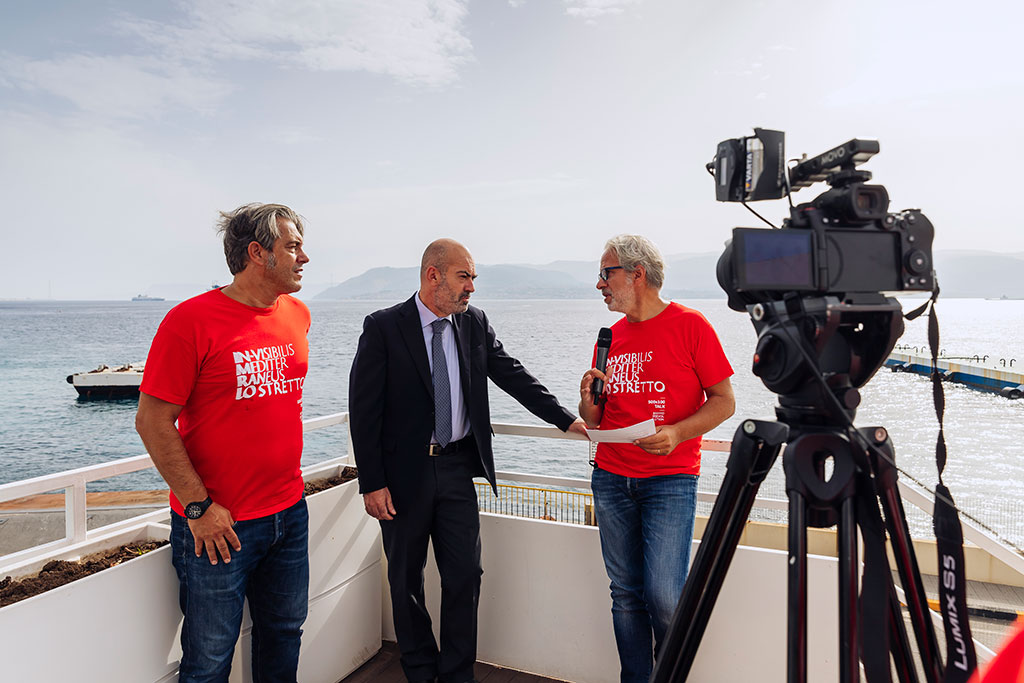
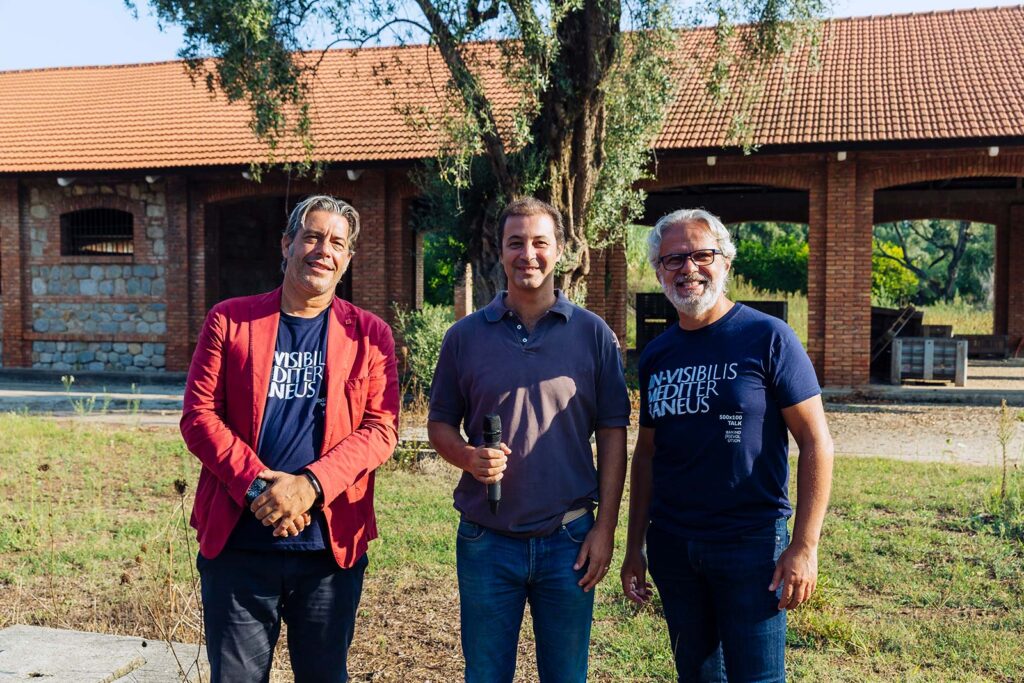
Da sinistra Giorgio Tartaro, Pietro Taccone e Alfonso Femia in Mediterranei Invisibili – Viaggio nello Stretto III, talk del 20 settembre 2020. Fotografia di Stefano Anzini.

Nel Settecento e nell’Ottocento, Napoli e le due Sicilie sono stati protagonisti europei, con governi all’avanguardia. La prima linea ferroviaria italiana a doppio binario, nel 1839, è stata costruita per connettere Napoli a Portici.  Cantieri navali, industria metalmeccanica, tessile, alimentare ed estrattiva (dello zolfo), e agricoltura erano ben sviluppate e consolidate, con relazioni commerciali verso tutto l’Europa. Seguì, nel contesto post-unitario – un periodo buio e si cominciò a parlare della “questione meridionale”.Il Sud diventò “sud”.La nostra azienda agricola è ciò che resta di un feudo che nasce prima, nel 1700, e che generò una ricchezza occupazionale per tutta la Calabria. Era un feudo di 40mila ettari che occupava il territorio dalla costa ionica alla costa tirrenica. Oggi l’azienda agricola si sviluppa su 250 ettari nella piana di Gioia Tauro: preponderante la produzione olivicola, abbiamo alberi secolari che risalgono alla fine del Settecento. Lavoriamo per innovare il processo produttivo e per mettere a punto un prodotto dalle caratteristiche eccellenti. Abbiamo conservato la maggior parte degli ulivi antichi, meccanizzando, già dagli anni Ottanta, la raccolta dei frutti attraverso le macchine scuotitrici.  Prima di questa innovazione, le olive degli alberi secolari erano destinate a produrre olio “lampante”, così definito perché, in tutto l’Ottocento e l’inizio del Novecento, veniva utilizzato per l’illuminazione ed esportato in Russia. Altro olio veniva esportato in Francia ed Inghilterra per la produzione di sapone: il famoso sapone di Marsiglia. Gli alberi secolari, alti fino a 20 metri, non consentivano la raccolta anticipata delle drupe. La loro raccolta avveniva attraverso una caduta naturale dopo la maturazione, dando luogo ad un prodotto ormai degradato , con un eccessivo tasso di acidità. Le olive non potevano essere utilizzate per fare olio extravergine. Per fare il salto di qualità era sufficiente anticipare la raccolta. La gestione di queste piante è complessa, per la dimensione, ma le macchine scuotitrici ci hanno permesso di raccogliere le olive prima della loro maturazione, ottenendo frutti con caratteristiche organolettiche eccellenti sia per la profumazione, sia per il sapore. Così siamo entrati in una nicchia di mercato di alto profilo. È stata proprio la Calabria, per prima, a importare dalla California gli scuotitori, la cui azione meccanica è calibrata in modo tale da non danneggiare la pianta. Tuttavia, per la raccolta delle olive dagli alberi secolari è necessario impegnare molta manodopera a causa della configurazione in “sesto ducale” cioè con una distanza molto ampia tra albero e albero. Per questo abbiamo scelto di piantumare parte degli appezzamenti con alberi giovani e di taglia piccola a distanza di sei metri l’uno dall’altro. Questo consente di gestire meglio la coltivazione, sia dal punto di vista fitosanitario, sia per quello che riguarda la raccolta, utilizzando scuotitori a ombrello che impegnano per ogni albero due persone al posto delle sei/otto necessarie per gli alberi secolari. Il ricambio delle piante è costoso e, giustamente, sottoposto a vincolo paesaggistico. Non è affatto semplice la gestione di questi uliveti, molti olivicoltori fanno ricorso alle sovvenzioni statali, quando sono disponibili.Nella nostra azienda, dei vecchi uliveti è rimasto il 50 per cento, con l’attenzione di conservare le stesse varietà autoctone, ottobratica e sinopolese, per preservare la tipicità del territorioIl nostro olio viene distribuito in Europa e negli Stati Uniti.L’olivicoltura era un’economia fiorente e ricca che vuole tornare, oggi, a raggiungere i fasti del passato e ad assumere una dimensione significativa in un contesto di riferimento internazionale.Il sostegno dello sviluppo agricolo fa parte di un più ampio processo di trasformazione economica della nostra regione che può, realmente, affiancare l’industria, il terziario e i servizi del Paese, rendendolo competitivo e attore significativo nel quadro europeo e globalizzato.La nostra azienda conta 50 addetti impegnati a controllare tutta la filiera dalla coltivazione all’imbottigliamento del prodotto. Viviamo in un piccolo borgo insediato nel territorio dal 1700, nel territorio della Piana di Gioia Tauro, il borgo di Cannavà che è stato riqualificato in chiave ricettiva, turistica e di intrattenimento culturale. Il nucleo del borgo è la Masseria Santa Teresa che risale agli anni Trenta dell’Ottocento e si compone di una serie di corpi di fabbrica, articolati intorno alla piazza quadrangolare.È un impianto che fa dell’agricoltura il proprio nucleo e che si autoalimenta in esso anche per le funzioni aggiunte di ospitalità e di impegno culturale.

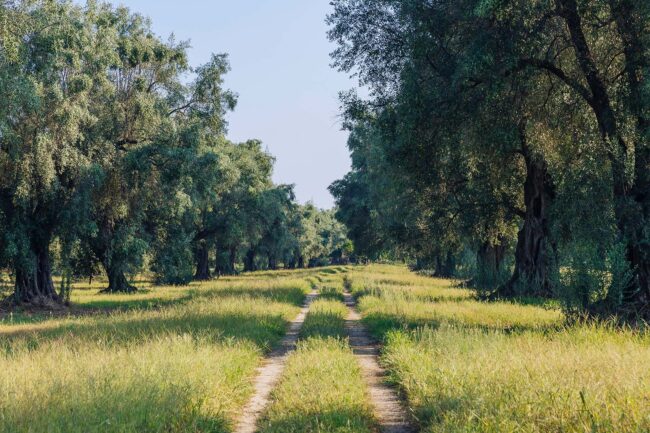
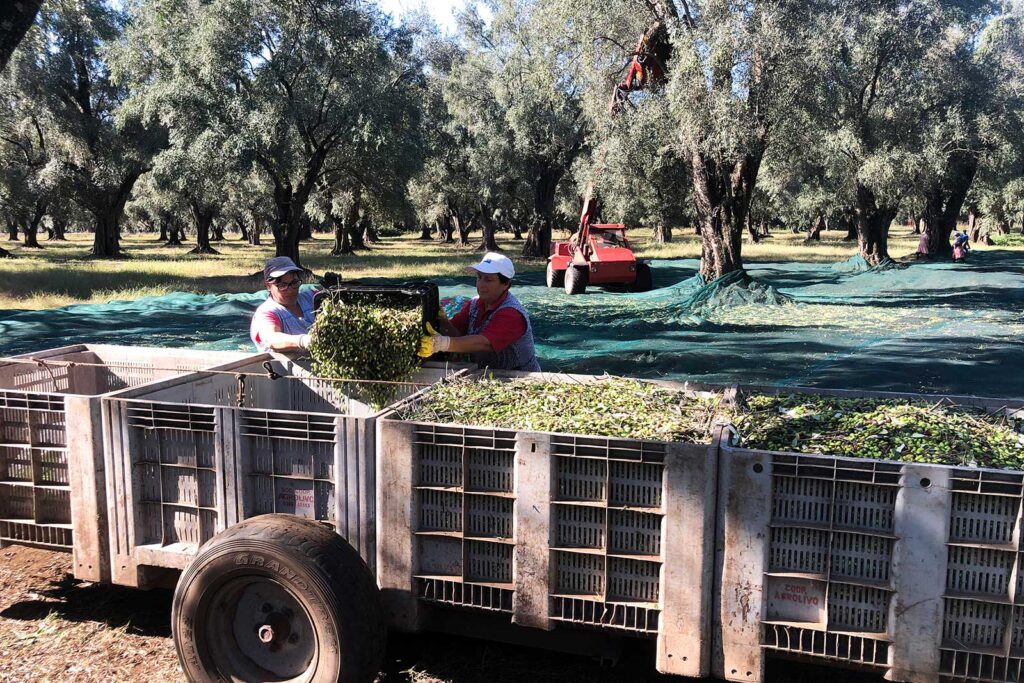
La raccolta delle olive, ottobre 2020 nell’azienda agricola Acton di Leporano. Fotografie di Salvatore Greco.

Il rilancio della Calabria a partire dalla terra, dalle piante di ulivo, non è una visione troppo romantica? Forse le cose sono un poco più complicate in Calabria, ma molte aziende agricole si stanno attrezzando in chiave contemporanea, sfruttando le tecnologie ed emergendo come realtà importanti sotto il profilo occupazionale ed economico.Il fermento è notevole: molti hanno saputo rinnovarsi, seguendo le direttive europee, investendo sui biogas (per gli allevamenti) e sull’energia rinnovabile (utilizzando i residui di potatura che possono essere trasformati in cippati). Tutta la Calabria è impegnata: nella zona di Lamezia con la coltivazione degli agrumi, nel crotonese con la produzione vinicola che sta conoscendo un’affermazione notevole in ambito nazionale e internazionale, nel reggino con il bergamotto per l’industria profumiera francese e internazionale. Sulla costa del reggino si coltiva il mango calabrese.Questo dimostra che ripartire dalla terra e dall’agri-cultura non è un’idea e neppure un progetto, ma una realtà già in essere.


Le lacune infrastrutturali, anche quelle interne alla regione vi penalizzano? Sono una discriminante per le proiezioni di sviluppo? Questo tema delle strade che mancano va valutato e pesato nei termini corretto. La Calabria è un territorio montuoso, Sila, Pollino, Aspromonte, sono le nostre montagne. E le montagne sono difficili da ida gestire ovunque. Sarebbe molto importante manutenere con rigore la vecchia viabilità esistente che attualmente presenta enormi carenze in questo senso.Siamo messi meglio di altri territori, abbiamo la Salerno Reggio Calabria che funziona, anche se il processo di revisione durato trent’anni ha causato problemi e disagi ingenti. La costa tirrenica è ben collegata con tutto il Paese. E anche per raggiungere la costa ionica ci sono due strade a grande scorrimento.La necessità di infrastrutturare il territorio deve fare i conti con l’assetto geomorfologico. Non si può cavalcare il tema delle strade che mancano senza una valutazione dei benefici rapportati agli investimenti e ai rischi territoriali. Il nostro svantaggio è quello di essere geograficamente “in fondo”, dobbiamo comunque fare, indipendentemente dal mezzo di trasporto, 1200 chilometri per raggiungere gli avamposti italiani per l’Europa, i maggiori centri di distribuzione, gli hub logistici.Quello che avrebbe potuto essere il nostro punto forte è completamente vanificato per funzione e per mancanza di connessione ferroviaria. Il porto di Gioia Tauro è un’occasione mancata, per costruirlo è stato oltraggiato un contesto ambientale straordinario, e ciò nonostante non offre alcun servizio alla propria regione. È uno scalo internazionale, di transhipment, una situazione chiusa e molto particolare. La nostra – nostra di diritto – scorciatoia naturale verso l’Europea e gli Paesi – il mare – è impegnata a uso esclusivo in altra funzione.


La nostra provocazione, quella di mettere il Sud al centro del processo di rilancio del Paese e dell’Europa tutta, ha una prospettiva reale? Sono convinto che sia possibile, utilizzando l’agricoltura come fattore di generazione della sostenibilità economica territoriale. Non ci sono, in Calabria, le condizioni territoriali e ambientale per sviluppare filoni industriali. I tentativi di industrializzazione hanno prodotto cadaveri di capannoni mai terminati ed ecomostri abbandonati. L’unica industria che abbia un senso sviluppare è quella rurale, creando stabilità occupazionale locale, con una grande proiezione internazionale.Per fare questo è necessario che la politica locale dia sostegno ai progetti, seguendo le direttive e usufruendo dei sostegni europei in termini corretti. E considerando che i piani dell’agricoltura non hanno, per loro natura intrinseca, la scansione quinquennale delle elezioni politiche, ma si proiettano in una visione temporale più lunga.  Errori sui tempi, scarsa capacità di comprendere le esigenze e mancanza di competenze specifiche hanno condotto a scelte sbagliate, lasciando di fatto gli imprenditori agricoli da soli a inseguire, e talvolta anche soddisfare, il sogno di affermare il proprio territorio nel mondo.

La fotografia in apertura è si Stefano Anzini.

200918_Mediterranei-Invisibili_∏Stefano-Anzini

SCOMMETTERE SUI GIOVANI E SULLA CULTURA: NON È UNO SLOGAN, MA L’UNICA OPPORTUNITÀ PER LIBERARE LA SICILIA DALLE DISTORSIONI PERCETTIVE con Pietro Briguglio

Pietro Briguglio, il sindaco di Nizza di Sicilia, parla di una Sicilia che vuol sconfinare sia fisicamente, sia creando ponti tra la memoria del passato, il mondo “esterno” e il futuro.

Pietro Briguglio, sindaco di Nizza di Sicilia a Mediterranei Invisibili-Viaggio nello Stretto, 17 settembre 2020. Fotografia di Stefano Anzini.

La Sicilia non è mafia e malavita. Se questa è, in background, la percezione permanente che deriva da una lettura non aggiornata del territorio, è altrettanto vero che la restituzione della realtà è completamente diversa, oggi. Un esempio? Savoca è il borgo delle 17 mummie, uno dei più belli d’Italia. Risale al 1134, ma è diventato famoso nel 1972 perché Coppola, il regista de’ Il Padrino ha girato alcune scene del film.
Non è questa l’unica distorsione percettiva che pesa e frena sullo sviluppo dell’isola.
Per esempio, Sicilia non è solo Taormina, né è solo turismo balneare e stagionale.
E storia e cultura non stanno solo a Palermo e a Noto.


La Sicilia è un territorio che va oltre le distanze e i limiti fisici dell’essere isola.
Certo, ci sono i limiti reali, ma talmente logorati da aver perso persino di intensità e urgenza: la mancanza di infrastrutture interne, l’esodo della popolazione giovane, il ponte mai costruito, la lacunosa diffusione della rete digitale.
Ci sono poi altri limiti meno evidenti, ma altrettanto impedienti: non siamo attrezzati, dal punto di vista “umano” della professionalità e delle capacità necessarie per disimpegnarci con agilità in uno scenario burocratico molto complicato sia nel contesto regionale e nazionale, sia, soprattutto, per accedere e sfruttare le opportunità economiche messe a disposizione dall’Europa. Sviluppare i percorsi, rendicontare e definire le scadenze implicano un’operatività organica sotto il profilo delle procedure.

Fotografia di Stefano Anzini

Quanto pesa il turismo per il rilancio di questa parte di Sicilia?
Il punto di forza del turismo balneare rappresenta anche, in qualche misura, un limite: trascuriamo le bellezze paesaggistiche e culturali dell’interno. E anche il litorale fuori dal polo di riferimento di Taormina è un patrimonio poco sfruttato che avrebbe la grande potenzialità di destagionalizzare il turismo. Un esempio che riguarda da vicino il mio territorio è la valle del Nisi sul versante jonico di Messina, composta da piccoli paesini sulla riviera e da antichi borghi collinari. La vallata è di origini preistoriche e si è sviluppata intorno a uno dei più importanti monti della catena di Peloritani, il monte Scuderi. Il contatto diretto tra mare e monte rende affascinanti e intensi questi luoghi ed è da qui che nasce l’anello del Nisi, che comprende Alì Terme, Alì, Fiumedinisi e Nizza di Sicilia.
Questi luoghi sono oggetto di studio, ma ancora sono un patrimonio sconosciuto.
Una grande opera che non possa essere fruita dalla collettività, chiusa in una stanza privata, rappresenta un ingiusto modo di mettere in relazione arte e comunità.
Molta parte della Sicilia è una grande straordinaria opera d’arte non valorizzata e sconosciuta ai più.
La diffusione della cultura e il turismo che ne può discendere sono lo strumento di rilancio del territorio.
Un’affermazione forte e autonoma in tal senso genererebbe l’interesse della politica centrale e accelererebbe la costruzione delle infrastrutture. Si potrebbe innestare un circolo virtuoso che abbatterebbe tutti i limiti.
La cultura prende avvio da un intenso programma di scolarizzazione e di formazione che crei affiliazione con il territorio, inverta il processo di abbandono della popolazione giovane, produca lavoro per la cultura, con la cultura.
I muri mentali si abbattono solo con la cultura, dunque questo è per la Sicilia un nodo fondamentale. Quello che riscatterà il nostro territorio dalle distorsioni percettive è l’impegno della popolazione giovane stimolata, attraverso lo studio e la cultura, a scommettere sulla Sicilia.


I confini, i limiti devono trasformarsi in orizzonti, aspirare a nuove formule che stimolino in continuazione alla ricerca di visioni senza confini
La Sicilia può essere visualizzata come una sorta di flebo benefica, energizzante, curativa, a lento rilascio di cultura, storia e tradizioni da somministrare a tutto l’Italia.
In Egitto e in altri Paesi che hanno segnato il percorso e l’evoluzione umana si continua e continua a scavare, dopo aver già svelato l’essenziale.
Noi abbiamo tantissima cultura da rivelare e da diffondere, ma non c’è interesse a “scavare” nella nostra terra.
Non indagare nella nostra storia significa restare un passo indietro.
Tornando al paese di Savoca, la scelta di Coppola e il successo de’ Il Padrino hanno funzionato da cassa di risonanza per tutta la zona. Ora la potenza della rete diffonde la conoscenza dei territori, la curiosità e il desiderio di visitarli e anche questo può funzionare, in combinazione con la costruzione dell’infrastrutturazione fisica interna all’isola.
Anche su questo fronte ci stiamo muovendo: lo scorso mese di settembre è stato firmato dal Commissario di Governo, l’amministratore delegato di RFI, Maurizio Gentile, l’approvazione del progetto definitivo del raddoppio dei binari tra Giampilieri e Fiumefreddo per un investimento di 2.300 milioni di euro, già integralmente finanziato. L’ordinanza segna un ulteriore decisivo passo in avanti nella realizzazione dell’asse ferroviario Messina-Catania-Palermo, che giunge a pochi giorni dalla chiusura della conferenza di servizi, avvenuta lo scorso agosto.Con l’avvenuta approvazione si potrà procedere già nelle prossime settimane alla pubblicazione dei bandi di gara per i due lotti funzionali Fiumefreddo – Taormina-Letojanni e Taormina -Letojanni Catania. L’intervento completa il raddoppio della linea ferroviaria fra Messina e Catania e prevede la realizzazione di 42 chilometri di nuovo doppio binario, di cui circa 37 chilometri in sotterraneo, con un aumento della capacità della linea per il traffico sia passeggeri sia merci e una riduzione dei tempi di viaggio di circa 30 minuti tra Messina e Catania, tanto da consentire lo sviluppo di un servizio di tipo metropolitano da Catania fino a Taormina/Letojanni.


Il ponte sullo Stretto è una discriminante in questo quadro di sviluppo?
Il Ponte è un’infrastruttura primaria, collegamento con la penisola, sia per il transito delle merci, sia per quello delle persone. I benefici sarebbero indiscutibili, anche se, avendo procrastinato la sua costruzione in un lasso di tempo ormai vicino al secolo, la complessità urbanistica dei luoghi di partenza e approdo è cresciuta a dismisura ed è, oggi, necessaria una compensazione allo stravolgimento che il progetto comporterebbe.
Al di là dei dibattiti, delle riflessioni, dei temi tecnologici, istituzionali, economici, ambientali, l’unica indiscutibile realtà è che è urgente e opportuno fare questo ponte: non è interesse solo della Sicilia e della Calabria, ma dell’Italia tutta.

La foto in apertura è di Stefano Anzini.


200918_Mediterranei-Invisibili_∏Stefano-Anzini

UN MODELLO SUD IN GRADO DI TRAINARE IL PAESE SI FONDA SULLE ESPERIENZE STORICHE, SENZA INDULGERE ALLA NOSTALGIA DEL PASSATO, DECLINANDO LA SAGGEZZA SECOLARE AL PRESENTE con Serena Bonura

Serena Bonura lavora e svolge attività di ricerca nel campo dell’ecologia e della sostenibilità applicate all’educazione e alla comunicazione. Dal suo punto di vista non si può parlare di “sud alla riscossa”, perché il Sud è meraviglioso, ma la qualità di vita la danno le scuole e gli ospedali che funzionano e non (solo) il paesaggio, il mare e il sole. In Sicilia ci sono ancora molte cose da mettere a posto.

Serena Bonura nel talk di Mediterraei Invisibili – Viaggio nello Stretto III del 18 settembre 2020. Fotografia di Stefano Anzini.

Serena ha vissuto a Bologna per qualche tempo e questo ha cambiato il suo modo di vedere il mondo (e il Sud). Per lei ecologia e sostenibilità, particolarmente per quello che riguarda il cibo, sono una risorsa economica e, insieme, un modo per non impoverire e oltraggiare la sua terra. 

Nuova economia ed economia circolare, neonate emersioni esito di uno sguardo più consapevole dell’ambiente, si stanno già rapidamente trasformando in slogan. Eppure, non si è neppure cominciato a lavorare in questa direzione. È come se anticipare il concetto, senza averlo pienamente sperimentato, già l’avesse logorato e reso vecchio.
Per il Sud, per la Sicilia, non si tratta, però, di una rappresentazione mentale, ma di una delle vie percorribili per fare economia dove, fondamentalmente, l’economia manca, utilizzando il complesso delle risorse e delle attività locali, in relazione al settore agro-alimentare.
In Sicilia si può realmente attivare una nuova economia a partire dalle tradizioni. Serena puntualizza che parlare di tradizione non vuole dire recuperare vetuste e antiquate modalità del fare o, peggio ancora, del pensare.
La consapevolezza del presente – spiega Serena – si origina in una stratificazione di esperienze positive e di errori. Nulla si deve dimenticare, la memoria è la miglior chiave del cambiamento. Per questo parlo di “retro-innovazione”. Si prende quanto di buono ci ha insegnato il passato e si attualizza, attraverso gli strumenti contemporanei. Non è un tema da limitare al cibo e all’agricoltura, è estensibile per ogni contesto e ovunque. Tuttavia, il modello della retro innovazione siciliana si declina nella specificità geografica, culturale e storica del Sud, in modo unico, non trasferibile o replicabile in altri territori. Così come unico è il Sud.

L’economia circolare genera modelli di consumo contemporanei, senza avvilire, né esaltare in modo acritico il passato ed è anche un’economia di relazione, un’espressione che è quasi una contraddizione in termini, perché attiva un processo che evoca lo scambio di antica memoria. Una sorta di “prima della moneta” del tempo moderno.
Per spiegare meglio, lavoriamo in co-produzione con i consumatori aggregati di altre aree d’Italia, i Gruppi di Acquisto Solidale, che accettano di condividere il rischio di produzione insito nell’agricoltura (variabili climatiche soprattutto), pagando anticipatamente i coltivatori. In questo modo il produttore “non corre da solo” con il rischio di non arrivare, attraverso il pre-finanziamento del consumatore.
È un modello che si estende ad altri Paesi europei, per esempio alcuni consorzi siciliani hanno stipulato accordi di questi tipo con gruppi di consumatori francesi.
Ecco, dunque, ancora in forma embrionale, la risposta alla provocazione di Mediterranei Invisibili, far ripartire il Paese e l’Europa dal Sud.
Un altro esempio, a Catania, è nata una start up – Orange Fiber – fondata da Adriana Santanocita ed Enrica Rena che, recuperando gli scarti degli agrumi, ha creato un tessuto esclusivo e di alta qualità tessile. Lo scorso anno Orange Fiber ha iniziato una collaborazione con il brand svedese H&M, che ha scelto l’azienda siciliana per realizzare parte della sua collezione premium Conscious Exclusive 2019.
Sempre di Catania è un’altra start up – Kanèsis – ad altissimo livello tecnologico che ha messo a punto un sistema per produrre la prima plastica ecosostenibile. È un materiale innovativo, che deriva dagli scarti della lavorazione industriale di vegetali, tra cui la canapa, ideato da un giovane studente di ingegneria, Giovanni Milazzo, e dal suo team. È un materiale composito termoplastico, con proprietà riconducibili alle plastiche petrolchimiche convenzionali e doti migliorate di resistenza e leggerezza. Di recente, Kanèsis ha stipulato un accordo con Lati, azienda italiana di statura internazionale. Ecco, dunque, anche in questo caso, la proiezione della Sicilia verso l’Europa e oltre.
Francia, Svezia, … non ci poniamo limiti.


È molto rigorosa la tua narrazione e trasmette l’idea di un grande Sud. Quanto la parte meno luminosa e meno intraprendente reprime e ostacola il grande Sud in emersione?
Sud è bello.
Sud è intelligente.
Sud è intraprendente.
Ma la realtà che noi viviamo deve fare i conti con inefficienze gravi che non solo rallentano lo sviluppo, ma deteriorano la qualità della vita: ospedali e scuole che non funzionano o funzionano male sono il tratto distintivo della nostra isola. Ci trinceriamo dietro l’alibi della mancanza di infrastrutture, quasi un mantra, ma i problemi sono altrove.

Il nodo delle infrastrutture è uno dei più dolenti e ricorrenti nel dibattito corrente sul Sud, ancora di più, in area Stretto. La tua sembra un’affermazione contro-corrente
È vero che mancano dei collegamenti, anche importanti, non intendo negare l’evidenza. Ma non ce ne siamo accorti ora, è un problema che risale al dopoguerra, agli anni Sessanta e ancora prima. E non l’abbiamo risolto, se non per piccoli tratti. Tutto il nostro territorio è a grave rischio idrogeologico e quando si costruisce un’opera di grandi dimensioni, un tratto autostradale o un viadotto bisogna aver eliminato qualsiasi incertezza e indeterminazione progettuale. In Sicilia ci sono molti “cadaveri”, resti di sogni infrastrutturali avventati, abbandonati per problemi di appalti, rischio geologico, conflittualità tra enti preposti o mancanza di risorse.
Il raddoppio ferroviario tra Giampilieri e Fiumefreddo, alle cronache in questi giorni, si dovrebbe sviluppare in una zona notoriamente franosa e dei 42 chilometri in preventivo, 38 sono in galleria.
Fino a questo momento, le stazioni sono state realmente di servizio ai centri abitati, dopo i lavori saranno spostate al di fuori e sarà necessario creare una rete di collegamento per raggiungerle.
Affermo che è un alibi quello delle infrastrutture, perché oggi, con un pensiero più contemporaneo e attuale di quello del dopoguerra, avrebbe più senso ripensare i processi e inventare nuovi modelli. In Sicilia, la chiave è la prossimità, non la mega infrastruttura.  Non ultimo le infiltrazioni malavitose si sono storicamente insediate con le grandi opere pubbliche.
Anche in questo caso la memoria è importante perché indica l’errore.
Possibilmente da non replicare.
Per comprendere meglio il tema infrastrutture al Sud, si può fare un parallelo con la situazione attuale: continuiamo a parlare di malattia, dovremmo ribaltare la visione, cominciando a prendere in considerazione la salute come modello.

Fotografia di Stefano Anzini.


200919_Mediterranei-Invisibili_∏Stefano-Anzini__

LA VOGLIA DI CULTURA, NON SOLO MARE E NON SOLO TURISMO. LA POPOLAZIONE LOCALE COME CHIAVE DI RILANCIO DEL TERRITORIO. TUTTO QUELLO CHE IL SUD PUÒ DARE con Caterina Limardo

Caterina Limardo è una delle anime di Zabut, festival internazionale di corti d’animazione, diventato, nel corso di poche edizioni, un punto di riferimento importante per i professionisti, per gli appassionati e per il pubblico amatoriale. Caterina racconta di una Sicilia in cui la bellezza si rivela attraverso la cultura cinematografica, la partecipazione delle persone e i luoghi.

Caterina Limardo nel talk di Mediterranei Invisibili-Viaggio nello Stretto III del 18 settembre 2020. Forografia di Stefano Anzini

Sud e bellezza, un binomio riconosciuto, come Sud e mare e Sud e cibo. Dunque, per sillogismo, la bellezza del Sud può essere il suo volano di rilancio.
Sembra semplice, ma le etichette possono essere pericolose.
E lo sono per la popolazione locale. Mare, cibo, paesaggio… della “bellezza turistica” certo non si perde l’incanto visivo, quando i visitatori scemano e finisce la stagione balneare, ma si svuota l’energia e l’intensità di chi anima i luoghi.
Noi che al Sud viviamo a novembre come ad agosto, siamo come in un cul -de-sac, consumiamo le possibilità all’ingresso (dell’estate) e ci ritroviamo, inesorabilmente stagione dopo stagione, con un muro davanti. Ritorniamo indietro e ricominciamo.
Anche sotto il sole e davanti al meraviglioso mare della Sicilia si può conoscere l’alienazione.
Al Sud possono e devono emergere le stesse potenzialità di vita che ci sono a Milano o in qualsiasi altra città d’Italia.
Le possibilità esistono, si tratta di cercarle con molta attenzione e grande volontà. Non sempre sono subito evidenti. E poi … sì, è più faticoso.
Il progetto di Zabut è un progetto in fieri che nasce dall’interesse e dalla passione comuni di un gruppo di amici. Ma è molto di più. Si lega al desiderio di esserci come persone e come persone legate ai luoghi, con la duplice ambizione di una crescita individuale e del territorio.
Perché se il luogo, il paese, diventa bello per chi lo vive sempre, per il turista sarà ancora più attraente.
È questa una bellezza che non vive di rendita paesaggistica, dell’architettura o dei monumenti, ma di impegno personale, di cultura e di innovazione dei contenuti.

Fotografia di Caterina Limardo.


Zabut nasce nel 2016 nel centro storico della città d’arte di Savoca, in Sicilia, uno dei “Borghi più Belli d’Italia”. Nel 2019 cambia location spostandosi nel comune di S. Teresa di Riva, “bandiera blu” dal 2017.
Zabut è soprattutto un evento che nei giorni del festival mette in comunicazione uno spazio e una comunità, persone e luoghi, diventando un luogo di fruizione culturale dall’atmosfera affascinante e ospitale.
Sulla riviera ionica siamo alla continua ricerca di stimoli e Zabut è il risultato del nostro desiderio di fare.
Il progetto si trova, oggi, pronto per un ulteriore salto di qualità che gli permetta di confrontarsi con i più importanti festival internazionali sebbene ora, le difficoltà generate nel corso del 2020 dalla pandemia, abbiano complicato le cose.
In questo strano agosto di tregua dal coronavirus e, insieme, di inquieta e ansiosa attesa del futuro, per ognuna delle serate del festival, 150 persone hanno partecipato alle proiezioni. Non è un numero raffrontabile a quello degli anni passati (450 per sera nel 2019), ma racconta con ancora maggior convincimento quanta sia la voglia di ascolto, la curiosità, il desiderio di bellezza. Nel nostro caso in chiave cinematografica.
I cortometraggi – 450 -sono arrivati da 62 paesi diversi, segno che, nei tempi in cui le distanze si riducono,  l’internazionalità è, in qualche misura, un obiettivo già raggiunto. 
Abbiamo l’ambizione di crescere, da concretizzare prima nei territori limitrofi e poi nel Paese, e poi ancora verso l’Europa e verso il mondo. Ambizione che  possiamo soddisfare, a partire dal desiderio che ha la popolazione locale di partecipare.
Il festival viene sostenuto dal Comune di Santa Teresa di Riva e da un gruppo di sponsor privati e patrocinato, tra gli altri,  dall’Università di Catania, di Messina e dall’Accademia delle Belle Arti di Palermo.
Al di là delle difficoltà che dobbiamo affrontare, una per tutti il fatto che l’accesso alla maggior parte dei bandi pubblici prevede l’anticipo delle spese, e del blocco causato dalla diffusione della Covid-19, abbiamo molte idee.
Vorremmo che Zabut crescesse, rimanendo legato alla Sicilia, senza perdere l’identità e vorremmo attirare l’interesse istituzionale a livello centrale.
Ci rendiamo conto che far arrivare le persone a Santa Teresa di Riva è più complicato. Ma lo era, lo è anche farle arrivare a Taormina.
Vorremmo abbattere il “limite territoriale”, poter invitare al festival ospiti e giurati provenienti anche da fuori Italia, limite oggi dovuto non solo alla carenza di infrastrutture ma anche e soprattutto alla difficoltà nel reperimento di maggiori fondi.


Vorremmo combattere, anche attraverso Zabut, quell’idea stereotipata della Sicilia che la associa – ancora – alla mafia e alla malavita. Anche perché, un po’ ci crogioliamo, nel nostro passato, persino in una memoria storica negativa: nei negozi di souvenir di Savoca, ad esempio, il paese in cui sono state girate alcune scene de’ Il Padrino, vengono venduti mug a sagoma di pistola…
La Sicilia si è, in grande parte, affrancata, ma non credo che le altre regioni italiane, incluse quelle del Nord siano escluse dalle infiltrazioni dell‘ndrangheta e della mafia.
Il tema della mafia è diventato folklore che si autoalimenta con il gradimento di un turismo di massa, che si carica però di negatività, limitando e ostacolando la fiducia nei territori; così, chi arriva da fuori, continua a valutare i luoghi anche con la discriminante delle memorie mafiose.

Fotografia di Caterina Limardo

Qual è la via per liberare il Sud dal sud?
Prendere le distanze dagli stereotipi. È la prima cosa.
E poi assumere la consapevolezza di avere un tempo più lento rispetto al Nord. Non è, necessariamente, un valore negativo. Ma non dobbiamo perderci e lasciare le cose incompiute. Altrimenti non usciremo mai dal “sud”.

La fotografia d’apertura è di Stefano Anzini.


MED-INV-JOURNAL-VIAGGIO-3-FERRARA

THE BRIDGE ACROSS THE STRAIT AND THE RECOVERY FUND, ANGELA MERKEL’S PRAISE FOR ITALY AND INVISIBLE MEDITERRANEAN(S): THE CONNECTION EXISTS AND IT IS VISIBLE

Invisible Mediterranean(s) is a permanent project; it does not end with the duration of the Journey. It seeks connections and pathways, nourished by the continuous relationship of interest that the South generates in Italy and across Europe.

Today’s Il Sole 24 Ore published an article about a Mastercard study on  tourism trends in G20 countries.
At the opening of the article, journalist Gianni Rusconi referred to a statement by Angela Merkel who, during a video conference with the ministers-president of the German Länder, described Italy as a country that is not at risk and where it its reasonable to travel. Whether the “Merkel effect” will generate a flow of German tourists – provided coexistence with the virus allows it – remains to be seen.

The Mastercard report highlights a rapidly consolidating trend: “…the way people travel has gradually adapted to the new scenario. Spending on fuel, restaurants, or car and bicycle rentals reflects a growing inclination toward ‘on the road’ and local travel, rediscovering national landscape territories.”

“Invisible Mediterranean(s) – Journey Across the Strait” investigates places and tells unexpected stories with the aim of bringing an end to the sort of cultural oblivion surrounding the lands around the meeting point of the two seas, the Ionian and the Tyrrhenian.
It is a project born from a cultural initiative and private economic commitment, supported by several companies, bringing together research on territories, the enhancement of communities, and a courageous awareness of the difficulties resulting from decades of inadequate policies deaf to real needs.

Mastercard’s research has highlighted what Invisible Mediterranean(s) has been telling for the past three years.

The first two journeys were educational explorations in search of the invisible, within landscape and architecture, but also through the stories of the women and men of the Strait: in 2018 through Reggio Calabria, the Grecanic area with Amendolea and Gallicianò, Filanda Cogliandro, and the Costa Viola; in 2019 through Rosarno in Calabria, Scilla, Gerace, and Messina, in Sicily. A narrative built through dialogue, gathering testimonies and fostering discussion, bringing together the visions of authentically Mediterranean people – different in background, age, and role – who share, even through contradiction, the identity of their territory.
The third journey, in this difficult and painful 2020 (from September 17 to 20), marked a turning point.

Journey Across the Strait 2020. Photo by Stefano Anzini

Many things have changed since previous years.
During the summer, the whole of Southern Italy experienced a revival in tourism. After months of mandatory quarantine to contain the spread of the coronavirus and restrinctions on travel to foreign countries, Calabria and Sicily ranked among the five most visited regions in Italy. This was stated by CNA Turismo together with Eurispes. Visitor numbers far exceeded expectations.

The pandemic generated a flow of interest toward the South, and the South revealed the most exposed part of its territory, arousing attention and curiosity even toward its “invisible” aspects.

The protagonists of the third edition of Invisible Mediterranean(s), even more motivated to express–according to their own sensibilities and without conforming to standardized language–the “invisibility” of their places, celebrated through the journey itself and through debates both the territories–in Sicily, the system of the Ionian valleys of the Peloritani Mountains between Capo Scaletta and Capo Sant’Alesso, and in Calabria, from the Tonnara di Palmi to Gioia Tauro–as well as the strong desire for integration within the European context.

Courageous in denouncing the difficulties – from the lack of infrastructure, to the managerial inconsistencies of urban centers, to the territorial-scale dissonances of the Port of Port of Gioia Tauro, and even the unresolved and painful issue of the ‘Ndrangheta, which undermines strategic planning–many mayors took part in the Invisible Mediterranean(s) talks: Piero Briguglio, mayor of Nizza di Sicilia, Nancy Todaro, deputy mayor of Alì Terme, Natale Rao, mayor of Alì, Giovanni De Luca, mayor of Fiumedinisi, Natia Lucia Basile, councillor for culture of Roccalumera, Rosanna Garufi, councillor for culture of Furci Siculo, Sebastiano Gugliotta, mayor of Pagliara, Giuseppe Briguglio, mayor of Mandanici; Armando Neri, deputy mayor of Reggio Calabria, Giuseppe Ranuccio and Wladimiro Maisano, mayor and councillor of the municipality of Palmi, Aldo Alessio, mayor of Gioia Tauro, Giuseppe Idà, mayor of Rosarno, Andrea Tripodi, mayor of San Ferdinando.

Also in agreement in affirming that the post-pandemic “renaissance” could recalibrate the map of the map of the Strait by relaunching economic investment through culture, tourism, and agriculture, were the presidents of the territorial Orders of Architects: Salvatore Vermiglio for Reggio Calabria and Francesco Miceli for Palermo; together with the “ambassadors” of Invisible Mediterranean(s)–architects active in the territory and holding academic positions at the Universities of Reggio Calabria, Ferrara, and University of Naples Federico II. For Sicily: Gaetano Scarcella and Francesco Messina; for Calabria: Salvatore Greco, Giovanni Multari, Michelangelo Pugliese, and Giovanni Aurino.

In particular, the transit area between Calabria and Sicily, shaped by geography and infrastructural limitations, is dense with uncertainties about the directions to be taken – torn between the desire for expansion and the will to protect an extraordinary heritage. This protection is not about restricting widespread knowledge, which is in fact desirable, but about resisting the vulgarization of low-cost, superficial dissemination.

The issue of the construction of the Bridge across the Strait is interwoven with and cuts across all the other reflections. Also today, an in-depth article in Gazzetta del Sud confirms the exclusion of the bridge project from those eligible for funding under the Recovery Fund, which allocates more than 190 billion euros to Southern Italy, to which are added 123 billion euros in European and national funds through 2030.
The journalist Lucio D’Amico analyses both the criteria for the exclusion and the positive employment effects (citing a study by the Bocconi University in Milan) that the construction of the bridge could have generated in the coming years. But above all, he emphasizes how the Bridge is “the infrastructure that more than any other would bring the South and the Strait area back to the center of national and international politics. And while opinions on the Bridge remain controversial, the issue of restoring the Strait to a central geographical and political position within Southern Europe is, instead, a significant opportunity for the whole country. Precisely the theme of the relationship between the Strait and Europe was the provocation of this third edition of Invisible Mediterranean(s).

We asked mayors, architects and Presidents of Professional Orders which paths should be taken to face the future of these extraordinary places, and to relaunch the country starting from the South, interpreting the Strait of Messina in a European key.
The answer was unanimous: it is possible.
The rigorous (and unsparing) analyses, the concreteness of the statements, and the proposed programmes all describe a territory ready to take off – provided that strategies and actions emerge from below, from communities, rather than being “placebo” measures adminstered by the central government.
Showing attention and listening to the demands expressed by local communities, using European funds and allocating dedicated resources, and aligning interventions with territorial vocations: these are the actions that can drive renewal.

One of the moments of discussion from the third edition of Invisible Mediterranean(s). Photo by Stefano Anzini

In multiple voices, there is a call for the need not to impose a pre-established vision –something that has happened in the past, for example in the mid-1970s, when, within the framework of the special project for the development of infrastructure in the province of Reggio Calabria (CIPE Resolution of 1974), the Port of Gioia Tauro was built. The scale and structural characteristics of the work were determined by its original functional purpose, serving the industrial settlements planned by the Government Authority, which envisaged the creation in Calabria of Italy’s Fifth Steel Centre. In the early 1980s, the construction program came to a halt due to the well-known crisis in the steel sector, which in reality had already begun in the previous decade. The port was therefore converted from an industrial port to a multipurpose one, requiring the redefinition of infrastructure programmes, operational structure, and development plans.
As stated by Giovanni Multari, architect and professor at the University of Naples Federico II: “Gioia Tauro is a geometric center, but also a generator of economic and political meanings. A place of missed strategies and lost opportunities. The Port of Gioia Tauro is a giant facing only the sea, turning its back on the land, because it generates little local impact, is self-sufficient in its function and organization, and is more inclined to look toward the Suez Canal or the Strait of Gibraltar than toward its own plain.”
However, as explained by Giuseppe Idà, mayor of Rosarno “it is also the third in Europe and the largest in Italy for transshipment, the transfer of cargo from one ship to another, usually through unloading and reloading in port; it takes place in hub ports where many shipping lines with different origins and destinations intersect. In the area surrounding the port, the flow of goods and culture intersects and integrates.”
Also, Salvatore Greco, architect and council member of the Order of the Architects of Reggio Calabria, brings the issue of the port back to the territorial scale. “The port is a ZES – a Special Economic Zone – which means that goods are produced and processed there, and trade takes place within the port itself. The lack of adequate rail infrastructure and railway terminals hinders the development of its potential economic spin-offs.”

Supporting the territory means fostering its cultural and tourist vocation.
Once again Salvatore Greco helps frame the issue: “(…) I believe that an extreme form of protection is preferable to misguided interventions or redevelopment solutions that turn villages into something resembling an Indian reservation. That would mean losing wealth, not gaining it, making room for a form of consumption that empties places out – a disposable, use-and-throw away approach to territories. We must encourage a gentle form of tourism, not one that is offensive and arrogant.
A landscape transformed into a postcard panorama becomes aligned with an undifferentiated multitude of postcard landscapes. The danger is that the richness of values may be reduced to a merely temporary purchasing power – and then be lost forever.”
Adds Michelangelo Pugliese, architect and professor at the University of Naples Federico II: “Calabria is a landscape that cannot be trivialized through opportunistic interpretations tied to places, villages, coastlines, or mountains. Beginning with the villages themselves, we are not speaking about idyllic situations, as the term might suggest regardless of context. Often these villages are not only abandoned places, but also devastated by mercilessly ugly construction. Violations that have been committed and, unfortunately, layered over time. The complexity of reinterpreting them also involves the issue of dwelling, which contemporary life has profoundly transformed.”
Not everything can take the traditional tourism paradigm as its model for development, either because there is no spontaneous vocation for it, or because places do not wish to transform themselves in that direction, – explains Gaetano Scarcella, architect on the “Sicilian side.” “For example, the Ring of Nisi is a circular network of paths connecting the four centers of a valley marked by subtle and previously unexplored landscapes, abandoned workshops, agricultural scenery, and scattered monuments. (…) If it makes sense for the revival of a territory to pass also – though not exclusively – through tourism, then it is necessary to find the right and respectful interpretative key, because these are still unexplored places.”

Inaccessibility and the lack of physical infrastructure remain the constant factor – a brake and an obstacle to any hypothesis of development.
Salvatore Vermiglio, president of the Order of the Architects of Reggio Calabria, takes a particularly strong position regarding the Bridge across the Strait of Messina: “A coordinated and parallel project involving both the bridge and the related infrastructure would mean transforming Sicily and Calabria into Europe. Stepping back from the commitment to build the bridge, on the other hand, means remaining still, anchored to that prefabricated vision of Southern Italy, denying its European and global potential. To deny the bridge means to remain invisible. The invisibility of the territory is not a protection of its beauty, but rather damage to its enhancement and dissemination. An effective parallel, in all its harshness and discomfort, is the contrast between expansion and contraction. The risk of contraction is extremely high and, in a global context that tends toward expansion and integration, the danger of permanent exclusion from development processes increases.”

The political attention currently focused on Southern Italy thanks to the Recovery Fund cannot ignore the actual needs of the territory. As Francesco Messina, professor at the University of Ferrara, stated: “There is a total lack of attention from central government toward real needs, and even local politics struggles to understand the priorities.”

Francesco Miceli, president of the Order of Architects of Palermo, broadens the perspective: “Accessibility to the enjoyment of heritage, as well as public spaces, concerns the issue of citizens’ rights. Providing infrastructure to a territory means enabling every individual citizen to access it.
The lack of accessibility represents a denied right to historical and cultural heritage”.

The protection and enhancement of the territories along the Strait cannot be resolved through infrastructure alone: smaller towns and peripheral areas, suspended between a distinct identity and degradation, must become part of a broader project aimed at safeguarding their identity. Explains Miceli: “The connection with the most authentic territory is difficult to preserve for smaller towns: the relationship between urbanity and rurality becomes increasingly complex, to the point of tearing apart and becoming distorted – Palermo is a paradigmatic example of this. The interweaving of agricultural fragments within the outskirts of the consolidated city can become a major resource: these too are invisible places, though invisible in a different way from the hidden invisibility of villages. They are invisibile because people do not wish to look at them, yet they are strategic for rethinking the city – certainly not to transform them into new building developments, but to construct an identity of connection and enhancement. In order not to deny natural sustainability, the intelligence of the place, and to exalt its resilience.”

To the concept of a natural limit impoed by geography is added that of a self-imposed limit, as explained by Messina “Limitation is the truly serious problem of our territorie: the Strait of Messina has a geographical and political specificity, a point of tension between the Italian mainland and the island, a great water square where the distance between the two shores is ‘dialectically’ variable. Invisibility is a limit tied to the difficulty of physical connections between places, a condition that feeds and perpetuates itself through the restraint imposed by a culture of conservation which, through a cognitive distortion, becomes intertwined with certain environmental policies.
Thus, a geographical limit is transformed into a major political limit that discourages development projects and fosters the abandonment of territories surrounded by ever-higher mental walls”.

Territories along the Strait must  – by right – find their place within European geography. To achieve this, suggests Giovanni Multari “Before thinking about new projects, we should first conduct a survey of what already exists – abandoned places and unfinished construction sites. We should involve a network of local enterprises, freeing ourselves from a system governed by a politics of favors that has damaged all of Italy, and Southern Italy in particular.”

The project Invisible Mediterranean(s) was initially conceived with the aim of revealing little-known places – scarcely photographed or narrated. It sought to satisfy a desire for knowledge about a unique part of Italy. Over the course of three years, the project grew and evolved, feeding itself through a deeper understanding of the situations and territories involved, and setting increasingly ambitious goals – foremost among them, transforming the Strait area into a new center of energy for the entire Old Continent.

The opening photo is by Mario Ferrara.

medinv-journal_calabria-19.jpg

CALABRIA IS IN CONSTANT MOTION, BUT SOMETIMES ITS COURSE IS THE WRONG ONE. LET US ABANDON OLD PROCESS MODELS AND FACE OUR “ARCHAIC FUTURE” with Salvatore Greco

Salvatore Greco, architect and council member of the Order of the Architects of Reggio Calabria, overturns the preconceived narrative of a poor Calabria. Its supposed poverty exists only in the eyes of the those who are unable to see.

Calabria is wealth”
Salvatore Greco opens with this stement, immediately and decisivly removing one of the many stereotypes surrounding Calabria as a “poor region”. It is a beautiful narrative by Greco one that does not indulge in sentimentality but instead develops a rigorous analysis grounded in observation and the memory of places. An alternating vision – close-up and from a distance – that returns the most honest and passionate portrait of the South.

Calabria is rich in perceptions. Its highly distinctive morphology is itself a form of wealth.
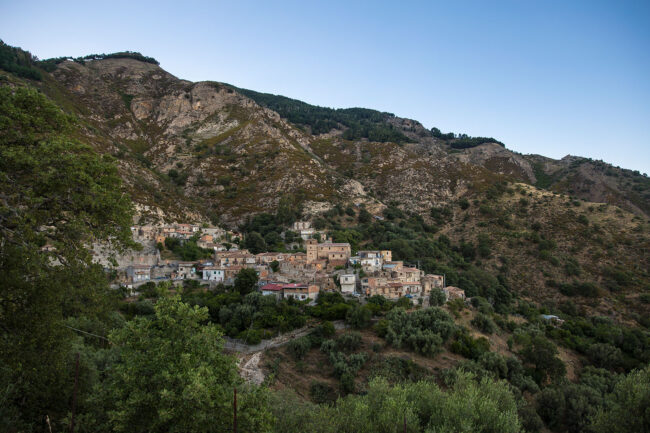
It is a mountainous region, made of mountains that face each other across the seas (the Ionian and the Tyrrhenian), and the physical space between the coasts and the Aspromonte is filled with countless stories.
Eight hundred kilometers of coastline, pastoral culture and cuisine…other narratives and forms of wealth.
Another form of wealth is the Calabrian “unfinished”: the rebar of pillars emerging from slabs, awkward volumes rising up, unfulfilled promises of houses – behind every house there is a social story, and this is wealth. Further wealth is the suspended sense of time, as if it stops and then resumes.
A sad form of wealth, but still wealth, is that of lands abandoned due to economic necessity, hydrogeological instability, earthquakes, and floods.
There is also the wealth of ghost towns, where only the past exists, while present and future are merely illusory intentions: the village of Amendolea and its river, the Cretto di Burri in Gibellina, which tells not what once existed, but its disappearance, the aftermath of the earthquake. The linguistic richness of the Grecanic area (certainly not a “minority” – a word that feels wrong and contradicts its enchantment and fascination).

Again, suspended time. All of this is wealth.

Photo by Stefano Anzini.
Then we move into the question of how to use and invest this extraordinary value.
A first reflection is that some of these situations have been preserved precisely because they have remained inaccessible.
And while invisibility and inaccessibility can certainly have negative connotations, I believe it is preferable to maintain an extreme form of protection rather than resorting to misguided interventions or restoration approaches that turn villages into something resembling and “Indian reservation”.
That would mean losing wealth rather than gaining it – making room for a form of consumption that empties places out, a throwaway use of territories.
Change, “progress”, even in its most aggressive forms, has reached Calabria filtered through its environmental character and geography – sometimes hostile – and this has caused less damage than in other regions.
We must encourage a delicate form of tourism, one that is not offensive or arrogant.
Landscapes transformed into postcard panoramas end up aligning with an undifferentiated mass of postcard-like landscapes.
The danger is that the richness of values is reduced to a merely transitory purchasing power – and the lost forever.

Can the authenticity of the Calabrian territory be reconciled within a European framework? The provocation we are putting forward with Invisible Mediterranean(s) is that of restarting the country (and Europe as well) from the southern Mediterranean.
These are not separate positions, but shared objectives grounded in respect for identity.
In Calabria there is no strong opposition between countryside and city; our wealth comes from the rural world and can be interpreted and strengthened within a European perspective. We are cities, villages, and communities: we must relaunch the vision of the world within and through communities.
For this reason, I believe a surgical level of attention is needed in how tourism is directed. And we must do this ourselves, as Calabrians.
Many things have been “dropped from above” onto us – for example investments in the steel industry, despite its crisis (with Taranto already struggling as a competitor). The Port of Gioia Tauro later managed to transform itself into a transshipment hub, but generating little local spin-off. The port is in fact a ZES–Special Economic Zone–which means that production and processing take place and exchange happens within the port itself. However, the lack of adequate rail infrastructure and railway terminals hinders the development of a potential local economic ecosystem.

Photo by Stefano Anzini.
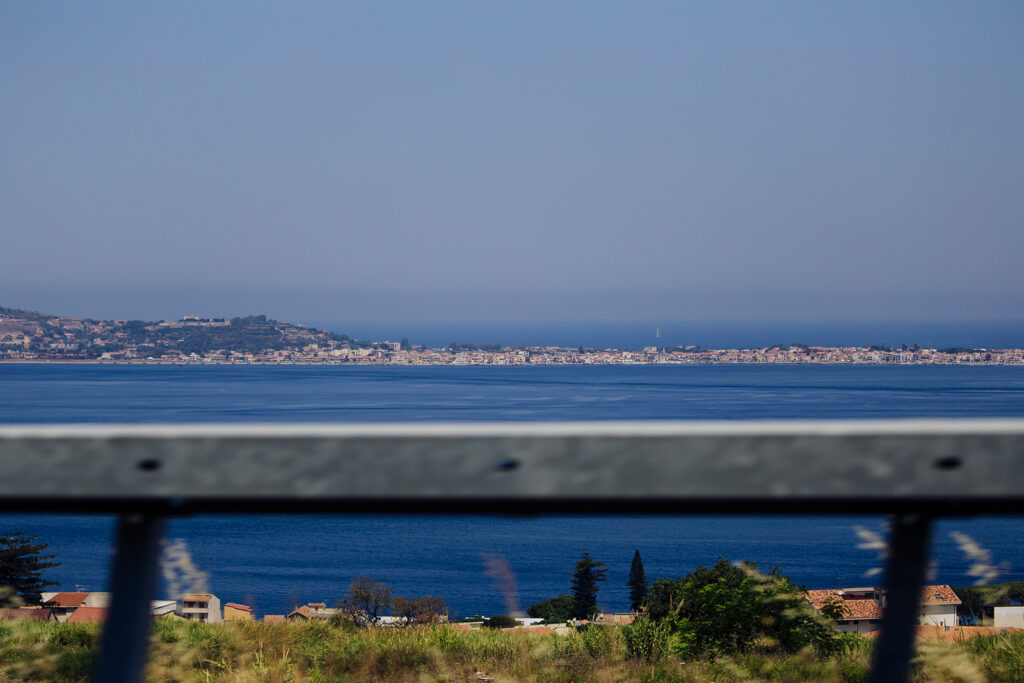
We simply need to return to being what we once where, without anachronistic positions, within a framework of real change.
Calabria is in constant motion, but too often the course it takes is the wrong one.
We can speak a great deal about conservation– about architecture, landscape, and places. But places and landscapes exist through their transformation. To trivialize concepts and apply labels – first “sustainability”, now “resilience” – while pretending not to understand what real mutation means, overlaying inadequate models onto communities, is precisely to take the wrong direction.

In Calabria there are two dawns and two sunsets: the sun rises over the Ionian Sea and over the Tyrrhenian Sea, and the water is made of two seas and of the fiumare. Geography is what shapes history. And it is from here that we must begin. 
Politics – which is a fundamental component in triggering architectural processes – must detach itself from models that do not work and embrace the regenerative capacity inherent in territories.
Nik Spatari, an internationally renowned artist and recently deceased, founder of Musaba, the art park in Mammola, spoke of the “archaic future” of Calabria – an idea that is less visionary and more deeply rooted in reality. 
I wish greater fortune to this my, and our, ultramediterranean Calabria”.
With Nik Spatari.


medinv-journal_calabria-27.jpg

A GIANT LOOKING OUT TOWARD THE SEA AND THE PLAIN BEHIND IT: GIOIA TAURO, A UNIQUE PLACE DIVIDED IN TWO, EEMBODYING AND REFLECTING THE DESTINY OF A SOUTH SHAPED BY ILLOGICAL SEPARATIONS. A CONDITION THAT ARCHITECTURE CAN TRANSFORM with Giovanni Multari

Giovanni Multari, architect and professor at University of Naples Federico II, believes that regeneration should be a program implemented through small steps, relying on alternative solutions: if the Bridge is not built, let’s immediately redevelop Villa San Giovanni. If industry is not working, let’s invest everything in agri-“culture”.

Invisible Mediterranean(s) is dialogue, comparison, and investigation. It is a journey and a revelation of the invisible dimensions of Sicily and Calabria. It is all of this, but above all it is a way to recognize and reaffirm the strong identity of shy places seeking a sustainable synchronicity with contemporary time.
The Mediterranean is a vast theme belonging to many cultures, marked by different geographies and united by ‘invisible’ aspects, contradictions, and harmonies. The Mediterranean of the Strait is a hidden and reserved place, despite still being a major crossroads and a transnational hub.
At the heart of this Mediterranean, of the South, Rosarno, the plain, and the port of Gioia Tauro form an extraordinary aggregation of masterful visual and olfactory euphonies, together with striking dissonances and urban distress.
Gioia Tauro is a geometric center, but also a generator of economic and political meanings. A place of failed strategies and missed opportunities.
The Port of Gioia Tauro is a giant facing only toward the sea, turning its back on the land because it generates little local impact, is self-sufficient in its function and organization, and is more inclined to look toward the Suez Canal or Strait of Gibraltar than toward its own plain.
Expanding the gaze outward, the richness of extraordinary places immediately emerges – places that have always nourished Calabria. A predominantly agricultural world, whose Calabrian environmental context makes it fertile ground for an evolution that can positively intertwine with architecture.

In Calabria and throughout the South, architecture takes on the meaning of care for the land and for communities; it becomes agri-culture.
We must invest in the traditions we have, enhance them, and make them known: recent pandemic events have confirmed Calabria’s capacity to be an extraordinary reservoir of energy and have highlighted that the region can be self-sufficient.
Infrastructure difficulties still exist, but we are working on them step by step: for example, our mountains are no longer inaccessible. The Club Alpino Italiano has mapped most of the trails and opened the way to a form of tourism that is passionate and respectful of places.
In these mountains lie areas only partially shaped by human activity, revealing an authentic heritage of culture and traditions. It is a unique monumental reality, that of the Sila mountain range, which contrasts with the coastline – a threshold element of the Mediterranean – where design is directed toward the essential themes of ecology and the environment.
In this unusual summer, the first phase of coexistence with coronavirus, Calabria experienced a moment of great redemption, lived across its entire territory, visited by tourists from all over Italy and even by some European visitors. A sign of attention, appreciation, a first step toward taking – by right – a place within a European geography, also through tourism.

Photo by Stefano Anzini.
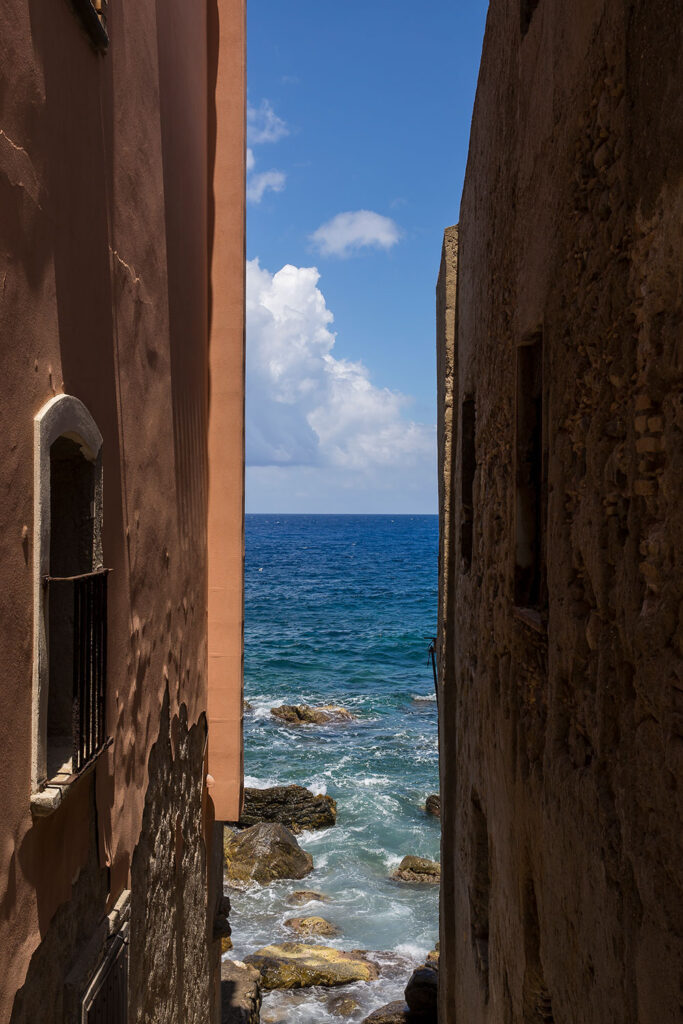
Where do we go after tourism?
Urban regeneration processes are not only made of large-scale transformations. Alongside major works – complex and difficult to implement – there is a small, continuous effort that also reaches the less visible territorial fringes and opens up unknown cultural and physical channels of communication.
We already have an infrastructure system in place that works, and it must be integrated with what is still missing.
The Ionian backbone suffers more, while the Tyrrhenian one is very dynamic, and from these different speeds of places emerges an unusual beauty, the awareness of a diachronic condition that generates positive evolutions out of contradiction: Paola, Crotone, Lamezia Terme, Catanzaro, Reggio Calabria.
There are territorial conditions that can be improved without major transformations, regenerating from the ground up and involving communities and citizens.

Photo by Stefano Anzini.
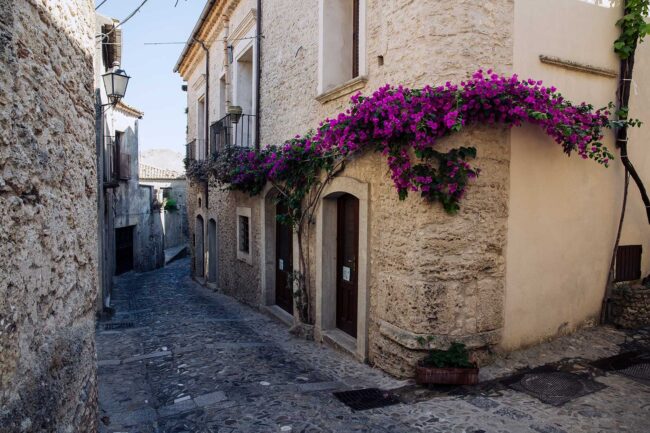
Let’s take a step back: how do the different “souls” of the same territory coexist?
Sometimes they are separate, sometimes they intersect. The Port of Gioia Tauro should be better connected with the plain. And if the best industry in Calabria is agriculture, then the agricultural system must be highlighted and enhanced, from cultivation to forestry, considering that it generates a significant economic impact, with exports across Europe.
But above all, precisely in order to reconcile these different identities, we must never stop and proceed in small steps: if the Strait Bridge is not built, let’s redevelop Villa San Giovanni, equipping it as a place of transit, imagining a large marina, and replicating the same program in Messina, to improve the efficiency of the two gateways.
Before thinking about new projects, we should survey what already exists: abandoned places and unfinished construction sites.
Let’s create a table of people who live in the communities; we do not need prefabricated solutions imposed from above.
Let’s involve a network of local businesses, breaking away from a system governed by patronage politics that has damaged Italy as a whole and especially the South.

medinv-journal_calabria-8.jpg

THE INFRASTRUCTURAL GAP GENERATES A CULTURAL GAP. THE DESIGN NARRATIVE STOPS, THE PERSPECTIVE CLOSES. CONNECTION – BETWEEN CLABRIA AND SICILY, BETWEEN THE IONIAN COAST AND THE TYRRHENIAN COAST – IS THE ONLY WAY TO GO BEYOND THE LIMIT with Francesco Messina

Francesco Messina, architect and contract lecturer at the University of Ferrara, addresses the concept of “limit”: the limits of cultural policy, of environmental policy, and of an attitude of self-imitation that prevents major transformation in the extraordinary space between Sicily and Calabria.

Invisible Mediterranean(s) is a narrative that makes it possible to discover territories that would otherwise remain in the background. Above all, it is a form of ‘proof of existence’., because without knowledge, storytelling, and representation, places and landscapes would not exist beyond their physical boundaries. The Journeys Across the Strait have the merit of going beyond the limit of invisibility.
The limit is the most serious problem of our territories: the Strait of Messina has a geographical and political specificity, a point of tension between the island and mainland dimensions of Italy, a large water space where the distance between the two shores is ‘dialectically’ variable. The journey becomes a syncrasis between these cultures – Sicilian and Calabrian – which find in the Strait a unique form of synthesis and propulsive energy, something that concerns the entire Italian South.
Landscapes are revealed, places are identified, and their knowledge is amplified, extending it to the entire local community and to Italy, in a global expansion where, finally, the limit is broken down.
Invisibility is a limit linked to the difficulty of physical connections between places, a condition that feeds and perpetuates itself through the constraints imposed by a culture of conservation which, in a distorted cognitive process, overlaps with certain environmental policies.
Thus, a geographical limit is transformed into a major political limit that discourages development projects and encourages the abandonment of territories sorrounded by increasingly high mental walls.
All levels of infrastructure are missing, starting from the physical one – and I am not referring only to exceptional engineering works such as bridges and viaducts, but also to basic roads.
In Sicily there is greater sensitivity; in Calabria, the two coasts – Ionian and Tyrrhenian – do not communicate with each other.
The revival of Calabria depends on these connection nodes between east and west, and between the interior, the mountains, and the coasts.
Architecture must intersect with infrastructure projects, acting on the territory to bring out its value and transform it into a driver for tourism flows.

Photo by Stefano Anzini

Tourism is a key element for places with unique environmental characteristics. But architecture has the responsibility to look toward the everyday life of a territory …
A country’s strategy can coordinated through architecture, which brings together, within an overall vision, the regeneration of places without allowing certain functions to prevail at the expense of others, and without creating single “vocations”.
Calabria region, in particular, must restart from architecture because it is dense with contradictions; it has been scarred by illegal construction that has continued, unpunished, for years. Architecture recognizes beauty everywhere, even where the “ordinary” eye sees only ugliness, and design is the best tool for redemption.
Redemption and regeneration feed one another, creating places for social life, public and accessible spaces. And precisely the lack of places where people can gather, engage, and find orientation is another serious limitation for communities. On the part of central government, there is a total lack of attention to real needs, and even local politics struggles to understand the true priorities.

Do decision-making and operational processes seem slower in Southern Italy than elsewhere? Is there a different sense of time in Calabria and Sicily?
Contrary to this common perception, I distance myself from the cliché of the “slow time” of the South: time is the same in both the North and the South. The difference is that in the South, Time expands in order to settle, to be absorbed, and metabolized. In the unique space between Sicily and Calabria, there is no such thing as “disposable” time – a consumable kind of time that leaves no trace of reflection or growth. In the South, Time always leaves something behind.

Photo by Stefano Anzini

medinv-journal_calabria-25.jpg

VILLAGES AND LANDSCAPES SPEAK OF CALABRIA. BUT IT IS IMMATERIALITY AND SUSPENSION THAT CONSTITUTE ITS PERFECT NARRATIVE EPIPHANY with Michelangelo Pugliese

Unexpected are the reflections of Michelangelo Pugliese, architect and landscape designer, professor at the University of Naples Federico II: mutation as a stable element of the landscape, and the search for beauty everywhere – even in what is ‘ugly’

Is the South a territory?
Michelangelo Pugliese is not particularly fond of the world ‘territory’, arguing that it evokes a ‘1970s flavor’ and an overly technical, urban-planning dimension. He prefers to use the term ‘landscape’. Why?

Because, in his view, ‘territory’ tends to frame space as something primarily administered, measured, and governed through planning categories – roads, zoning, infrastructure, administrative boundaries. It carries a bureaucratic and functionalist imprint that became especially strong in post-1960s and 1970s planning culture. ‘Landscape’, instead, shifts the focus. It is not just a container of functions, but a lived and perceived space: a synthesis of natural forms, built environments, memory, perception, and everyday practices. It allows for ambiguity, change, and even contradiction – including abandonment, transformation, and informal uses – without reducing everything to a planning problem to be solved. In that sense, speaking of ‘landscape’ rather territory is also a way of resisting a purely technical or top-down gaze. It opens the possibility of reading the South not only as something to be organized, but as something already meaningful, already narrated, and constantly evolving – even in its fragilities.

The relationship between these three elements is in continuous evolution, and this immediately highlights how the expression ‘landscape restoration’ is, in itself, a contradiction in terms.
Mutation is the primary characteristic of landscape.
Calabria is a landscape that cannot be trivialized through opportunistic interpretations tied to villages, coastal areas, or mountains. Starting with villages, we are not dealing with idyllic situations, as the term itself often seems to suggest regardless of context.
In Calabria there is no widespread desire to ‘return to the villages’; this is more a media distortion or an exercise in balancing architecture and marketing narratives.
Often, villages are not only abandoned places, but also damaged by an unforgiving and often ugly form of construction – acts of architectural violence that have unfortunately sedimented over time.
The complexity of reinterpreting them also involves the theme of dwelling, which contemporary society has profoundly transformed.
As well taught in Spanish schools of architecture, the design theme is not singular but must be declared and adapted according to places and situations.
Thus, today, living in a village is different from living in a small town. The actions required must be appropriate and coherent with the historical dimension, the recent past, and future perspectives.
Certainly, the only thing that cannot be done is simply ‘returning’ as if going back to the village had, in itself, a healing or redemptive value.
If ways of living have changed, and this transformation must be supported through design actions, then with equal care we must avoid trivializing the process of updating, or turning interventions into mere salone exercises. A propositive example of a well-conceived project is Farm Cultural Park, near Agrigento, which has enhanced a degraded and abandoned place through cultural regeneration.

Photo by Stefano Anzini.
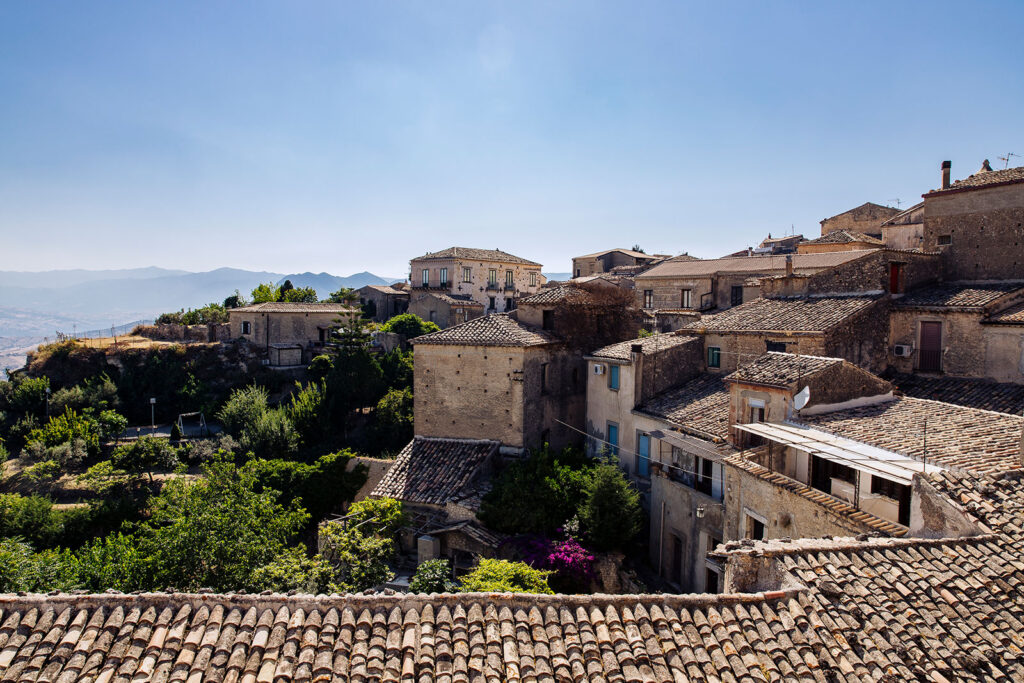
The example of Favara is remarkable, but its starting point already had some advantages: the Moorish-styly courtyards in Favara’s historic centre, and its proximity to Agrigento …  

Villages to be restored do not all start from the same conditions of fascinating abandonment and decay wrapped in brambles that conceal extraordinary beauty.
However, the intensity of a suspended soul exist in all centres that were once inhabited: a hidden soul, sometimes deeply concealed by ‘uglyness’. I also believe it is an advantage to work on places where beauty is more hidden. In such cases, research can free itself from the constraints of the Soprintendenza Archeologia, Belle Arti e Paesaggio, but above all from certain cultural approaches that do not allow for the new, or take into account the unpredictability of a design thinking shaped by landscape and communities.

Our project, Invisible Mediterranean(s), has the unique merit of revealing the beauty behind ugliness, without fearing to engage with visions closer to a scenario of desolation that to the enchanted forest of Sleeping Beauty.
All of this is the authentic contemporary South: a South that coexists with ugliness and, in turn, coexists with magnificent landscapes, tongues of sea and light. It is a reality that must be valued and cannot be ignored, because it is within it that communities live – memory of the past and energy for the future, the true strength of the South.
It is the immaterial dimension that filters the beauty of landscapes and villages, making everything clear and more legible, beyond the stereotype of the postcard image.
The architect’s work thus becomes more difficult, as it requires the reconstruction of the immaterial dimension of territories, often suffocated by labels and narratives that have distorted their soul.

In this balance between needs and desires, time plays an essential role.
The time of South is different, but it is not slower, as is often said. It is a non-linear time, made of compressions and dilations: at times it condenses rapidly, at others it settles. Actions combine according to this temporal balance, from which design action emerges.
More than ever today, architecture must step down from the pedestal, be courageous, take risks, and accept even the possibility of error.

Photo by Stefano Anzini.
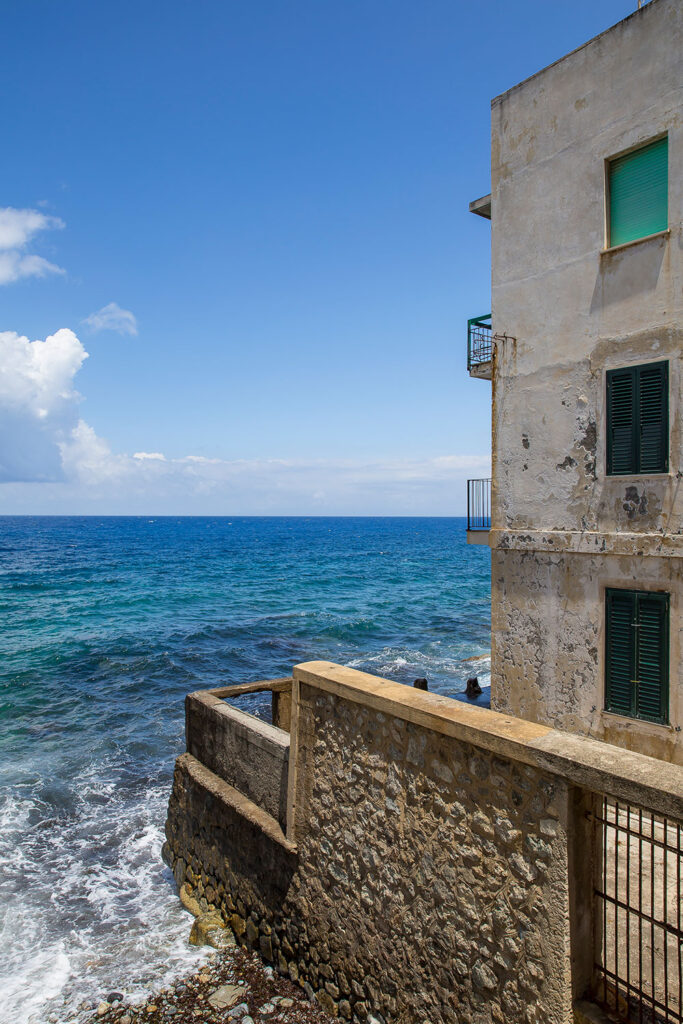
medinv-journal_calabria-9.jpg

THE STRAIT BRIDGE AND THE MUSEUM OF THE SEA BY ZAHA HADID COULD TRANSFORM SOUTHERN ITALY INTO A DYNAMIC SOUTHERN EUROPE AND A DRIVING NORTHERN HUB FOR AFRICA AND THE EAST with Salvatore Vermiglio

It is not a provocation, according to Salvatore Vermiglio: the invisible reveals itself through a comprehensive strategy of emancipation from outdated and worn-out models. The South, and Calabria region in particular, are vibrant and full of energy.

The emerging – albeit slow – process of restoring architecture to its role as an urban and social driving force, as a means of strengthening communities and as an engine for collective progress, represents and extraordinary opportunity for the entire country, for our South, and for supporting, guiding, and assisting both national and local politics.
The questions and reflections awakened by the pandemic have, as an initial reaction, turned the spotlight onto Italy’s beautiful yet invisible places. To make our places truly accessible and enjoyable, architecture and politics must work together – and quickly: without roads without infrastructure, these invisible places cannot be reached.

Building the bridge across the Strait or the tunnel beneath it (interchangeable in terms of connection, though certainly not in terms of architecture, engineering, and impact) is an important choice for opening up to the world and to Italy a closed-off territory that would undoubtedly undergo profound transformation, altering geographical, environmental, and socio-economic balances. Something would be lost (a great deal, perhaps?), but much would also be gained. Our South would become a strong South, with a decisive voice on the economic and political stage – a new hub between Africa, the East, and Europe. An infrastructure network serving the hypothetical bridge would generate economic value and unlock the cultural and tourism potential of our territories. Architecture, fundamental in this process, would have the task of guiding a conurbation protected from degrading physical contamination – in terms of construction, urban planning, and infrastructure.

In summary and simplifying the issue, the point is that if the bridge is not built, the essential infrastructure will not be developed – both those within the regions and those connecting them to Rome and the rest of Italy. The urgency of the bridge, together with a coordinated and parallel project linking the bridge and infrastructure development, means transforming Sicily and Calabria into Europe. Conversely, stepping back from the commitment to build the bridge would mean remaining stagnant,. anchored to that prefabricated vision of the South, while denying its European and global potential.

Photo by Stefano Anzini.

Denying the bridge means remaining invisible. The invisibility of a territory is not a protection of its beauty, but rather a detriment to its enhancement and dissemination. A powerful parallel, despite its harshness and discomfort, is the contrast between expansion and contraction. The risk of contraction is extremely high and,. in a global context that tends toward expansion and integration, it increases the danger of permanent exclusion from development processes. To counter contraction, it is essential to direct investments towards schools and both physical and digital infrastructure. Cultural and physical depopulation is a serious form of contraction, and education – together with awareness of the value of the territory – is the only real possibility for reversing the course of abandonment.

How can a pragmatic and operational vision be reconciled with positions of ‘intellectual and protective hesitation’, discreet enhancement, and slow-paced development?
Ours – especially Calabria’s – is an undeserved invisibility. I believe that bringing greater attention to the territory, even through bold and powerful attractions, is a crucial step toward restoring balance between what is visible, what remains invisible yet deserves to be revealed, what can remain invisible (delicate and unique parts of the territory), and even what we may not wish to look at.
Haha Hadid’s project for the Museo del Mare could become such a powerful attraction, beyond the architectural and cultural controversies surrounding it. In this regard, as the Order of Architects, we have committed ourselves to contributing to the public debate, and we have created a synergy with the municipal administration of Reggio Calabria for the realization of the Museo del Mare.

Bringing to light the richness of Reggio Calabria and strengthening the university system so that it can serve as an attractive hub not only for the South, but for all of Europe as well – given the undeniable uniqueness of our heritage – could prove effective, just as it has for other cities, Ferrara for example, also acting as a driving force for urban renewal in the form of a university city, helping to reverse the processes of abandonment and depopulation.

In this vision, villages – no longer isolated entities defined solely by their uniqueness and beauty – could benefit from a network capable of supporting their immense potential. A village is not a consumer product. It makes no sense to speak of villages in a generic and interchangeable way, as a thought Tuscany could be swapped with Liguria, or Liguria with Calabria. In many of our villages there are not even emergency medical services, assuming one can actually reach team. Nor is there fiber-optic internet access, assuming it is even possible to buy groceries without embarking on expeditions that consume an entire day.

What is the operational path to follow?

The first step is to abandon local rivalries between Sicily and Calabria and work together to bring priorities and intervention strategies to the attention of lawmakers. Let us raise our heads again, especially now, after COVID – which, despite the harshness of loss, the severity of illness, and the economic devastation it caused, had the merit of making us aware of how strong the South truly is.
To achieve this, let us begin with architecture, assigning it a strategic coordinating role. We are no longer willing to settle.
Let us dare to make difficult choices. Let us bring architecture and infrastructure together. Let us connect the Ionian coast with the Tyrrhenian coast.
Let us think and act freely, without prejudice.
Let us accelerate.