


An anthropological reading of the Strait of Messina reveals its intangible heritage. Europe’s finis terrae, an inner landscape, a geographical singularity: this is how anthropologist and journalist Patrizia Giancotti outlines the elusive profile of a place rich in meaning. It is a place whose protection should extend beyond the beauty of its landscape to include its “volatile assets” – the intangible cultural treasures that are on the verge of disappearing.
Patrizia Giancotti recounts that anthropology has been a passion of hers since her youth, when, as a teenager, she would listen to the stories and songs of an elderly aunt from Calabria sitting by the heart, recording and preserving them in written form.
“Anthropology,” she explains, “is also the study and narration of the intangible and the invisible. It provides a textual anchor for cultural heritage that is fading away, sometimes capturing it at the very moment before it disappears.
It is not mere storytelling: it is research, carried out with scientific rigor, and the systematic organization and interpretation of findings.
Your perspective on the Strait of Messina is quite distintive. Many acknowledge the existence of an important intangible heritage there, yet they often only touch upon the subject, preferring the more concrete dimensions of history and culture. What is the immateriality of the Strait?
I believe that, in order to truly understand the Strait, an anthropological approach focused on intangible culture is essential. We are talking about a place that is remote by definition, overlooking a sea marked by a transition between continents.
It is the finis terrae of Europe.
But is it really the end?
Nothing ends at the Strait.

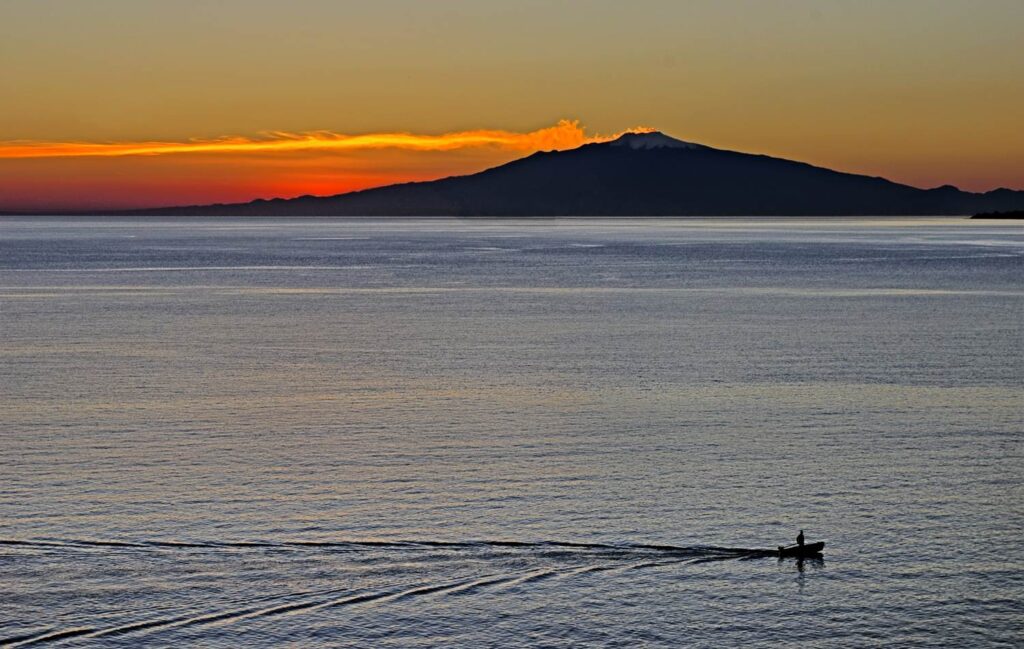
If one arrives in the right frame of mind – perhaps at sunset, after a journey across the entire length of Italy – what emerges is not a sense of ending, but rather the sight of an explosive and magnificent elsewhere: a mythical horizon, complete with snow-capped smoking volcanoes, suspended above and continually transforming across this stretch of sea. If anything ends at the Strait, we might say, borrowing the words of Fitzcarraldo as he gazes over the Amazon rainforest: “Here reality ends, and visions begin”.
By its very nature as both a divider and a connector, the Strait embodies a rite of passage. Between one shore and the other, between the continental mainland and what lies beyond, between one vision of reality and its opposite, one is alternately audience and spectator.
For centuries, this has nourished myth and ignited our imagination. Yet, in many instances, reality surpasses even the myths themselves.
The stories and practices associated with the phenomenon of the Fata Morgana, with oceanic fish, the women who were believed to cut down waterspouts, the She-Wolf, swordfish fishing, the Feast of Saint John bonfires, and the apotropaic tradition of the women of Bagnara Calabra, are also anthropological treasures – living symbolic arsenals, complete with their ritual gestures and practices. They are manifestations of the intangible rooted in the territory: treasures, immaterial extensions, “visions” of the Strait. These elements also serve an important social function: they help stitch together and preserve the bonds between the island and the peninsula.
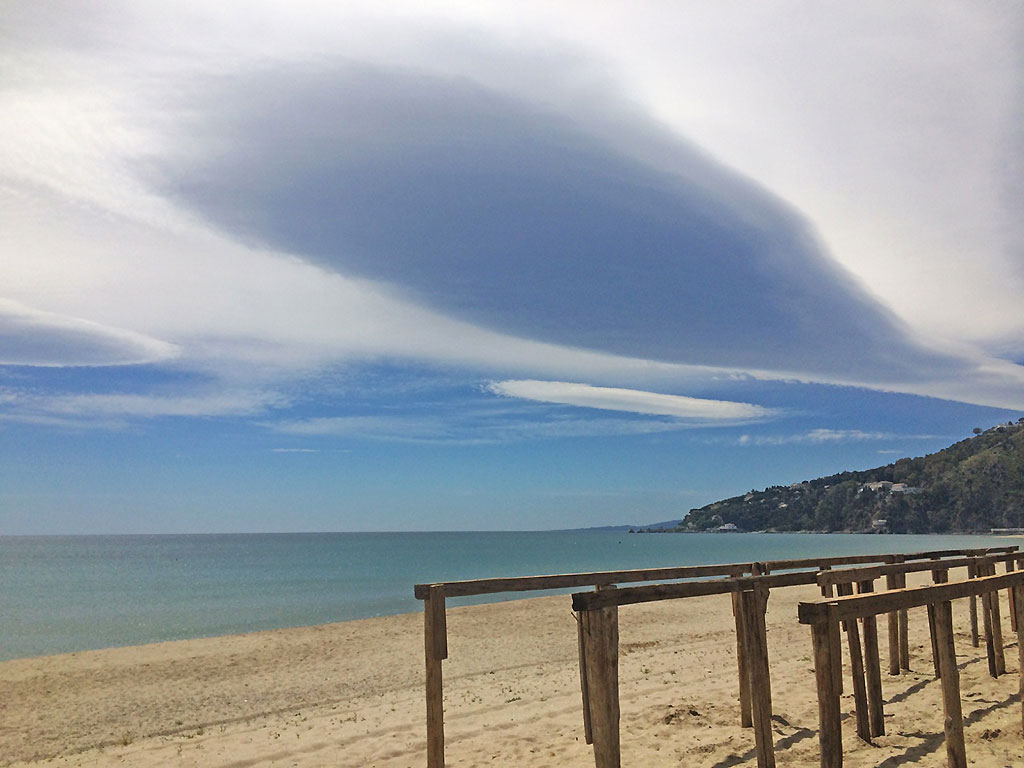
The She-Wolf, for example, is the name given to the fog that typically forms over the Strait and appears in the sky as an elongated shape, sometimes resembling an animal, causing a dramatic reduction in visibility. From this phenomenon – highly dangerous for navigation and resulting from the Strait’s unique atmospheric and geographical conditions – have emerged stories and legends, traditions, and shared practices found on both shores.
The Bonfires of Saint John have long served as a means of communication between the two shores, which share an ancient ritual tradition: the simultaneous lighting of bonfires, similar divinatory practices, nursery rhymes, and gestures of good fortune. Together, these customs testify to the deep and complex bond between Sicily and Calabria – one that has also, at times, been marked by conflict.
It should not be forgotten that the Strait is where Italy’s eastern and western coastlines converge. Here, the two seas – the Ionian and the Tyrrhenian – meet, each with distinct temperatures, marine life, currents, and depths. Flows and currents travel thousands of kilometers along the coasts of the peninsula before confronting one another at this very point, erupting into whirlpools and eddies, their power further intensified by the region’s tectonic forces.
All of this has, throughout history, nourished the myths of the Strait, endowing the place with an aura of mystery as well as a distinctive sense of power, magnetism, and energy. In many ways, it lends an uncanny quality to the cities overlooking its waters and shapes the unique character of the people who inhabit these shores.
The ancient rituals shared by the two shores reveal much about the deep and complex relationship between Sicily and Calabria – a bond that has also, at times, been marked by conflict.
These striking contrasts – between cliffs and abysses, wind and sea – give rise to extraordinary landscapes, stretching from depths of one thousand meters above sea level. These mountains emerged from the sea and still preserve its memory, with fossilized seashells scattered along their trails and the skeleton of a whale discovered at an elevation of 800 metres.
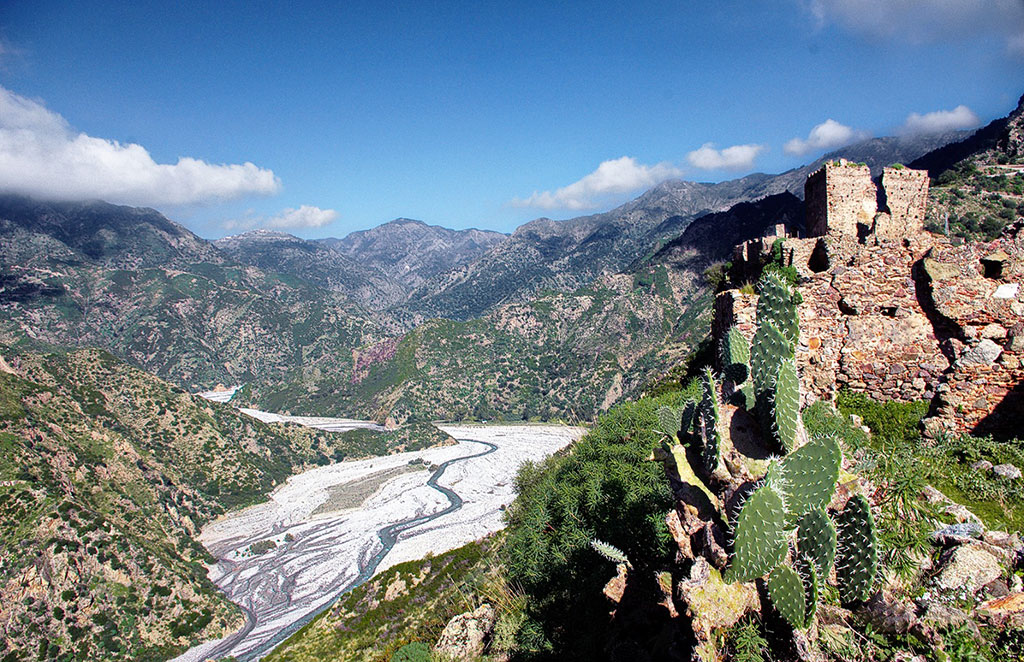
Equally remarkable are the vast, stony fiumare – the seasonal riverbeds characteristic of Calabria –with their silent sentinels: ancient remnants of the past, reclaimed by abandonment until they have become part of the landscape itself. From the rocky heights above them, the gaze extends far across the sea.
Beyond the decay and the concrete, there is this as well.
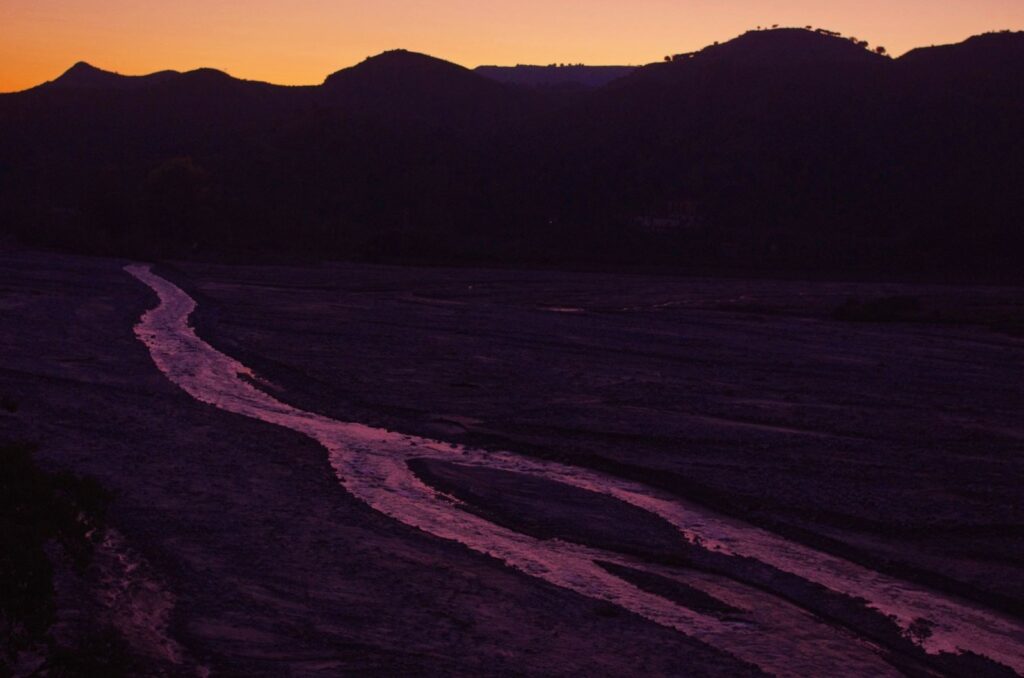
The Strait possesses a boundless frontier-like dimension, one that inspires a visionary and mysterious form of maieutics – a process of revelation and discovery that emerges through contemplation.
In the end, all of this becomes an inner landscape – something one carries within oneself, and from which it is difficult to remain distant.
The Strait’s intangible heritage is not only difficult to uncover, but also challenging to convey. Patrizia Giancotti explores the people who inhabit these landscapes – and who, in many ways, embody them – in her book Filoxenia …
The Strait’s invisibility also extends to its intangible heritage: a fragile, elusive, almost volatile legacy constantly at risk of disappearing. It is an invaluable cultural inheritance that urgently calls for preservation, documentation, and recognition. This is an anthropological imperative. It is the anthropologist’s task to “capture” this heritage before it fades away, using the tools of the discipline: film cameras, audio recorders, photographic equipment, and other means of documenting what is otherwise destined to vanish.
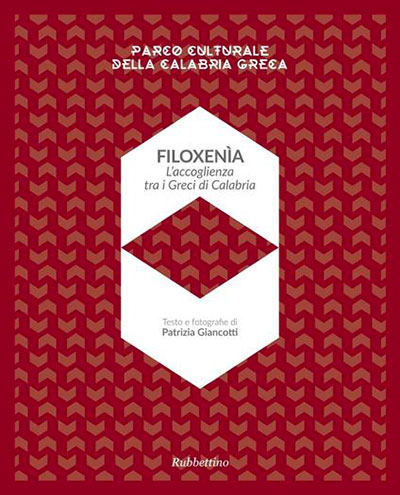
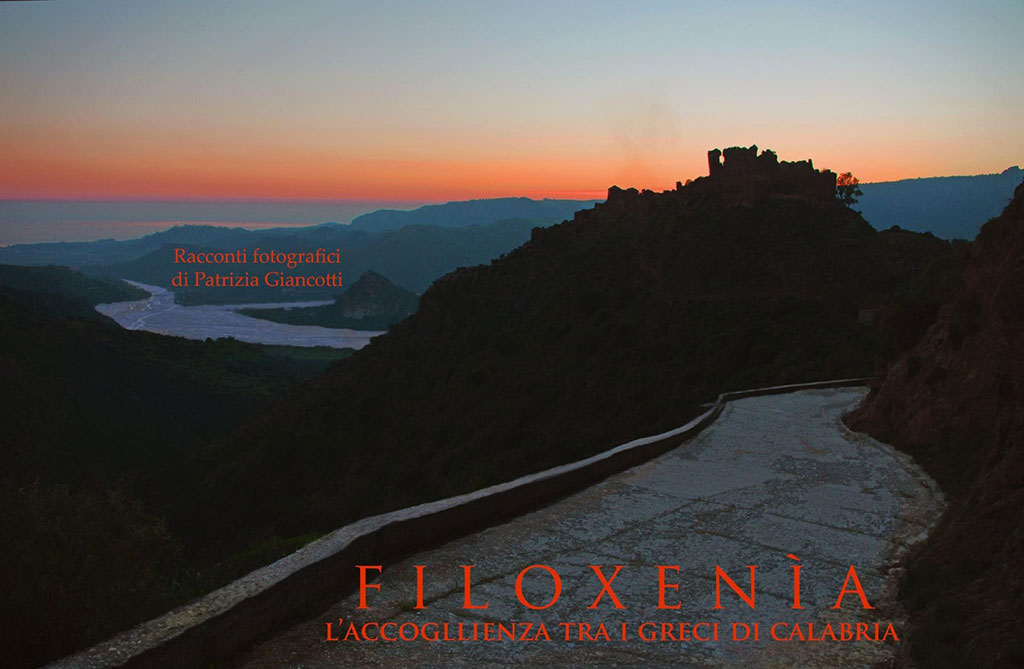
In Filoxenìa, I explored the landscapes of the Greek-Aspromonte hinterland overlooking the Strait, in search of the ancient meaning of hospitality – of the care for the stranger celebrated in Homeric tradition. Filoxenìa, the love of the outsider, stands as the very opposite of the more familiar concept of xenophobia. To pursue this search, I deliberately reversed the usual perspective, following the road signs that point inland, towards the vertical landscape and the ancient heart of Greek Calabria.
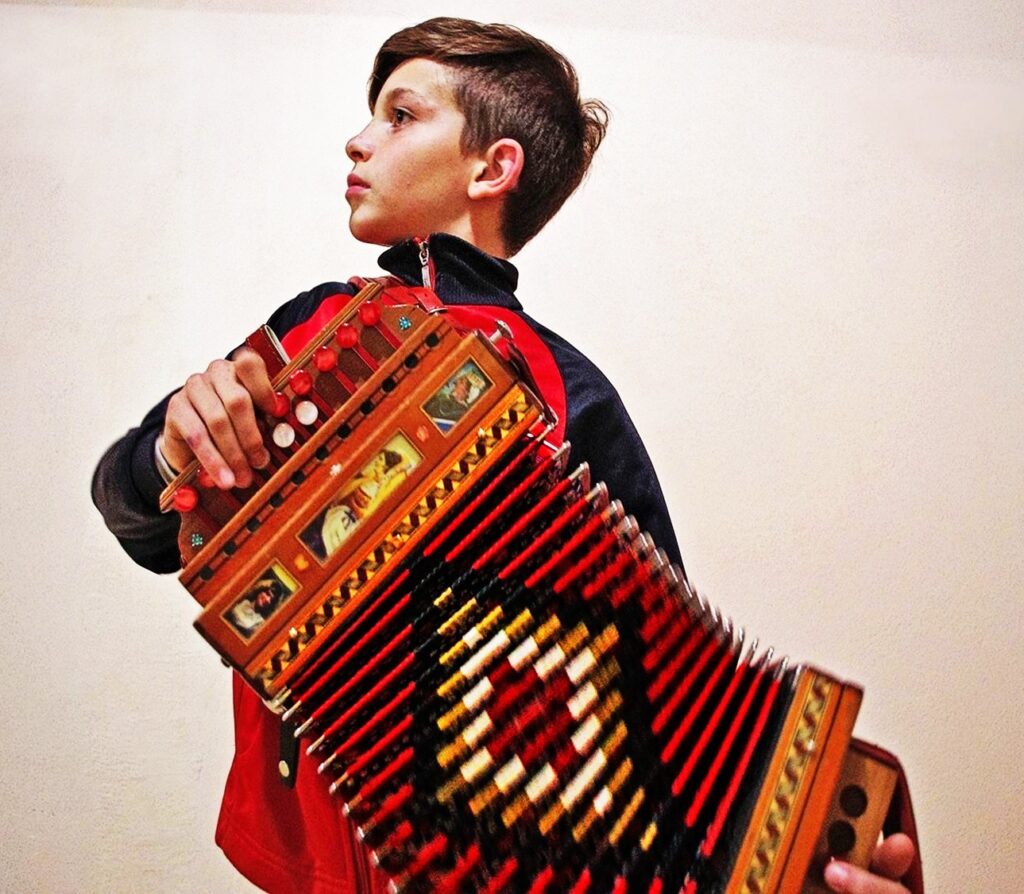
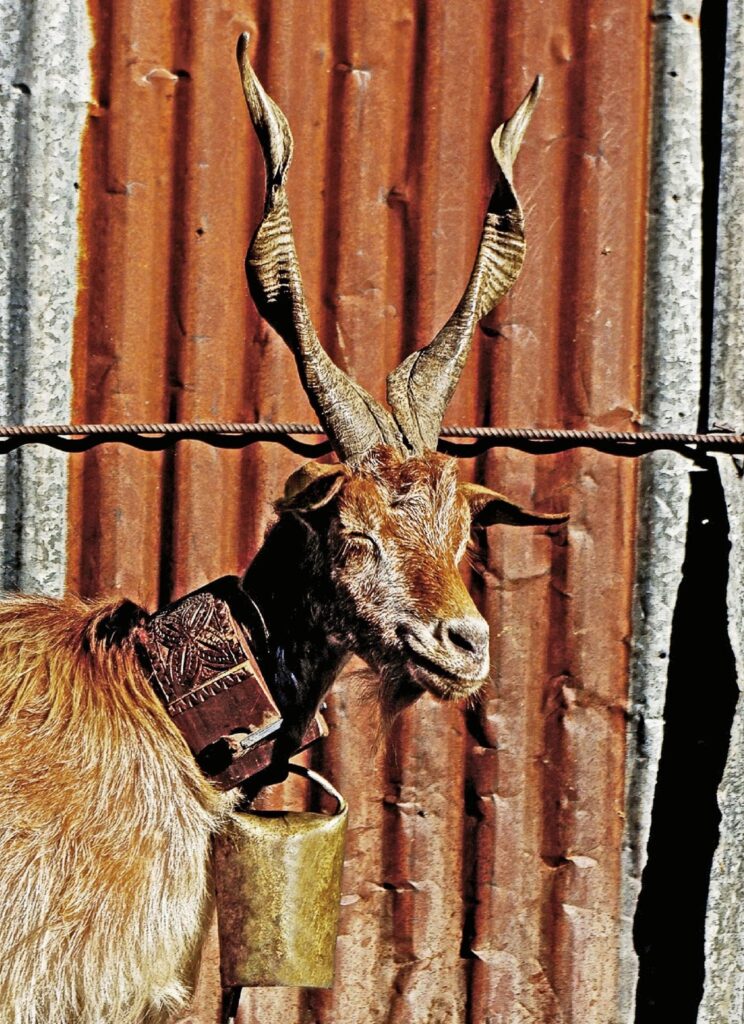
At the centre of this photographic narrative – poised between travel reportage and ethnographic research – are the people I encountered along the way: shepherds tuning the bells of their goats, guardians of the Greek language of Calabria, traditional dance masters, women preparing zippuli, scholars of Byzantine culture, musicians, elderly women who preserve ancestral knowledge, and young girls proud to call themselves Calabrian. Together, they become luminous points in an intimate geography overlooking the Strait.
How can the slow time of invisibility and immateriality be reconciled with the accelerated pace of contemporary life?
During my long anthropological research among the peoples of the Amazon, I came to realize that there are places where it seems both more realistic and more fruitful to bring the ancient and the hypermodern into dialogue, allowing each to enrich the other. This is not about indulging in nostalgia or imagining that the past was somehow better. Our own agro-pastoral past, for instance, was also marked by hardship, injustice, and inequality.
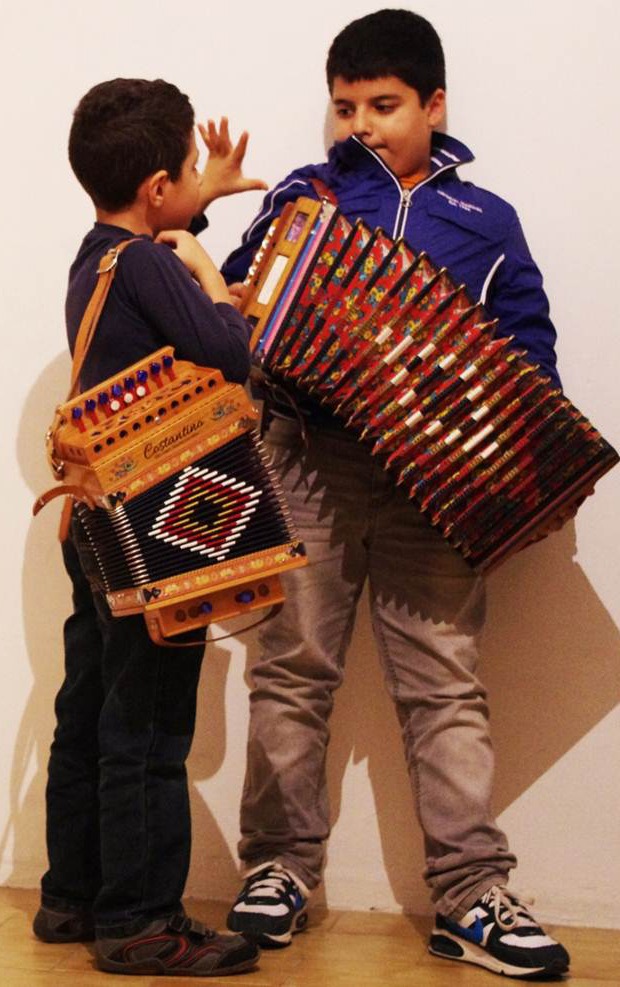
It is up to us to discern what within traditional culture can still be useful and inspiring in improving our lives, in light of today’s renewed awareness, and what is better left buried once and for all.
Can the safeguarding of such a singular experience find a home in museums?
To cease being mere repositories of dusty, dying objects – condemned to the loss of their social function – the museum must learn to tell the story of a community. Indeed, it must become a tool for community cohesion, a device through which the community itself recognizes and expresses itself: a living, articulate, and active form of memory, where objects, when present, are allowed to become spokespersons.
A museum must know how to communicate, involve, and move people, engaging new generationms to the point of making them active participants in the narrative. It must also be capable of using new technologies, but only insofar as they serve this purpose with humility and precision.
Certain values – our relationship with nature, seasonality, knowledge of the land and its plants, and above all the sense of community – are precious resources for improving contemporary life. They strengthen awareness and a sense of humanity, giving value to shared existence, to the feeling of being active, living, and even transformative agents within our surroundings.
In the Strait, I imagine a “narrating museum”: a weaving of faces and voices, of images and speaking objects, of Sirens, the Fata Morgana mirage, and women who “cut” waterspouts; stories of fishing and crossings, ritual specialists, songs, testimonies, living communities. An anthropological task force of students engaged in research and recovery of what is being lost; a fluid, evolving, immersive and open experience; a collecting device for those who wish to take part. Its aim would be not only to give value to all this, but also to capture, entangle, and draw the visitor into the “vision” of the invisible.

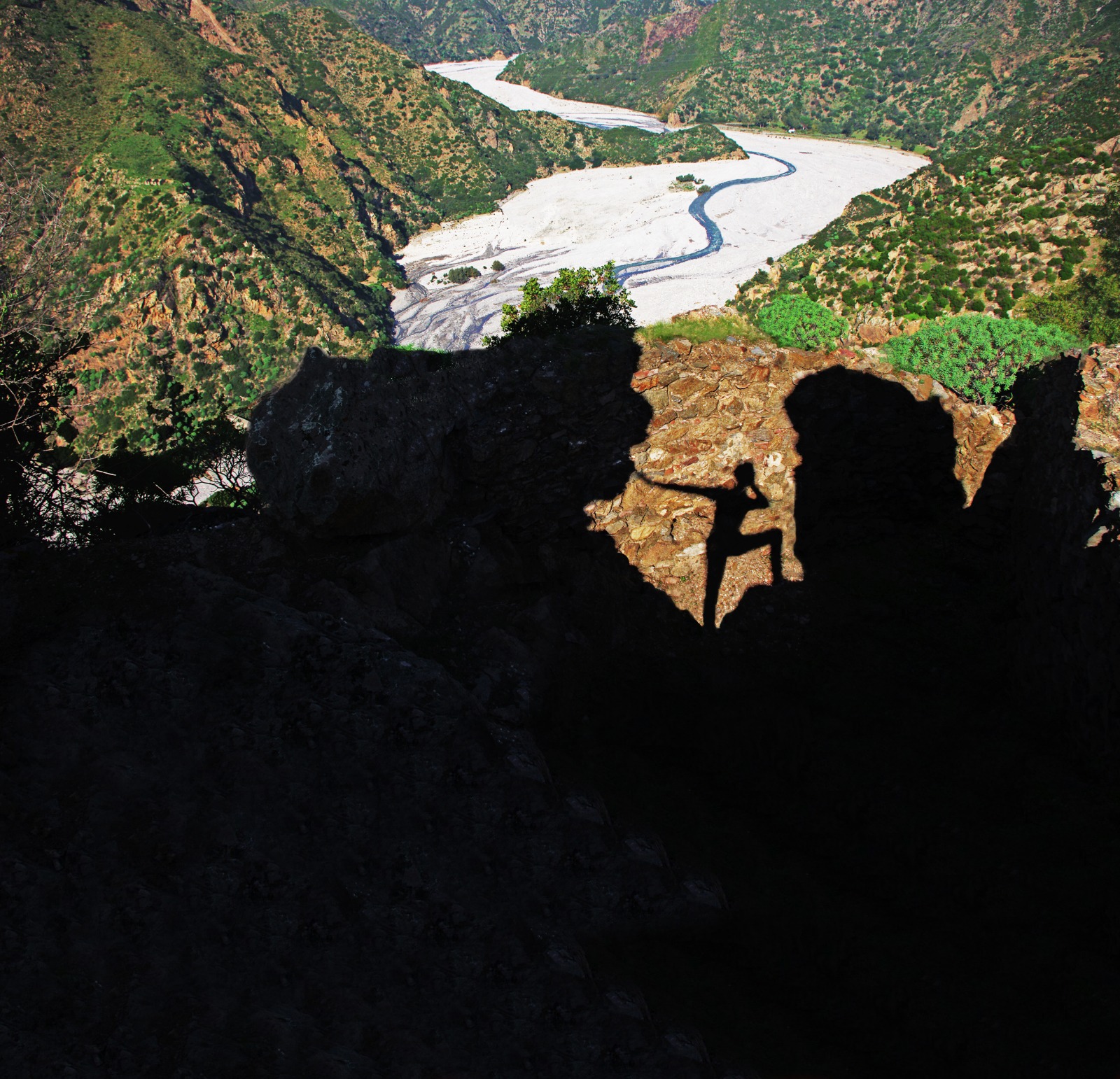
Opening: The shadow of Patrizia Giancotti on the Amendolea River, from the book Filoxenìa. Photo by the author.
Patrizia Giancotti, born in Turin to Calabrian parents, is an anthropologist, photographer, and writer. She teaches anthropology at the Academy of Fine Arts in Reggio Calabria. She is also an author and broadcaster for Rai Radio 3, and has published more than one hundred reportage pieces in major magazines, as well as produced over fifty photographic exhibitions in Italy, France, Germany, Portugal, Africa, and Brazil. She has conducted visual anthropology research in Italy and abroad, particularly in Brazil, where she lived for over ten years, receiveng the high honour of the Order off the Southern Cross (Cruzeiro do Sul) for cultural merit. In Southern Italy she has carried out visual anthropology fieldwork taht has resulted in photo-filmic and musical works. For the GAL of the Greek-Calabrian area, she conducted visual anthropology research that resulted in the book Filoxenìa – L’accoglienza tra i Greci di Calabria (Rubbettino Editore), winner of the Ali sul Mediterraneo Prize 2017, as well as in the radio documentary series for Radio3 Volti e voci della Calabria Greca. Among her travelling lecture-performances are Filoxenìa e altre storie di Calabria and Dal Mediterraneo al Brasile sulla rotta delle Sirene, presented, among other venues, at the Arena dello Stretto. For the past four years, she has been living in a small village in Calabria.