


LOCATION
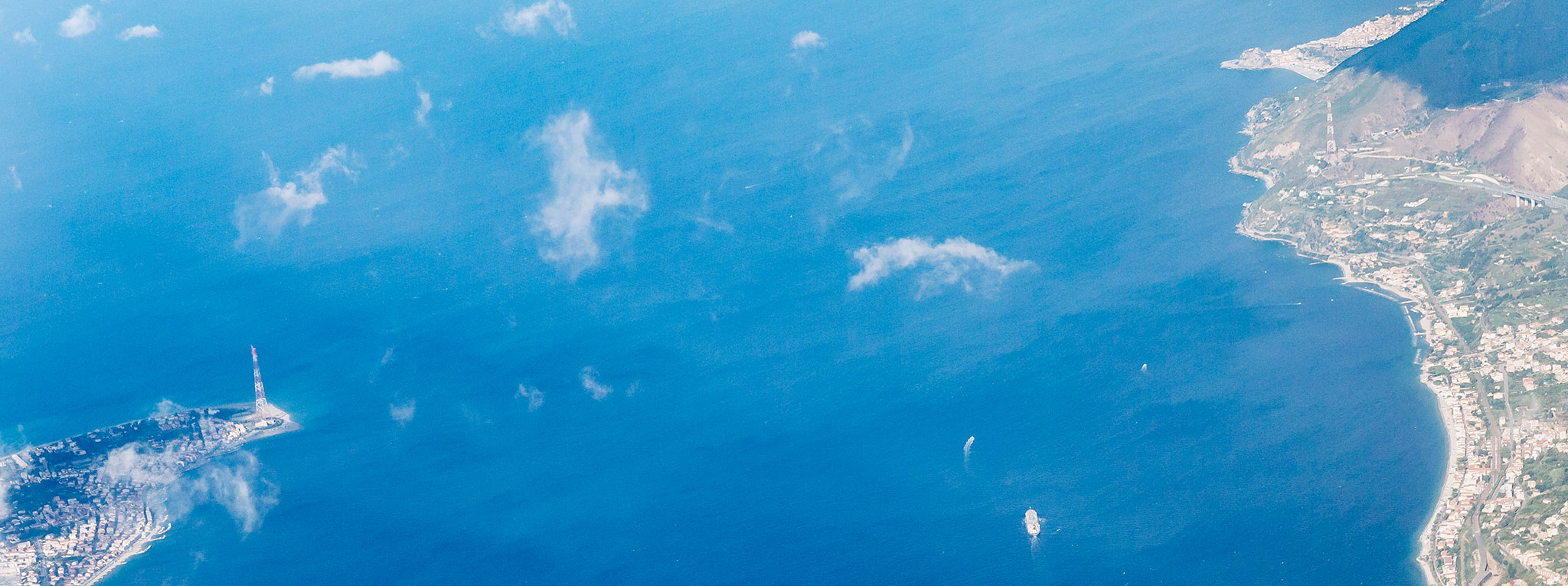
WHERE THE BIENNALE DELLO STRETTO WILL TAKE PLACE
The third edition will take place at Forte Batteria Siacci, the main exhibition venue, as in previous editions.
We will also be present at the National Archaeological Museum of Reggio Calabria, Villa Genoese Zerbi, Badolato and Tropea; in Sicily, in Messina, at Palazzo del Monte di Pietà and Fondazione Messina.
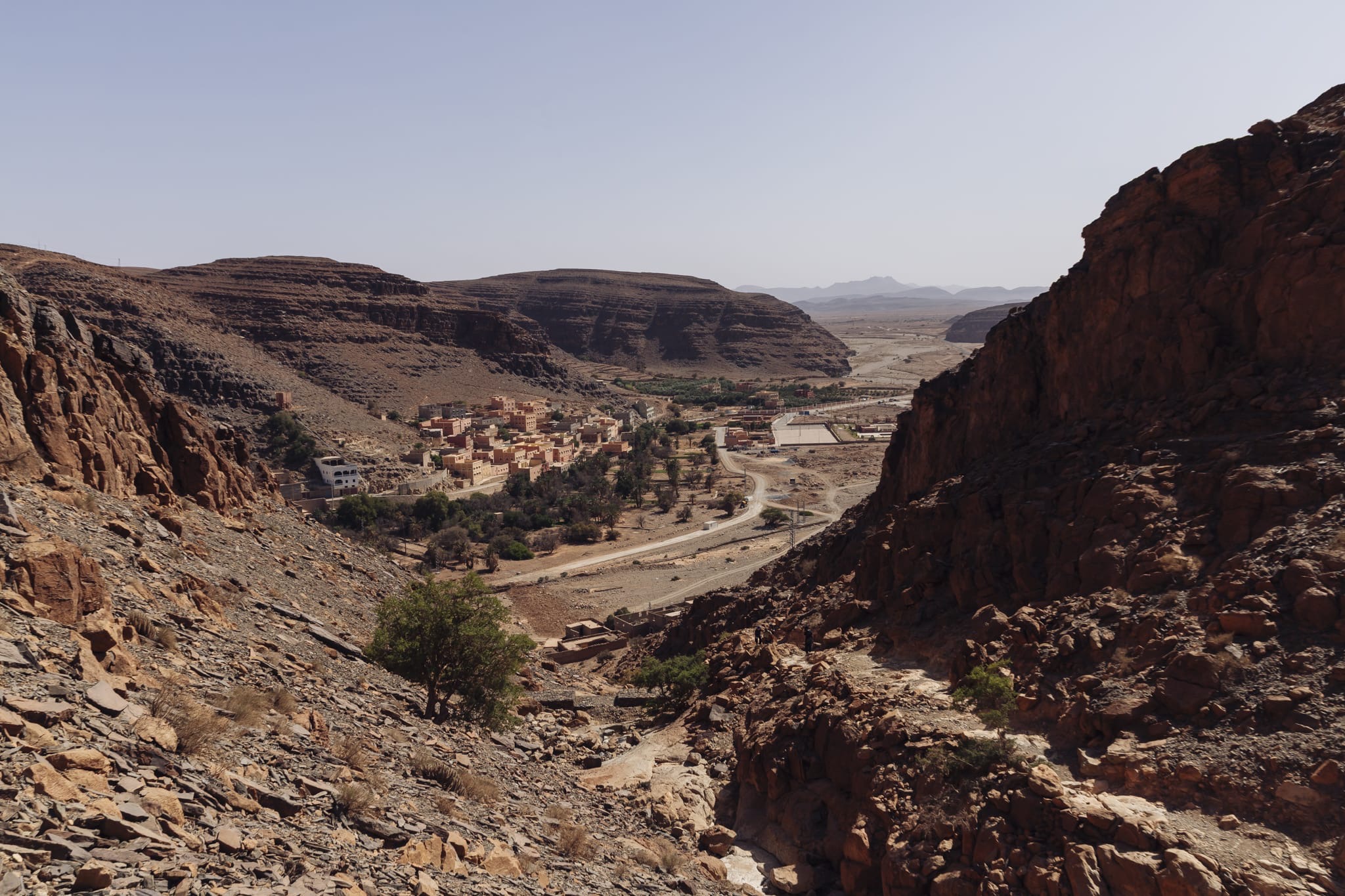
Agadir was the first stop of this edition of the Biennale: a journey through the Moroccan territory, exploring an idea of architecture understood as a responsibility towards people, the landscape and the passage of time. Here, under the guidance of artistic director Salima Naji, the project engages with contemporary transformations by drawing on vernacular techniques, local materials and traditional building knowledge.
Agadir
Located on the Atlantic coast of south-western Morocco, Agadir lies at the edge of the Souss plain, between the coast and the foothills of the Anti-Atlas. The area is characterised by the meeting of coastal, desert and mountainous landscapes, palm groves and oases, within a context marked by a strong relationship between settlements, natural resources and climatic conditions. It is precisely this territorial complexity that makes southern Morocco a privileged laboratory for reflecting on the relationship between architecture, environment and community.
Forte Batteria Siacci
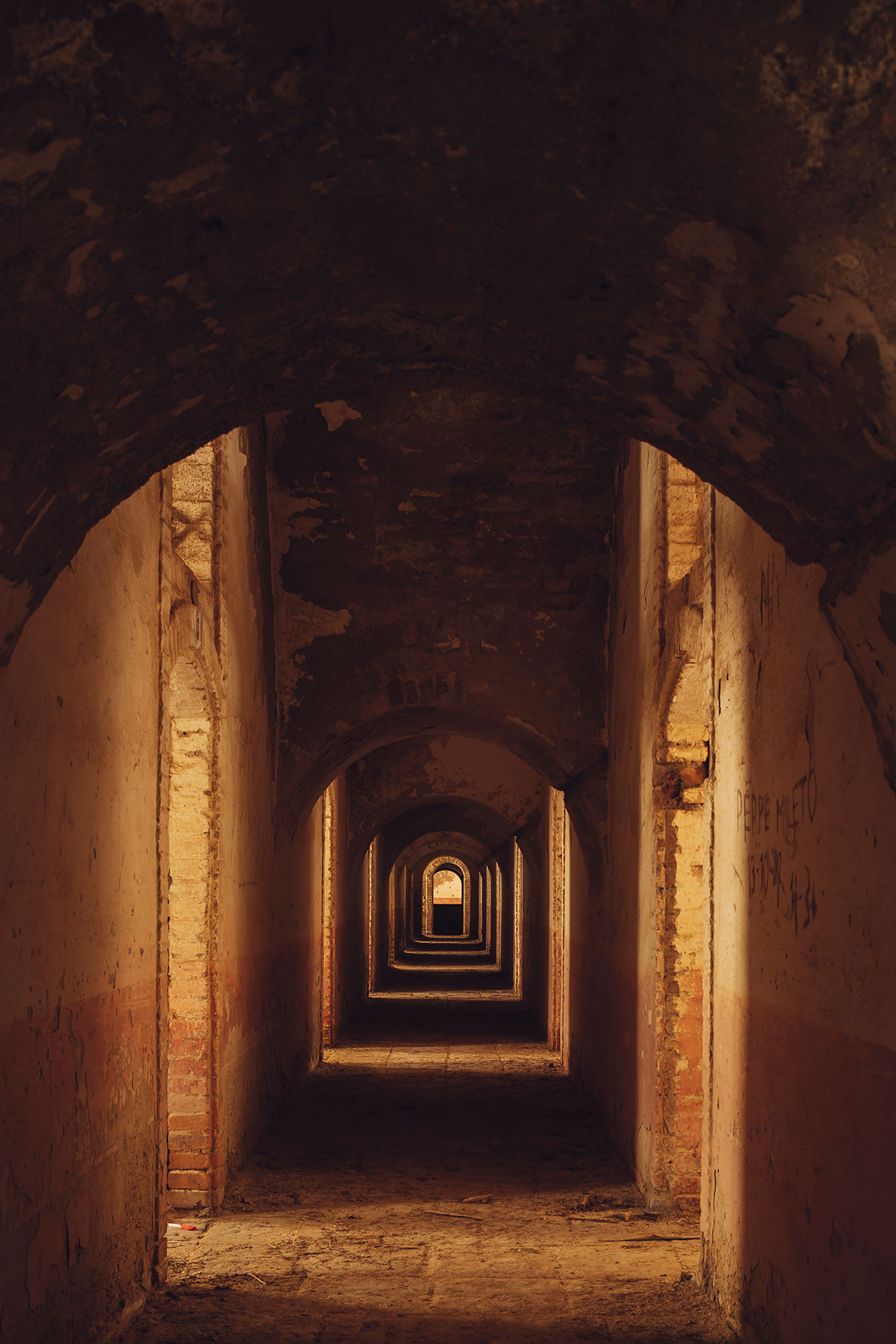
Forte Batteria Siacci in Reggio Calabria is the largest Umbertine fortification in the Strait of Messina in terms of size and architectural value. Constructed in 1888, it develops in a quadrangular plan, with the left side not aligned, a sort of rectangle trapezoid. It is characterized on the main front by a triangular figure, while a deep moat surrounds the whole building. The firing positions had to cover a range of 120° on the Strait of Messina, corresponding to the territory that goes from Villa San Giovanni to Torre Cavallo. Most of the interiors had a high level of finish, still largely legible.
The National Archaeological Museum of Reggio Calabria
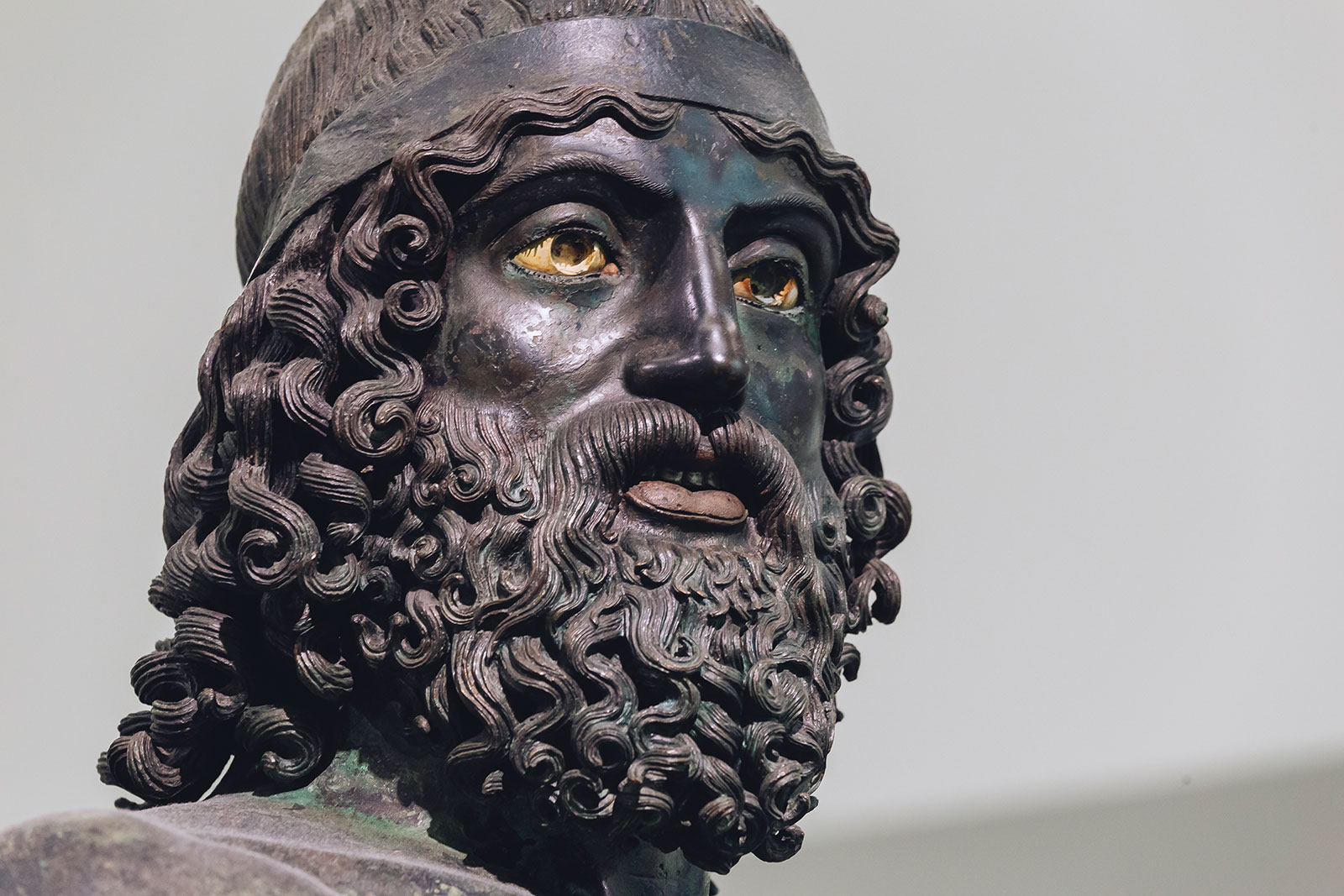
The National Archaeological Museum of Reggio Calabria, opened in 1959, has undergone major transformations over the years. In 1981, the underwater archaeology section was set up to give proper visibility to the Riace Bronzes, considered among the world’s most significant masterpieces of Greek art.
Closed for restoration in 2009, the museum was reopened to the public in 2016. The main element of the current layout is the new inner courtyard, covered by a transparent glass ceiling that naturally illuminates the atrium. The basement of Palazzo Piacentini houses two large rooms for temporary exhibitions; inside the long side corridor, there is a lapidarium. The MArRC also has an indoor archaeological area: a patch of the large Hellenistic necropolis discovered during the building’s construction.
Palazzo del Monte di Pietà
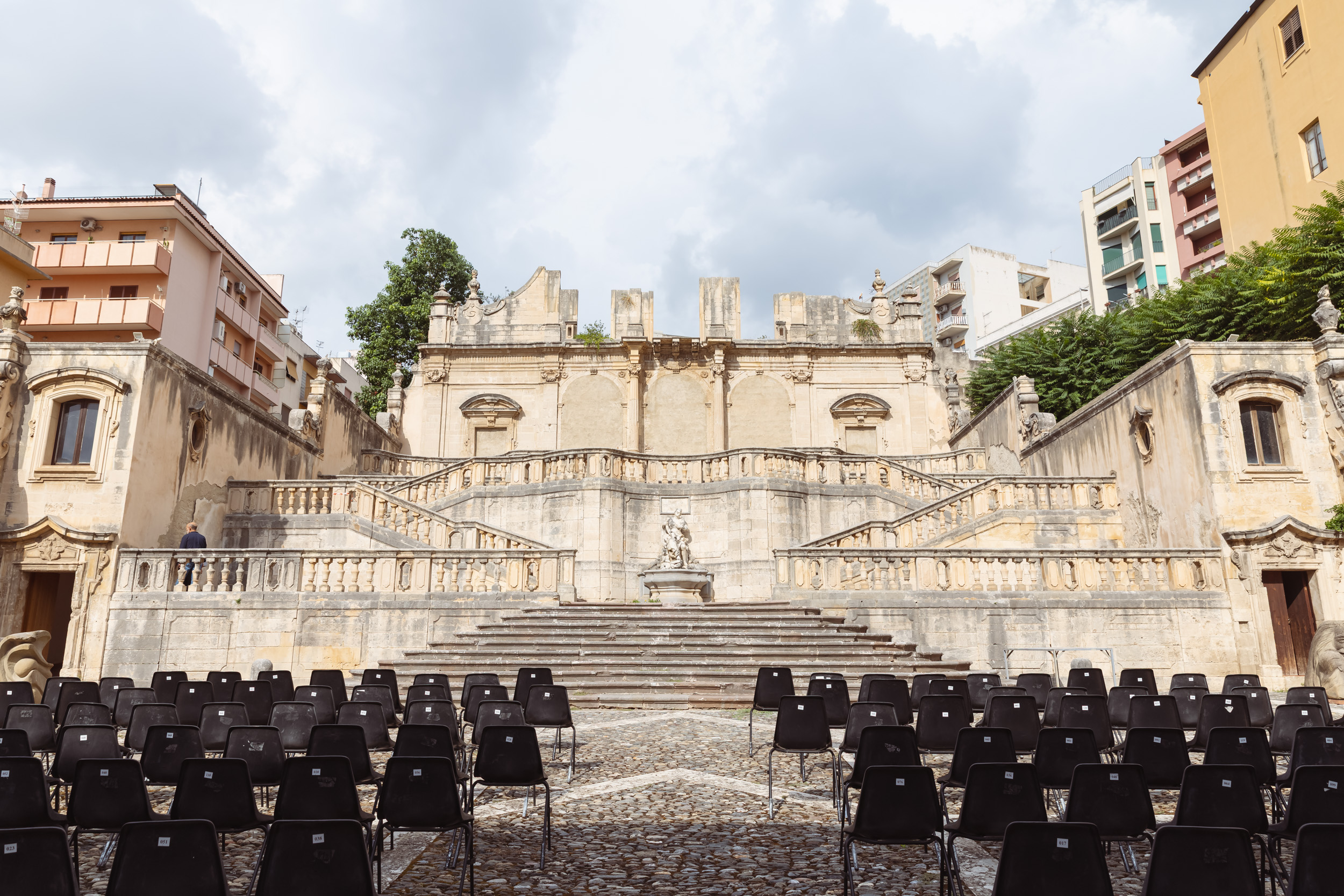
Located along the ancient Via dei Monasteri (today Via XXIV Maggio), the Monte di Pietà complex represents a key element of Messina’s urban landscape. Founded by the Archconfraternity of the Azzurri, the building has survived the 1908 earthquake in fragmented form, revealing a clear historical stratification: the Monte dei Pegni, conceived in the early seventeenth century by Natale Masuccio and extended upwards in the eighteenth century; the Church of Santa Maria della Pietà, rebuilt between the seventeenth and eighteenth centuries; and the striking courtyard with its flight of ramps, designed in 1741 by Antonino Basile. This Baroque composition connects the urban level to the elevated churchyard, embodying the confraternity’s role in artistic patronage and civic life.
Villa Genoese Zerbi
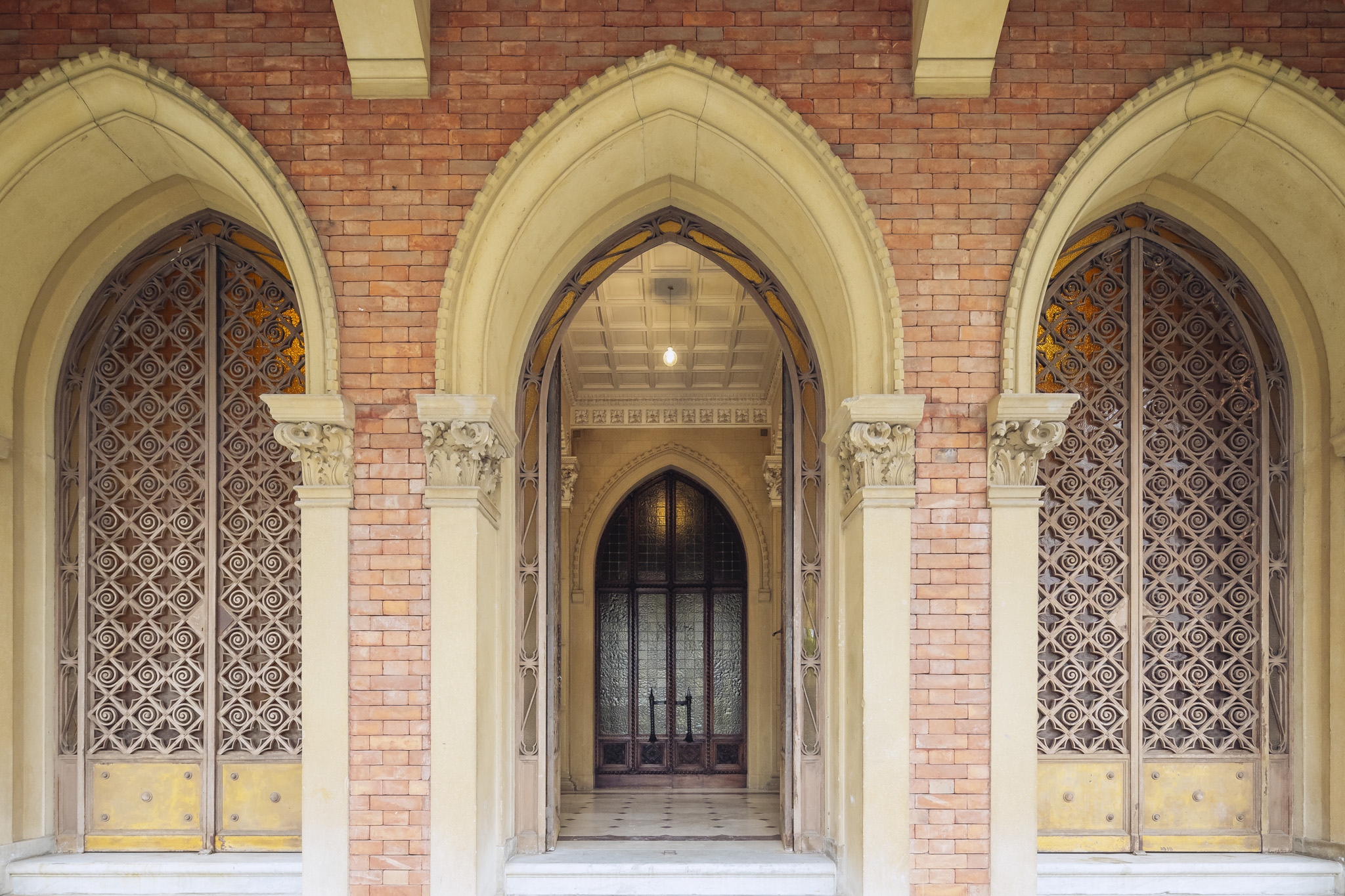
A historic residence in neo-Gothic-Venetian style, located on the seafront of Reggio Calabria, facing the Strait of Messina. Built at the end of the 19th century and renovated in 1925 after the 1908 earthquake, the villa is characterized by elegant double windows, stone decorations, and a picturesque garden. Once the private residence of the Zerbi family, it is now the venue for cultural events, exhibitions, and artistic perfomances, and is one of the most captivating architectural symbols of the city.