
Category: journal
medinv-journal_calabria-9.jpg

THE STRAIT BRIDGE AND THE MUSEUM OF THE SEA BY ZAHA HADID COULD TRANSFORM SOUTHERN ITALY INTO A DYNAMIC SOUTHERN EUROPE AND A DRIVING NORTHERN HUB FOR AFRICA AND THE EAST with Salvatore Vermiglio

It is not a provocation, according to Salvatore Vermiglio: the invisible reveals itself through a comprehensive strategy of emancipation from outdated and worn-out models. The South, and Calabria region in particular, are vibrant and full of energy.

The emerging – albeit slow – process of restoring architecture to its role as an urban and social driving force, as a means of strengthening communities and as an engine for collective progress, represents and extraordinary opportunity for the entire country, for our South, and for supporting, guiding, and assisting both national and local politics.
The questions and reflections awakened by the pandemic have, as an initial reaction, turned the spotlight onto Italy’s beautiful yet invisible places. To make our places truly accessible and enjoyable, architecture and politics must work together – and quickly: without roads without infrastructure, these invisible places cannot be reached.

Building the bridge across the Strait or the tunnel beneath it (interchangeable in terms of connection, though certainly not in terms of architecture, engineering, and impact) is an important choice for opening up to the world and to Italy a closed-off territory that would undoubtedly undergo profound transformation, altering geographical, environmental, and socio-economic balances. Something would be lost (a great deal, perhaps?), but much would also be gained. Our South would become a strong South, with a decisive voice on the economic and political stage – a new hub between Africa, the East, and Europe. An infrastructure network serving the hypothetical bridge would generate economic value and unlock the cultural and tourism potential of our territories. Architecture, fundamental in this process, would have the task of guiding a conurbation protected from degrading physical contamination – in terms of construction, urban planning, and infrastructure.

In summary and simplifying the issue, the point is that if the bridge is not built, the essential infrastructure will not be developed – both those within the regions and those connecting them to Rome and the rest of Italy. The urgency of the bridge, together with a coordinated and parallel project linking the bridge and infrastructure development, means transforming Sicily and Calabria into Europe. Conversely, stepping back from the commitment to build the bridge would mean remaining stagnant,. anchored to that prefabricated vision of the South, while denying its European and global potential.
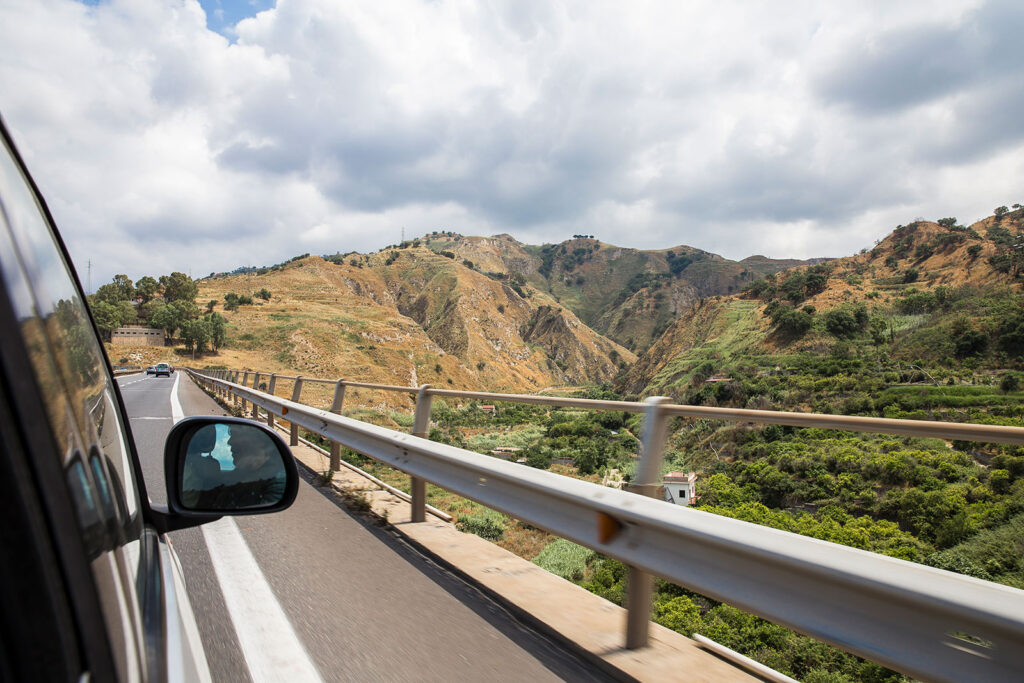
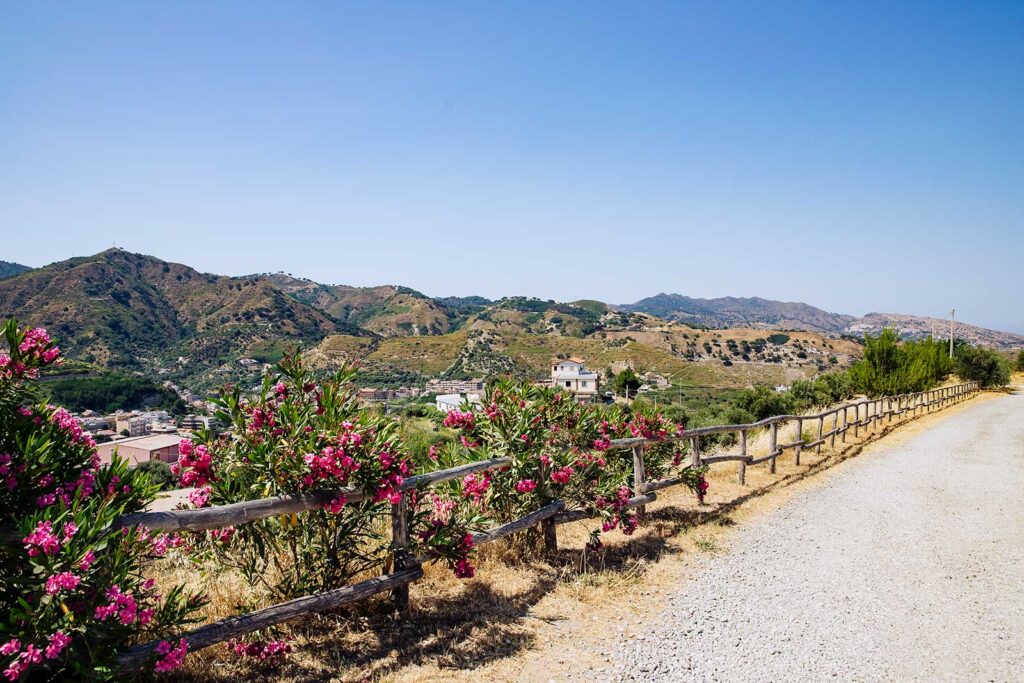
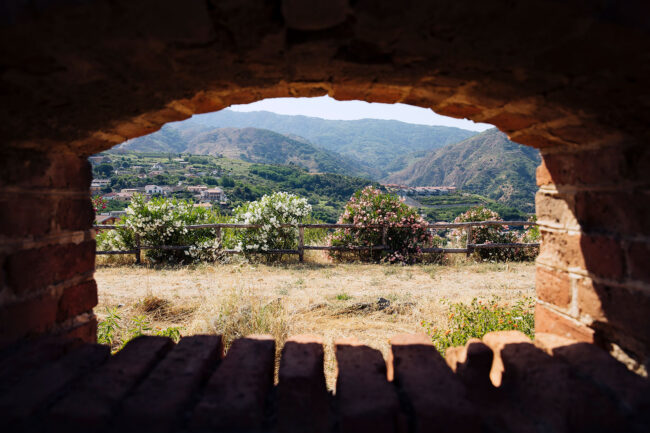
Photo by Stefano Anzini.

Denying the bridge means remaining invisible. The invisibility of a territory is not a protection of its beauty, but rather a detriment to its enhancement and dissemination. A powerful parallel, despite its harshness and discomfort, is the contrast between expansion and contraction. The risk of contraction is extremely high and,. in a global context that tends toward expansion and integration, it increases the danger of permanent exclusion from development processes. To counter contraction, it is essential to direct investments towards schools and both physical and digital infrastructure. Cultural and physical depopulation is a serious form of contraction, and education – together with awareness of the value of the territory – is the only real possibility for reversing the course of abandonment.

How can a pragmatic and operational vision be reconciled with positions of ‘intellectual and protective hesitation’, discreet enhancement, and slow-paced development?
Ours – especially Calabria’s – is an undeserved invisibility. I believe that bringing greater attention to the territory, even through bold and powerful attractions, is a crucial step toward restoring balance between what is visible, what remains invisible yet deserves to be revealed, what can remain invisible (delicate and unique parts of the territory), and even what we may not wish to look at.
Haha Hadid’s project for the Museo del Mare could become such a powerful attraction, beyond the architectural and cultural controversies surrounding it. In this regard, as the Order of Architects, we have committed ourselves to contributing to the public debate, and we have created a synergy with the municipal administration of Reggio Calabria for the realization of the Museo del Mare.

Bringing to light the richness of Reggio Calabria and strengthening the university system so that it can serve as an attractive hub not only for the South, but for all of Europe as well – given the undeniable uniqueness of our heritage – could prove effective, just as it has for other cities, Ferrara for example, also acting as a driving force for urban renewal in the form of a university city, helping to reverse the processes of abandonment and depopulation.

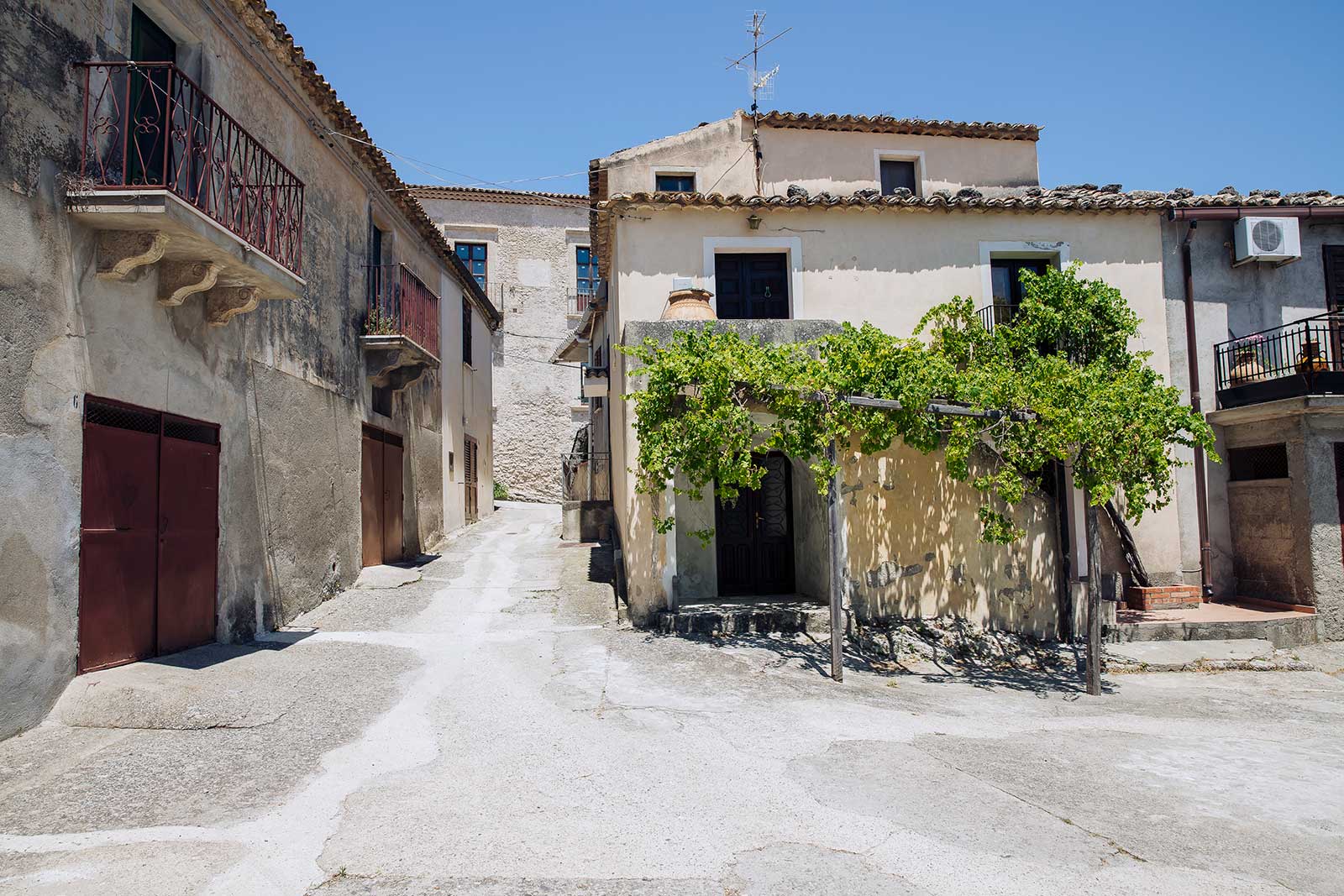
In this vision, villages – no longer isolated entities defined solely by their uniqueness and beauty – could benefit from a network capable of supporting their immense potential. A village is not a consumer product. It makes no sense to speak of villages in a generic and interchangeable way, as a thought Tuscany could be swapped with Liguria, or Liguria with Calabria. In many of our villages there are not even emergency medical services, assuming one can actually reach team. Nor is there fiber-optic internet access, assuming it is even possible to buy groceries without embarking on expeditions that consume an entire day.

What is the operational path to follow?

The first step is to abandon local rivalries between Sicily and Calabria and work together to bring priorities and intervention strategies to the attention of lawmakers. Let us raise our heads again, especially now, after COVID – which, despite the harshness of loss, the severity of illness, and the economic devastation it caused, had the merit of making us aware of how strong the South truly is.
To achieve this, let us begin with architecture, assigning it a strategic coordinating role. We are no longer willing to settle.
Let us dare to make difficult choices. Let us bring architecture and infrastructure together. Let us connect the Ionian coast with the Tyrrhenian coast.
Let us think and act freely, without prejudice.
Let us accelerate.
medinv-journal_sicilia-8.jpg

UNVEILING THE INVISIBLE IS AN EXERCISE THAT OFTEN DEPENDS ON ACCESS TO PLACES: A RIGHT DENIED IN SOUTHERN ITALY with Francesco Miceli

Francesco Miceli, President of the Order of Architects of Palermo, tells us how architecture, historic villages, the territory, and all enhancement projects clash with the harsh reality of inadequate infrastructure. This is not (just) a problem, but a denied right to access and enjoyment

Let us start from a basic assumption: Southern Italy is a resource, thanks to the quality of its territory and the extraordinary richness of its historical and cultural heritage (all Souther regions have a high density of cultural assets, as recorded by ISTAT according to their size). Unfortunately, despite this immense heritage, no effective policy is being implemented to properly protect and enhance it, confirming Italy as one of the least generous countries in Europe in terms of cultural funding. There is no real strategy for promotion or preservation, nor any effort to build a network capable of connecting these scattered small-scale realities and strengthening their interaction and visibility toward the outside world.  
Isolated communities live out their fate either as centers of excellence (in some cases) or, more often, of abandonment and decay. They fail to recognize the affinities shaped by history – from their Greek roots to Arab and Norman influences – because there is no physical relationship, no real connection linking them together.
The cultural heritage of Southern Italy, like that of any other place, cannot simply be reduced to a list of sites: it must be integrated into a broader territorial policy strategy that uses culture also (and not only) as a driver for intelligent tourism. Therefore, beyond actions focused on individual sites, it is necessary to intervene at the territorial level in order to guarantee accessibility to these cultural assets.
Accessibility to cultural heritage, as well as to public spaces, is closely tied to the issue of citizens’ rights. Developing infrastructure across the territory means enabling every individual citizen to access it. The lack of accessibility represents a denial of the right to enjoy historical and cultural heritage.

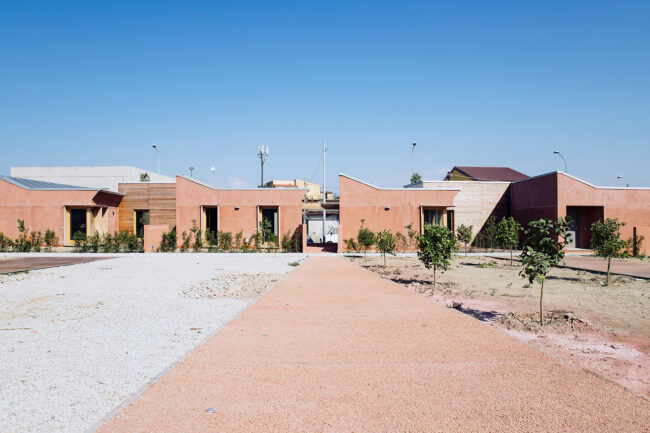
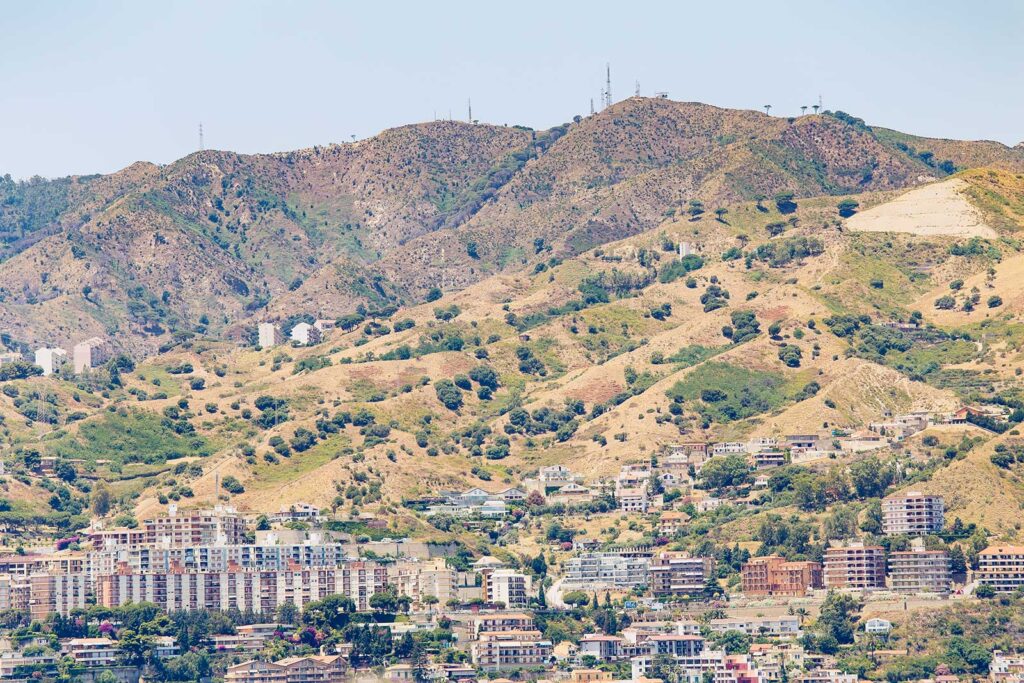
Photo by Stefano Anzini.

If we begin from the issue of rights – the right to experience the city, its historical heritage, and access its services – we open up an entire range of further questions, because this broadens the reflection on what cities, smaller towns, and villages are today.
Cities emerged and developed throughout the twentieth century primarily as places of consumption. The logic of the modern city is not centered on the citizen, but rather on a concentration of people often coming from other contexts, sometimes rural ones.
Economic forces concentrate people where opportunities to “consume” are created.
The spread of COVID-19 is prompting a reinterpretation (though not necessarily a transformation) of the city, which can instead become a place of cultural innovation and the exercise of rights.
A process of reconfiguration in this sense – interpreting the city as an element of civilization rather than merely a place of consumption – would mean rewriting and adapting the prevailing models adopted up to now, starting with architecture itself and restoring to it a strategic and political role.

Over the past ten years, three adjectives have progressively been associated with the city, almost with a cathartic function: smart, resilient, and sustainable. The so-called “smart city” is, in reality, a rather aseptic expression aimed at governing the logic of consumption in a different way; “resilient” and “sustainable” complete this semantic triad.
We must ask ourselves whether the purification of the city truly passes through these three meanings, or whether they are simply linguistic expedients used to disguise an identity that has, in fact, remained unchanged.  The reflection is broader: the rethinking of the urban center involves a new form of urban physiliogy, particularly in Southern Italy, where environmental sustainability has always compensated for unsustainable building practices, and resilience is part of the South’s very DNA, given its ability to recover from earthquakes, structural decay, and floods over time.
Certainly, today a new awareness is emerging, and digitalization has become a key element in the organization of the city. Within this transformation, architecture must confront its own time, attempting to provide answers.

Unveiling the invisibility of the places in our Mediterranean is one of the possible responses.  
Invisible Mediterranean(s) is an important initiative because it tells the story of an unseen South – not an easy one, but one with extraordinary cultural, tourist, and landscape potential.
It is an exploration that starts from the ground up, investigating territorially marginal realities that are nonetheless rich in content and in unusual, almost forgotten models, giving value to what can no longer be found elsewhere.
Sicily, in particular, holds strong potential to translate these models into a working hypothesis.
The three “catartic” words in the South become everyday acts of survival.
An exceptionally powerful testimony of this was given by Pier Paolo Pasolini in “La lunga strada di sabbia”, the diary of a journey in 1959 along the Italian coasts from Ventimiglia to Palmi, where, upon reaching the South, he describes expectation and joy at their highest intensity. The route toward Vallo Lucano leads him to write: “Here beauty directly produces wealth. People live in a kind of quiet ease, letting beauty work for them”.

Photo by Stefano Anzini

However, the most authentic bond with the territory is increasingly difficult to maintain for smaller towns: the relationship between urbanity and rurality becomes ever more complex, to the point of being torn apart and distorted. Palermo is a paradigmatic example of this condition. The interweaving of agricultural fragments within the outskirts of the consolidated city can become a major resource. These too are invisible places – but a different kind of invisibility from that which characterizes hidden villages. They are invisible because there is no willingness to look at them, yet they are strategic for rethinking the city: not to be transformed into new building developments, but to build a connective identity and enhance their value. This means not denying environmental sustainability, the intelligence of place, or its resilience, but rather reinforcing and bringing them to light.

In the South of the Mediterranean, identity also exists in the outskirts: this is a fact that must be recognized and emphasized in order to redeem their degradation and underuse, and to extend the right to public and urban space.
Urban space is both a concept and an expanded right – an important design dimension for defining any model. It is not an independent variable, but something that deeply influences the everyday life of the individual.
In his talk on “Architettura e Salute”, delivered to the Consiglio Nazionale degli Architetti, Paesaggisti e Conservatori in July 2018, the psychiatrist Vittorio Andreoli explained with scientific rigor how human behavior is influenced by three factors: biology (the physical being, “flesh”), personality, and environment – both natural/geographical and relational – and how, for this reason, it is necessary that the natural environment and the relational environment be coeherent with one another.

All of this is architecture – architecture in Southern Italy.


medinv-journal_sicilia-9.jpg

THE MEDITERRANEAN OF THE STRAIT IS NOT CELEBRATED THROUGH STRIKING MONUMENTAL OR LANDSCAPE EPISODES; IT IS MADE OF FRAGMENTS AND GLANCES with Gaetano Scarcella

Reflections by Gaetano Scarcella, a Sicilian architect active in Messina and Nizza di Sicilia, addressing infrastructure, tourism, and education in relation to globalization

The Mediterraneans are not all the same. Perspectives and conditions change between the Atlantic Mediterranean and the Mediterranean that washes the Tyrrhenian, Ionian, or Adriatic coasts of Italy. Invisible Mediterranean(s) – Journey Across the Strait III – focuses on the strip of sea and the territories between the extreme edge of Calabria and the welcoming, outstretched cusp of Sicily.
This territory is so distinctive that, to truly understand it, one must experience it slowly – walking, lingering along a path made of diverse yet coherent fragments that together generate the uniqueness and rural character of these places. Small villages, terraces, and spaces – those of the Messina area – do not live through spectacular monumental or scenic events. Here, Time transforms from an abstract theme into a material reality measured by the speed at which places and the relationships between them were built.
Within this vision, the village embodies one of its meanings: a settlement, an extension of a settlement, or a way of living connected to the past through its relationship with the land.
Our villages were born to protect communities from medieval pirate raids, within a territorial system based on agricultural connections and the use of water resources.
Construction methods and systems of relationships were conceived according to the climatic conditions of the periods in which they emerged, when dwelling expressed different meanings and needs because domestic life was not yet the central focus of existence. 
This is the primary reason why the destiny of these villages must be understood starting from their present-day relationship with the territory, reconciling it with their historical one. Some villages, because of their landscape, architectural, or historical qualities, now exist in a postcard-like dimension. Yet not everything can adopt the traditional tourism paradigm as its model for development – either because there is no natural vocation for it, or because these places do not wish to transform themselves in that direction. For example, the Ring of Nisi is a circular network of paths connecting the four centers of a valley marked by discreet and unexpected landscapes, abandoned mills, agricultural scenery, and scattered monuments.
It is precisely here that, in recent years, spontaneous movements have emerged with the aim of promoting a quieter, research-oriented form of tourism – one that does not conform to the pre-established mental image shaped by traditional tourism models.
If it makes sense for the revival of a territory – such as the Ionian valleys of the Peloritani Mountains, the first stage of the 2020 journey – to pass also (though not exclusively) through tourism, then it is essential to find the right and respectful interpretative key, because these are still unexplored places.

The meaning attributed to tourism – de-seasonalized and made more ‘cultivated’ – must be calibrated to places not only in functional terms, but also in ways that are coherent with the temperament and vocation of local communities.
If tourism appears to be a spontaneous and straightforward opportunity for revitalizing Southern Italy, development neverthless remains dependent on three fundamental elements of growth: physical infrastructure, educational systems, and digital infrastructure. When speaking of physical infrastructure, we must move beyond the obvious refrain of simply strengthening road and railway connections. Instead, contexts should be carefully analyzed in order to identify solutions that are harmonized with the physical characteristics of each territory. When we speak of physical infrastructure, we are still living in a prehistoric age: in much of Sicily, public transportation is unusable, there is no genuine cycling network, and places of extraordinary charm – such as the Magna Via Francigena – have only been minimally enhanced. Schools, especially in Southern Italy and particularly in this South, must take on the responsibility of transmitting knowledge, awareness, and prime in local places and identities. Finally, digital infrastructure must become a means of projecting Southern Italy outward, connecting it with the rest of the world.

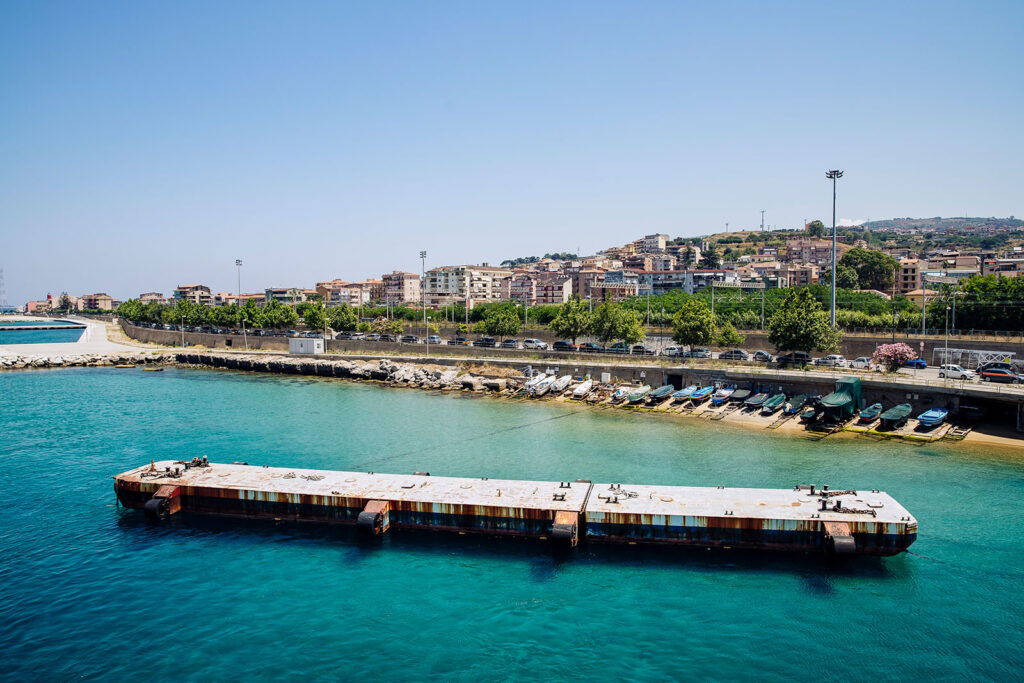
Photo by Stefano Anzini

What design strategies can be implemented to reconcile, for example, infrastructural development with the expansion of tourism?
The approach is, first and foremost, cultural: infrastructure is not meant ‘for others’, for tourists, but rather serves the needs of the territory and its communities, because the primary outcome of good physical infrastructure is the improvement of the quality of life of every individual citizen. This is not about emulating or uncritically importing Northern European or Northern Italian models. Instead, it requires analyzing the organization of local economies and working through their underlying values – including in terms of infrastructure – for example by preserving the identity of agricultural systems and highlighting the biodiversity of the landscape.

The landscape is a unique and unrepeatable product, and it is precisely from this awareness that one can work on the territory by adopting the right interpretative approach and intervening in ways that enhance its value.
Southern Italy may appear as a small and marginal fragment when viewed within the broader framework of globalization, yet its renewal could emerge precisely in opposition to the cultural models of the Anglo-Saxon world, which, in 2020, revealed the profound limitation and inability to replace the verb to consume with the verb to live.
The South could become the counterpoint to ruthless globalization, absorbing only its positive aspects and finally emerging as a truly competitive cultural and territorial model.

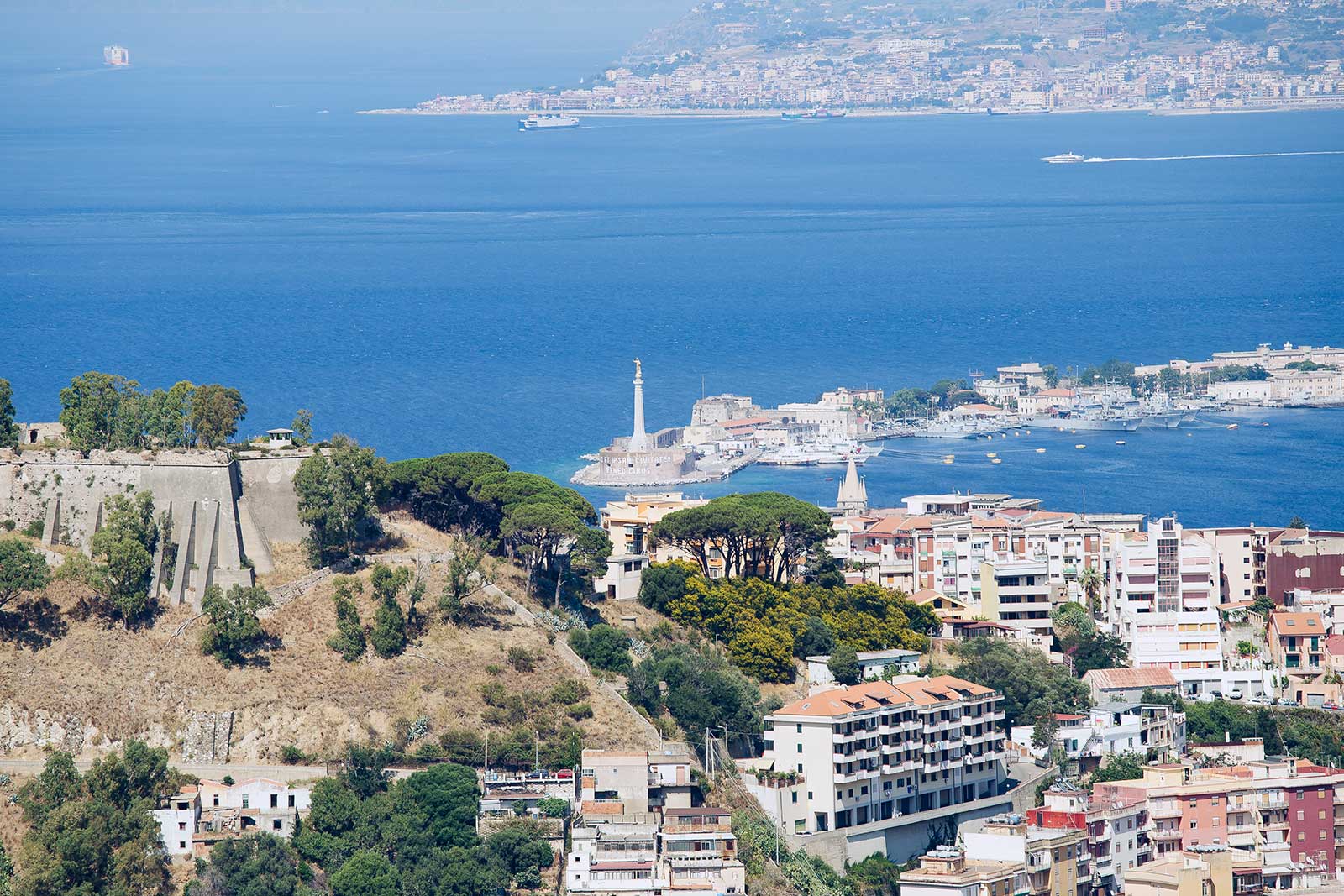
Photo by Stefano Anzini

CONTRADICTIONS AND OBJECTIVES: WHY IS THE SOUTHERN ITALIAN MEDITERRANEAN A POOR REGION, EVEN THOUGH WEALTH DEPARTS OR PASSES THROUGH HERE ON ITS WAY TO EUROPE? with Giuseppe Ida

Reflections by Giuseppe Ida, lawyer and mayor of Rosarno, speaking about transshipment, functional integration, and … the South, not just turism

Imagining that the Mediterranean and the South can contribute to the overall balance of the country and of Southern Europe is not an unrealistic dream.

The Mediterranean is a crossroads of cultures; restoring its centrality is a possible goal – indeed, it is the revival of a model already experiences in the past. Certainly, physical infrastructure is the first element that can help rebuild the centrality of Southern Italy. One example is the Port of Gioia Tauro, the third largest in Europe and the largest in Italy for transshipment – the transfer of cargo from one ship to another, usually through unloading in port and reloading. This takes place in hub ports where many shipping routes with different origins and destinations intersect. In the area surrounding the port, the movement of goods and the exchange of culture intersect and integrate.

One immediately perceives the contradiction between the habitual tendency to think of poverty as the harshest expression of Southern Italy, even though in reality it is precisely from our Mediterranean that wealth departs or passes through on its way to Europe.

The strengthening of physical infrastructure could generate lasting local wealth and place our Mediterranean at the center of the European development process, engaging with and balancing other transshipment hubs, for example. This strengthening should arise through a balanced participation of the public sector and private investors. But when strategy and planning are lacking, investments end up being wasted or undermined. This magnificent South, despite having such a highly efficient port, lacks an adequate railway system to transport goods and likewise lacks a road network capable of supporting the port’s expansion by land transport. Infrastructure and culture, in close connection with institutional strategies, are the fundamental pillars of a process aimed at making the South a leading force in Europe.

Today, the meaning of the South is almost entirely equated with tourism, but can tourism alone make it a leading force in Europe? And what kind of tourism are we talking about? What is the twenty-year vision for the Mediterranean?

For many parts of Southern Italy, tourism still remains an unrealized potential, and this consideration immediately brings us back to the previous issue: the development of what is still an underdeveloped tourism sector also depends on the growth of infrastructure and of the territory’s economy as a whole. It is difficult to imagine achieving results in the short term. Added to this is the fact that, in Calabria, youth unemployment has reached extremely high levels, despite the existence of real employment potential. Responsibility lies equally with regional and central political leadership that has been profoundly inattentive and has failed to allow these untapped opportunities to develop.

Certainly, Calabria can restart from its port system. During the lockdown period, Italian ports recorded a 30% decrease in traffic. Our port of Gioia Tauro, however, recorded a 40% increase, because goods destined for all of Southern Europe depart from here. Beyond this, stepping away from a strictly Calabrian and Italian perspective, it is essential to observe that the European vision of the entire Mediterranean is shaped through its ports.

A topic with limited media appeal and considerable complexity, seaports require cross-disciplinary expertise in logistics, technology, economics, and international relations. Insufficient attention is given to the value of ports, and the surrounding territories fail to connect with the broader economy. This also occurs in other Mediterranean countries – the so-called PIGS (Spain, Italy, Greece, and Portugal) – all countries considered key drivers of Europe’s growth.

In reality, precisely because of the unexpressed yet concrete and quickly activatable potential of these territories, if Europe wanted to become stronger and expand its capacity for inclusion, translating it into development, it should invest more in these regions.

Today, the Mediterranean and Southern Europe are not seen as places of development nor as crossroads of culture, because multiculturalism that is poorly managed and lacking integration turns into poverty. And, by ‘betraying’ its potential for opportunity, it becomes a burden to be carried. A vicious circle is triggered, whose dramatic outcome is the lack of investment in Europe’s periphery, precisely because it is seen as non-productive…a dead weight. In this vision, negativity spreads in concentric waves that affect the villages of which Calabria is so rich – places of history and culture that, in just a few decades, have been transformed into realities of sadness and depopulation. 

The regional administration of Calabria has committed itself to a policy of enhancing the villages that preserve our elderly, our customs, that intangible evanescence which is perpetuated through belonging to the territory. However, for now, except in a few exceptional cases, it remains a denied form of intangible heritage. In other contexts, for example, transhumance – the traditional practice of seasonal livestock migration – has been inscribed on the UNESCO Representative List of the Intangible Cultural Heritage of Humanity. The enhancement of villages falls within a strategic tourism plan that centralizes infrastructure, not as alienation, but as a form of valorization of the territory.

Photo by Stefano Anzini

Photo by Stefano Anzini