


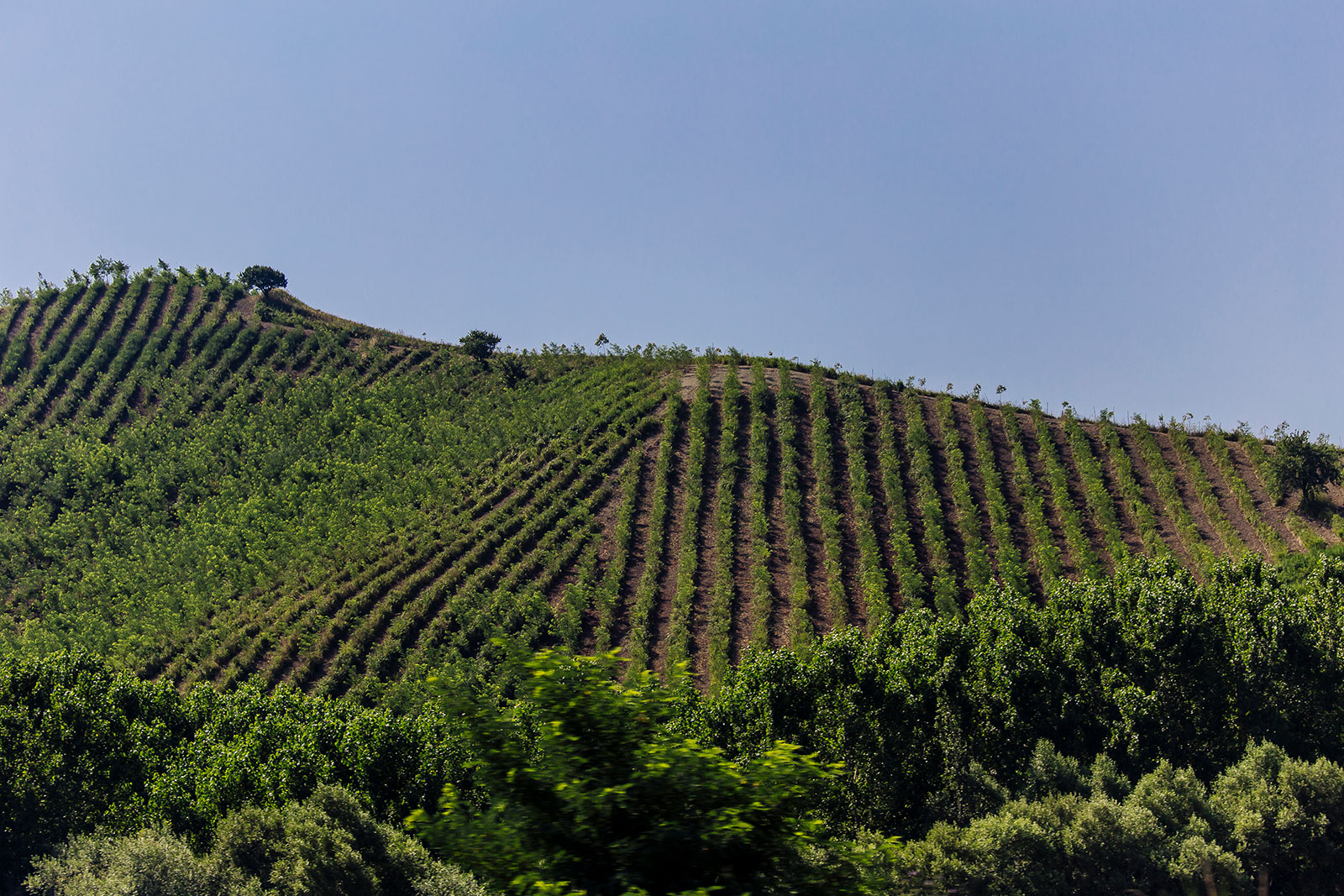
It is not a provocation, according to Salvatore Vermiglio: the invisible reveals itself through a comprehensive strategy of emancipation from outdated and worn-out models. The South, and Calabria region in particular, are vibrant and full of energy.
The emerging – albeit slow – process of restoring architecture to its role as an urban and social driving force, as a means of strengthening communities and as an engine for collective progress, represents and extraordinary opportunity for the entire country, for our South, and for supporting, guiding, and assisting both national and local politics.
The questions and reflections awakened by the pandemic have, as an initial reaction, turned the spotlight onto Italy’s beautiful yet invisible places. To make our places truly accessible and enjoyable, architecture and politics must work together – and quickly: without roads without infrastructure, these invisible places cannot be reached.
Building the bridge across the Strait or the tunnel beneath it (interchangeable in terms of connection, though certainly not in terms of architecture, engineering, and impact) is an important choice for opening up to the world and to Italy a closed-off territory that would undoubtedly undergo profound transformation, altering geographical, environmental, and socio-economic balances. Something would be lost (a great deal, perhaps?), but much would also be gained. Our South would become a strong South, with a decisive voice on the economic and political stage – a new hub between Africa, the East, and Europe. An infrastructure network serving the hypothetical bridge would generate economic value and unlock the cultural and tourism potential of our territories. Architecture, fundamental in this process, would have the task of guiding a conurbation protected from degrading physical contamination – in terms of construction, urban planning, and infrastructure.
In summary and simplifying the issue, the point is that if the bridge is not built, the essential infrastructure will not be developed – both those within the regions and those connecting them to Rome and the rest of Italy. The urgency of the bridge, together with a coordinated and parallel project linking the bridge and infrastructure development, means transforming Sicily and Calabria into Europe. Conversely, stepping back from the commitment to build the bridge would mean remaining stagnant,. anchored to that prefabricated vision of the South, while denying its European and global potential.
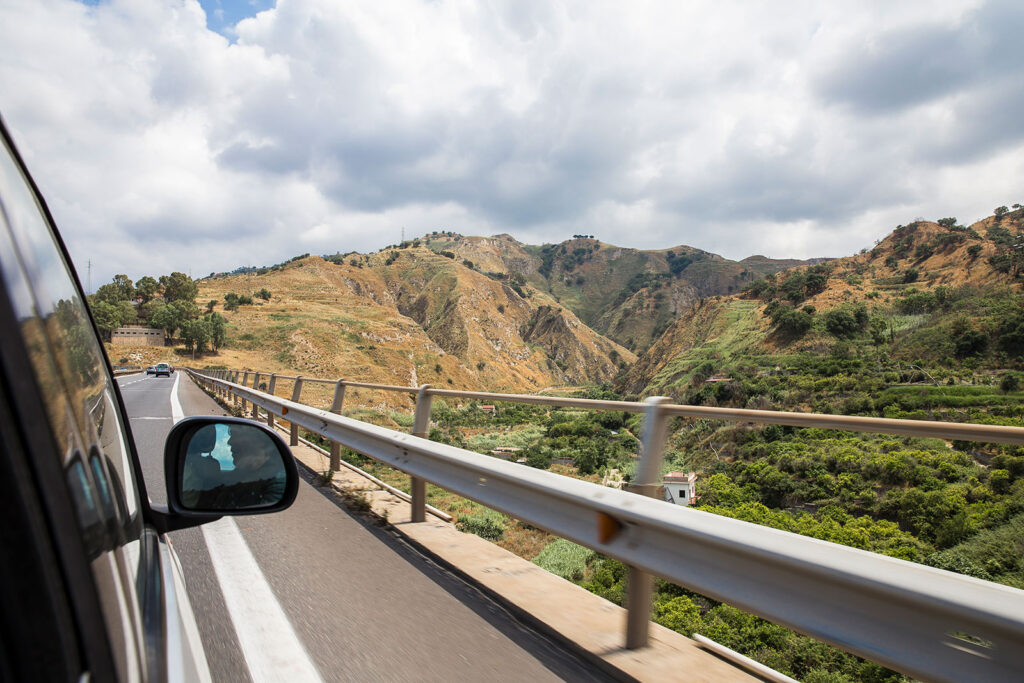
Denying the bridge means remaining invisible. The invisibility of a territory is not a protection of its beauty, but rather a detriment to its enhancement and dissemination. A powerful parallel, despite its harshness and discomfort, is the contrast between expansion and contraction. The risk of contraction is extremely high and,. in a global context that tends toward expansion and integration, it increases the danger of permanent exclusion from development processes. To counter contraction, it is essential to direct investments towards schools and both physical and digital infrastructure. Cultural and physical depopulation is a serious form of contraction, and education – together with awareness of the value of the territory – is the only real possibility for reversing the course of abandonment.
How can a pragmatic and operational vision be reconciled with positions of ‘intellectual and protective hesitation’, discreet enhancement, and slow-paced development?
Ours – especially Calabria’s – is an undeserved invisibility. I believe that bringing greater attention to the territory, even through bold and powerful attractions, is a crucial step toward restoring balance between what is visible, what remains invisible yet deserves to be revealed, what can remain invisible (delicate and unique parts of the territory), and even what we may not wish to look at.
Haha Hadid’s project for the Museo del Mare could become such a powerful attraction, beyond the architectural and cultural controversies surrounding it. In this regard, as the Order of Architects, we have committed ourselves to contributing to the public debate, and we have created a synergy with the municipal administration of Reggio Calabria for the realization of the Museo del Mare.
Bringing to light the richness of Reggio Calabria and strengthening the university system so that it can serve as an attractive hub not only for the South, but for all of Europe as well – given the undeniable uniqueness of our heritage – could prove effective, just as it has for other cities, Ferrara for example, also acting as a driving force for urban renewal in the form of a university city, helping to reverse the processes of abandonment and depopulation.
In this vision, villages – no longer isolated entities defined solely by their uniqueness and beauty – could benefit from a network capable of supporting their immense potential. A village is not a consumer product. It makes no sense to speak of villages in a generic and interchangeable way, as a thought Tuscany could be swapped with Liguria, or Liguria with Calabria. In many of our villages there are not even emergency medical services, assuming one can actually reach team. Nor is there fiber-optic internet access, assuming it is even possible to buy groceries without embarking on expeditions that consume an entire day.
What is the operational path to follow?
The first step is to abandon local rivalries between Sicily and Calabria and work together to bring priorities and intervention strategies to the attention of lawmakers. Let us raise our heads again, especially now, after COVID – which, despite the harshness of loss, the severity of illness, and the economic devastation it caused, had the merit of making us aware of how strong the South truly is.
To achieve this, let us begin with architecture, assigning it a strategic coordinating role. We are no longer willing to settle.
Let us dare to make difficult choices. Let us bring architecture and infrastructure together. Let us connect the Ionian coast with the Tyrrhenian coast.
Let us think and act freely, without prejudice.
Let us accelerate.