


Reflections by Giuseppe Ida, lawyer and mayor of Rosarno, speaking about transshipment, functional integration, and … the South, not just turism
Imagining that the Mediterranean and the South can contribute to the overall balance of the country and of Southern Europe is not an unrealistic dream.
The Mediterranean is a crossroads of cultures; restoring its centrality is a possible goal – indeed, it is the revival of a model already experiences in the past. Certainly, physical infrastructure is the first element that can help rebuild the centrality of Southern Italy. One example is the Port of Gioia Tauro, the third largest in Europe and the largest in Italy for transshipment – the transfer of cargo from one ship to another, usually through unloading in port and reloading. This takes place in hub ports where many shipping routes with different origins and destinations intersect. In the area surrounding the port, the movement of goods and the exchange of culture intersect and integrate.
One immediately perceives the contradiction between the habitual tendency to think of poverty as the harshest expression of Southern Italy, even though in reality it is precisely from our Mediterranean that wealth departs or passes through on its way to Europe.
The strengthening of physical infrastructure could generate lasting local wealth and place our Mediterranean at the center of the European development process, engaging with and balancing other transshipment hubs, for example. This strengthening should arise through a balanced participation of the public sector and private investors. But when strategy and planning are lacking, investments end up being wasted or undermined. This magnificent South, despite having such a highly efficient port, lacks an adequate railway system to transport goods and likewise lacks a road network capable of supporting the port’s expansion by land transport. Infrastructure and culture, in close connection with institutional strategies, are the fundamental pillars of a process aimed at making the South a leading force in Europe.
Today, the meaning of the South is almost entirely equated with tourism, but can tourism alone make it a leading force in Europe? And what kind of tourism are we talking about? What is the twenty-year vision for the Mediterranean?
For many parts of Southern Italy, tourism still remains an unrealized potential, and this consideration immediately brings us back to the previous issue: the development of what is still an underdeveloped tourism sector also depends on the growth of infrastructure and of the territory’s economy as a whole. It is difficult to imagine achieving results in the short term. Added to this is the fact that, in Calabria, youth unemployment has reached extremely high levels, despite the existence of real employment potential. Responsibility lies equally with regional and central political leadership that has been profoundly inattentive and has failed to allow these untapped opportunities to develop.
Certainly, Calabria can restart from its port system. During the lockdown period, Italian ports recorded a 30% decrease in traffic. Our port of Gioia Tauro, however, recorded a 40% increase, because goods destined for all of Southern Europe depart from here. Beyond this, stepping away from a strictly Calabrian and Italian perspective, it is essential to observe that the European vision of the entire Mediterranean is shaped through its ports.
A topic with limited media appeal and considerable complexity, seaports require cross-disciplinary expertise in logistics, technology, economics, and international relations. Insufficient attention is given to the value of ports, and the surrounding territories fail to connect with the broader economy. This also occurs in other Mediterranean countries – the so-called PIGS (Spain, Italy, Greece, and Portugal) – all countries considered key drivers of Europe’s growth.
In reality, precisely because of the unexpressed yet concrete and quickly activatable potential of these territories, if Europe wanted to become stronger and expand its capacity for inclusion, translating it into development, it should invest more in these regions.
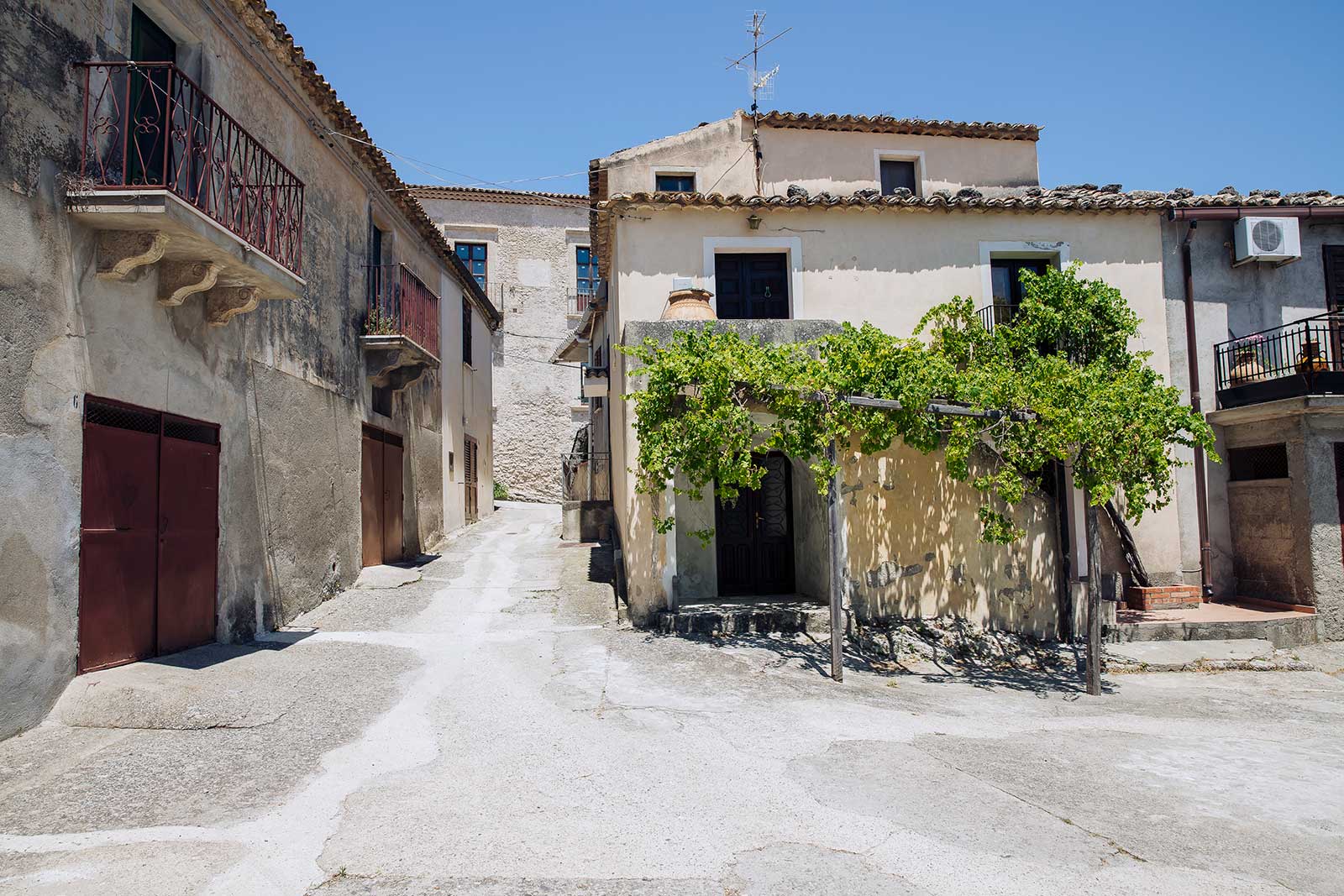
Today, the Mediterranean and Southern Europe are not seen as places of development nor as crossroads of culture, because multiculturalism that is poorly managed and lacking integration turns into poverty. And, by ‘betraying’ its potential for opportunity, it becomes a burden to be carried. A vicious circle is triggered, whose dramatic outcome is the lack of investment in Europe’s periphery, precisely because it is seen as non-productive…a dead weight. In this vision, negativity spreads in concentric waves that affect the villages of which Calabria is so rich – places of history and culture that, in just a few decades, have been transformed into realities of sadness and depopulation.
The regional administration of Calabria has committed itself to a policy of enhancing the villages that preserve our elderly, our customs, that intangible evanescence which is perpetuated through belonging to the territory. However, for now, except in a few exceptional cases, it remains a denied form of intangible heritage. In other contexts, for example, transhumance – the traditional practice of seasonal livestock migration – has been inscribed on the UNESCO Representative List of the Intangible Cultural Heritage of Humanity. The enhancement of villages falls within a strategic tourism plan that centralizes infrastructure, not as alienation, but as a form of valorization of the territory.