
Articles Tagged with: Mediterranei Invisibili 2020
Dettagli allegato 200919_Mediterranei-Invisibili_∏Stefano-Anzini Ponte sullo Stretto

IL SUD DEVE COMPRENDERE SE STESSO E LE SUE VOCAZIONI. E L’ITALIA TUTTA DEVE RENDERSI CONTO CHE SENZA UN SUD FORTE CONTINUERÀ A SEGNARE IL PASSO: È UNA QUESTIONE DI GEOPOLITICA con Laura Pavia

Laura Pavia, architetto e docente a contratto all’Università della Basilicata è una delle anime del progetto Rigenerare a Sud/Rigenerare il Sud e ha le idee chiare sulle vie da intraprendere per trasformare il Meridione in un centro propulsivo per l’economia. La sua visione è lucida e rovescia la prospettiva: il Paese riparte solo se riparte il Sud.

Non scherziamo sull’argomento infrastrutture: sono necessarie, non c’è un’alternativa possibile pena la recessione e la stagnazione. E serve il Ponte sullo Stretto.
Un esordio deciso quello di Laura che ha partecipato per la prima volta a Mediterranei Invisibili quest’anno.
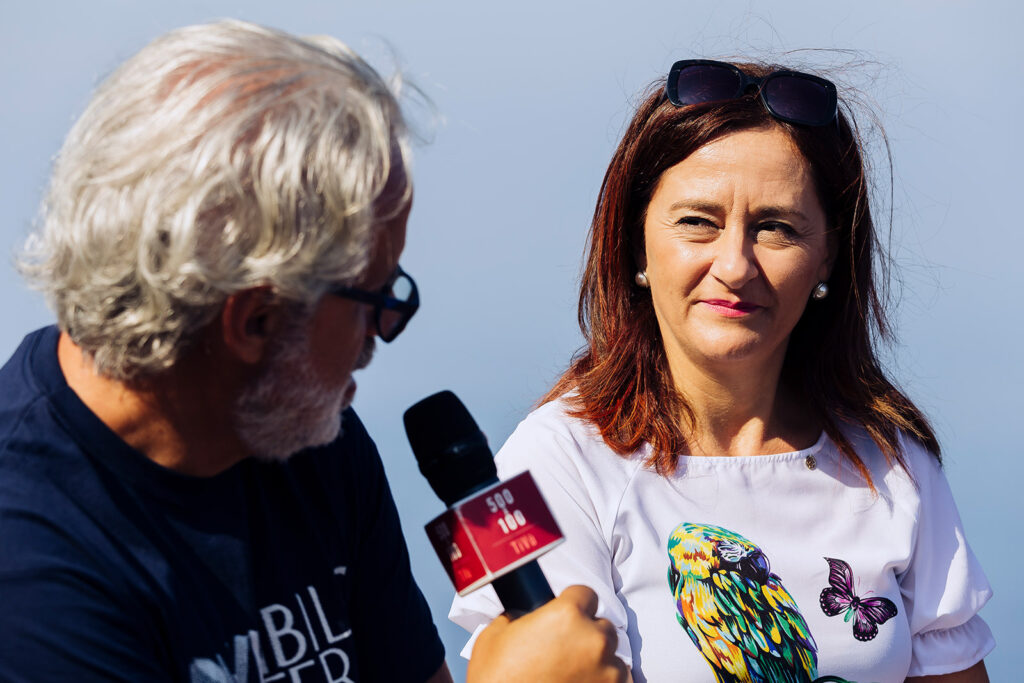
Laura Pavia con Alfonso Femia in Mediterranei Invisibili – Viaggio nello Stretto III, talk del 19 settembre 2020. Fotografia di Stefano Anzini.


Ci sono, al Sud, regioni con sofferenze infrastrutturali acute e regioni che stanno un po’ meglio, grazie anche alla loro collocazione geografica ma, al di là dei casi specifici, costruire le connessioni fisiche necessarie, salvaguardando gli aspetti ambientali e paesaggistici, è fondamentale per lo sviluppo. Non attivarsi in tal senso esprime solo la volontà negativa di tenere il meridione sempre un passo indietro.
Dissesto idrogeologico, complessità morfologiche del territorio sono ostacoli superabili: l’Italia ha i migliori ingegneri e le migliori tecnologie, tanto che esporta questa cultura tecnica in tutto il mondo dai primi anni del secolo scorso e ha contribuito a costruire ponti, dighe e strade nelle situazioni geografiche più improbabili.
Ora avremmo a disposizione anche i soldi del Recovery Fund.
Eppure, si continua a procrastinare, prima di tutto sul tema del Ponte. Il Governo, nella figura dell’attuale Ministro per il Sud e per la coesione territoriale, Giuseppe Provenzano, si è espresso chiaramente “Il ponte non è finanziabile e i tempi sono incompatibili con quelli del Recovery Fund”.
Provenzano sostiene che le priorità siano altre, per esempio l’Alta Velocità per la Calabria e la Sicilia, che potrebbero garantire una mobilità quotidiana dignitosa ai cittadini. 
Ma stiamo parlando di tre chilometri di ponte: non costruirlo, nel 2020, significa tenere il Sud un passo indietro.
E l’Italia ferma.


Il Ponte non serve (solo) a collegare la Sicilia con l’Italia. Bisogna allargare lo sguardo: per esempio, chi continua ad avvantaggiarsi delle lacune infrastrutturali del nostro meridione è il porto di Rotterdam. Va detto che c’è anche un triste aspetto campanilistico nazionale, Genova e Trieste non vogliono perdere primati e potere economico sulla piazza europea. Abbiamo la possibilità di riattribuire alla Sicilia (e all’Italia) il ruolo di vera frontiera del Mediterraneo, considerando anche la stretta correlazione con il Canale di Sicilia (che gli inglesi chiamano sbrigativamente Stretto di Sicilia) tra Italia e nord-Africa, sensibilissima zona su diversi fronti: militare, commerciale ed economico per le connessioni energetiche e digitali.
Continuare a leggere il valore del Ponte sullo Stretto di Messina esclusivamente come passaggio tra Calabria e Sicilia rivela una grave miopia geopolitica.
Il Mediterraneo della Sicilia non è neppure un tema solo europeo, ma internazionale, mai così importante come in questo momento storico: riprendendo un’affermazione dell’ammiraglio Mario Rino Me, in un articolo di Limes, Africa e medio-Oriente, i commerci cinesi e le manovre russe “materializzano nel Mare Nostrum una competizione fra imperi simile al Great Game ottocentesco fra Mosca e Londra”.
Questo per chiarire che la domanda giusta da porsi non è se costruire il Ponte, ma come farlo nel tempo più veloce possibile.


Poi ci sono altre considerazioni, ad ambito più circoscritto, nazionale ed europeo: per esempio, l’alta velocità finisce praticamente a Roma (Napoli); c’è un tratto della linea adriatica ferroviaria, tra Termoli e Lesina, che è ancora a binario unico, dai tempi di Vittorio Emanuele II.
Da Bari a Reggio Calabria il tempo medio di percorrenza in treno è di quasi 10 ore, per coprire 350 chilometri.
Ecco, dunque, perché il Sud come luogo di investimento è logisticamente poco appetibile ed economicamente insostenibile.
Di nuovo il problema non è (solo) meridionale, ma dell’Italia tutto che si propone smezzata agli investitori internazionali con una potenzialità inattiva e impedente dello sviluppo nazionale.
Un’Italia a due velocità non può più funzionare nel 2020, … se mai ha funzionato.
La Puglia è l’esempio di quello che il Sud può fare e dare all’Italia; si è completamente rinnovata attraverso una politica generativa, affrancandosi dagli stereotipi secolari, mettendo a punto programmi che si proiettano di vent’anni avanti (il qui e ora non ha senso), attivando la straordinaria risorsa delle nuove generazioni e puntando sulla dimensione reale del territorio: la cultura, l’agricoltura e il turismo.
Un’operazione diversa nei contenuti, ma simile nei processi, è stata quella che ha visto Matera protagonista nel 2019 come Capitale Europea della Cultura: la città della vergogna dei Sassi è tornata a credere in se stessa e nel valore millenario della sua identità.

Sul tema degli stereotipi … il Sud è mafia e malavita. Di recente Emiliano Morreale ha pubblicato una storia a fumetti dal titolo “La mafia immaginaria. Settant’anni di Cosa Nostra al cinema”, in cui racconta come la mafia siciliana sia stata protagonista “di decine di film e di fiction televisive, con un corredo riconoscibile e stereotipato di personaggi, situazioni, immagini: un codice che si è sovrapposto agli eventi storici, li ha modellati e ne ha influenzato la percezione”. Si tratta di un modello negativo non solo sul piano culturale, ma soprattutto su quello dell’economia reale. Qual è il tuo pensiero a riguardo?
C’è la storia. E poi c’è un tema di attualità in cui risulta molto facile colpevolizzare il Sud, assegnandogli l’etichetta di “mafia”, come se, anche oggi, la responsabilità fosse solo nostra.
Mafia e ‘ndrangheta colonizzano anche i territori lombardi o veneti o piemontesi, e riescono a farlo perché trovano terreno fertile, cioè soggetti importanti per capacità economica, disposti ad accogliere dinamiche illegali e a integrarle nei processi di sviluppo, talvolta apparentemente virtuosi.
Il pregiudizio è radicato e sembra ancora molto lungo il cammino da compiere per estirparlo.
Fotografia di Stefano Anzini.


Cosa può accelerare lo sviluppo del Sud e offrire un punto di partenza aggiornato e più forte come piattaforma di rilancio globale? Intendo nell’attesa che si costruiscano ponti e strade e si attivino le politiche generative di cui abbiamo parlato?
Un tema importante e che mi è particolarmente caro è quello dell’università.
Penso che molte città del Sud potrebbero trasformarsi in città universitarie, creando uno straordinario indotto, composto dai ricercatori e dai fuori sede italiani e internazionali (Covid a parte). La città di Taranto, per esempio, nel suo centro storico ospita ben tre sedi universitarie, oltre le altre sei dislocate nella città nuova. Se Taranto, gravata da problemi enormi legati alla sua zona industriale, riuscisse ad implementare i servizi ad esse connessi, seguendo l’esempio di città come Urbino o Trento, potrebbe contribuire all’importante processo di rinnovamento e di rigenerazione urbana che in questo momento sta interessando non solo il centro storico, ma anche l’intera città.
Investimenti mirati in comunicazione, un minimo potenziamento e razionalizzazione dei voli aerei, potrebbero realmente rendere attraente e culturalmente prestigioso studiare dove c’è tanta storia e tanta cultura, tanta architettura, tanta arte e tanto paesaggio.
Il problema storico delle università del Sud è quello dei finanziamenti. Ricevono una minor quota di finanziamenti e questa “sete perenne” di denaro frena gli investimenti sulla ricerca. Non si possono importare ricercatori perché non ci sono le condizioni economiche al contorno, ma continua l’emorragia delle intelligenze locali che preferiscono spostarsi al nord o all’estero.
E al Sud, spesso, mancano gli investimenti privati che potrebbero compensare le lacune pubbliche, semplicemente perché non c’è industria.
Il Sud non ha mai avuto una vocazione industriale, qualsiasi tentativo fatto, in passato, è stato una forzatura, un calare dall’alto decisioni calibrate non sui bisogni reali, ma su necessità immaginate da parte degli amministratori, spesso non da quelli locali, ma dal Governo centrale.

Da dove partire, allora, per ribaltare lo scenario meridionale?
È la narrazione che genera prima la visione e poi il progetto. Occorre partire dal racconto di luoghi, paesaggi, persone, esattamente come fa Mediterranei Invisibili e come fa l’Università della Basilicata con il progetto Rigenerare a Sud/Rigenerare il Sud.
Spesso quando indaghiamo nei territori del Sud, nei paesi e nelle piccole città, nei borghi, ci sentiamo chiedere “perché siete qui, se qui non c’è nulla?”.
È una condizione ricorrente nel Sud e in tutti i Sud del mondo l’incapacità di vedere architettura, ambiente e paesaggi a casa propria.

La pandemia è stata l’occasione per organizzare un ciclo di seminari online, nati da un’idea mia e di Ina Macaione, per il Laboratorio di Fenomenologia dell’Architettura di Matera. Abbiamo avvertito l’esigenza di dare voce a tante esperienze importanti di rigenerazione urbana in atto nel Sud, portate avanti da persone del Sud, che però ci apparivano isolate e distanti fra loro. Nella consapevolezza che non parlare di qualcosa equivale a ignorarla e a condannarla all’oblio, in più di quarantacinque seminari abbiamo dialogato con docenti, ricercatori, studenti, professionisti, amministratori, associazioni e liberi cittadini. Da questo lungo e anche faticoso racconto, è emersa tutta la ricchezza e la vitalità di un Sud che è attivo, si impegna sul campo e vuole costruire una rete di relazioni, conoscenze, abilità ed esperienze che sono strettamente legate alle peculiarità dei territori del Sud. Rigenerare a Sud/Rigenerare il Sud indica con chiarezza una strategia d’azione: senza il coinvolgimento e la partecipazione diretta dei cittadini che vivono nel Meridione non è possibile avviare percorsi di rigenerazione del territorio urbano. Soprattutto, non è possibile quel racconto che cambia lo sguardo su se stessi e sull’intorno e che genera l’amore verso i territori e il desiderio di restare o tornare al Sud.

Le esperienze raccontate in questo ciclo di seminari saranno a breve pubblicate in un Atlante della rigenerazione urbana a Sud, un’opera aperta, uno sguardo attivo sul Meridione che speriamo sia solo l’inizio di lungo percorso di condivisione e collaborazione con tutti i rigeneratori del Sud.

Per trovare il progetto Rigenerare a Sud/Rigenerare il Sud nei Social:
instagram: rigenerareasud_rigenerareilsud
facebook: Rigenerare a Sud / Rigenerare il Sud
youtube: Nature City Lab

La foto in apertura è di Stefano Anzini.

200920_Mediterranei-Invisibili_©Stefano-Anzini_IMG_6338

THE SOUTH LIES AT THE EDGE OF EUROPE: IT STRUGGLES MORE TO MAKE ITS VOICE HEARD BUT, IN THE PAST, IT MADE A GREAT CONTRIBUTION TO THE COUNTRY’S HISTORY. AND NOW IT IS PREPARING TO START AGAIN FROM AGRI-CULTURE with Pietro Taccone

Pietro Taccone and his family could be the protagonists of a film: a melting pot of cultures, where the cool Anglo-Saxon spirit intertwines with passionate Neapolitan roots, followed by a long period in Milan and then a return to Southern Italy – bringing with them the energy, expertise, and discipline needed to transform Calabria into a truly European region.

Pietro begins speaking about the South, recalling its glorious past: not as a learned historical synopsis, but as a premise for the potential re-emergence of the territory.

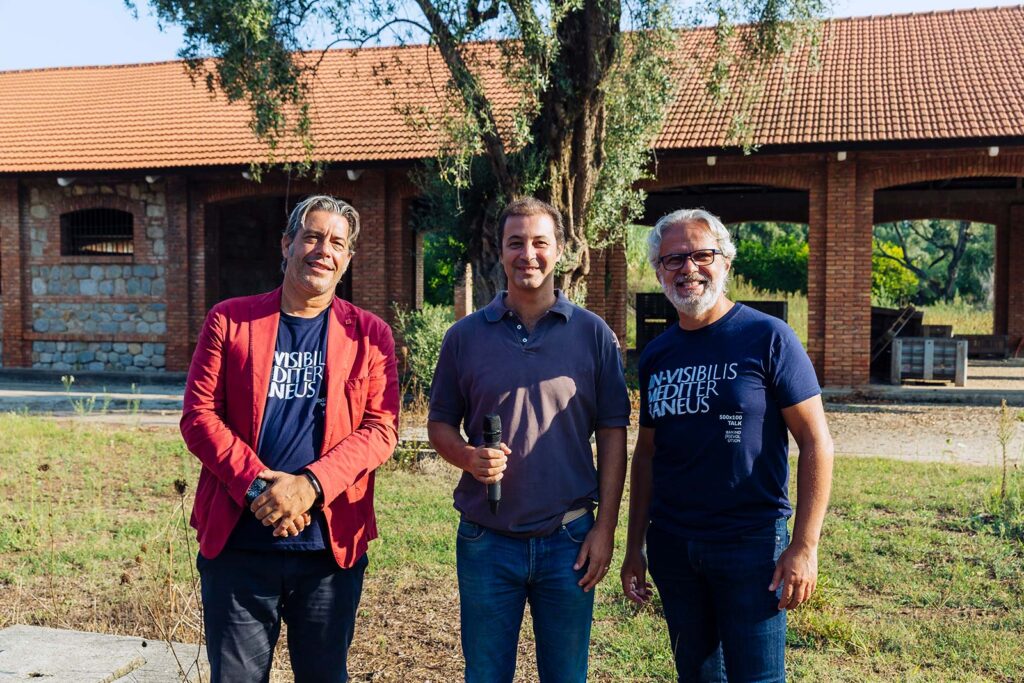
200920_Mediterranei-Invisibili_©Stefano-Anzini_IMG_6291From left to right: Giorgio Tartaro, Pietro Taccone, and Alfonso Femia during Invisible Mediterranean(s) – Journey across the Strait III, talk session on 20 September 2020. Photo by Stefano Anzini.
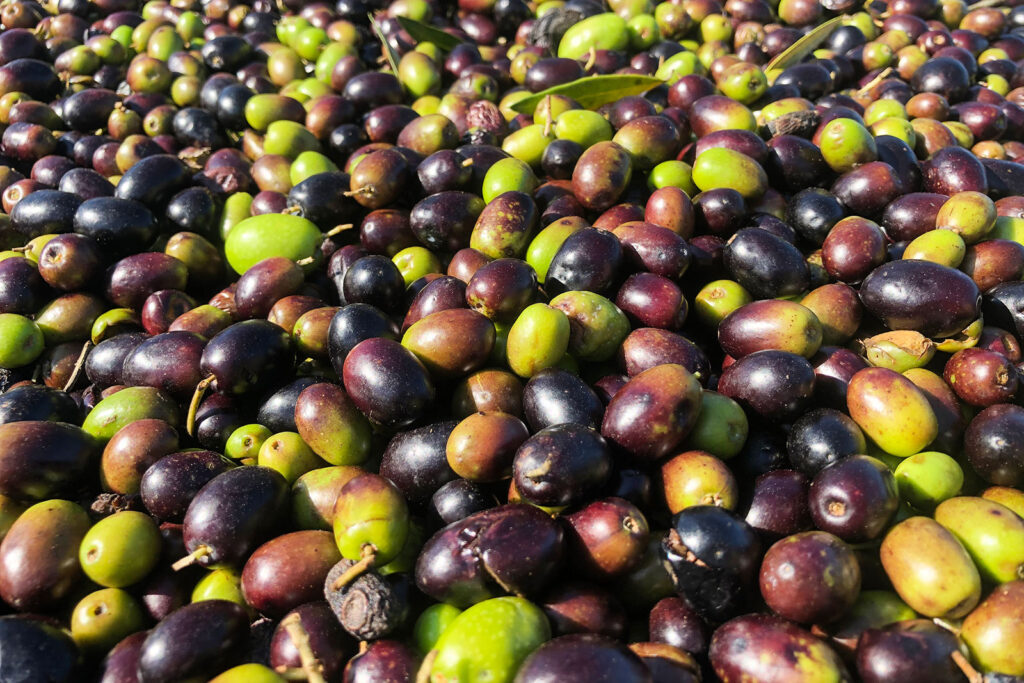
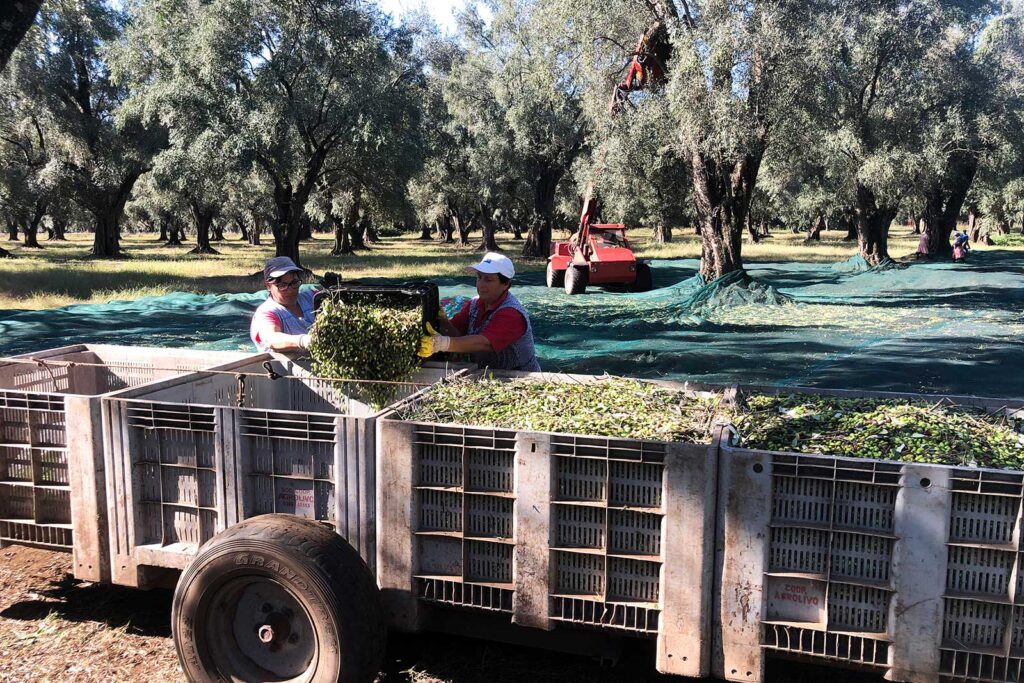
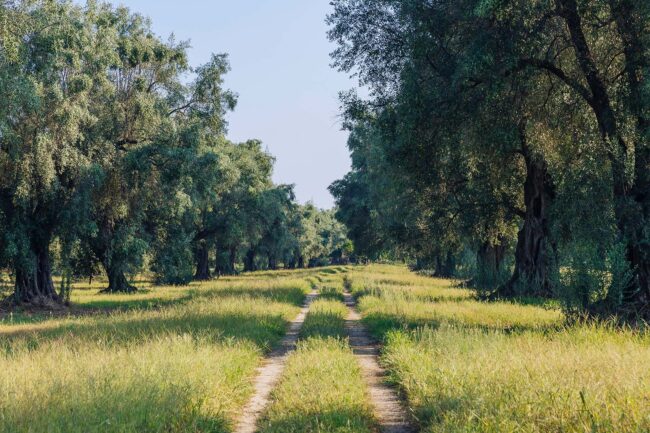
In the 18th and 19th centuries, Naples and the Kingdom of the Two Sicilies were leading European powers, with remarkably progressive governments. In 1839, the first double-track railway link in Italy was built to connect Naples and Portici.  Shipyards, metalworking, texitle, food-processing, and sulfur-extraction industries, along with agriculture, wow highly developed and firmly established. with commercial relations extending throughout Europe. Then, in the post-unification period, a dark era followed, and people began speaking of the “Southern Question”. The South became simpy “the South”. Our farm is what remains of an estate that originated earlier, in the 1700s, and that generated employment and prosperity throughout Calabria. It was a 40,000-hectares in the Plain of Gioia Tauro where olive cultivation is predominant. We have centuries-old olive trees dating back to the late 18th century. We work continuously to innovate the production process and refine a product with outstanding qualities. We have preserved most of the ancient olive trees, while mechanizing fruit harvesting as early as the 1980s through the use of shaker machines.  Before this innovation, olives from centuries-old trees were used to produce “lampante” oil, so called because throughout the 19th century and the early 20th century it was used for lighting and exported to Russia. Other oil was exported to France and England for soap production, including the famous Marseille soap. The centuries-old trees, reaching heights of up to 20 meters, did not allow for the early harvesting of the olives. Harvesting occurred only after natural falling once the fruit had fully ripened, resulting in a degraded product with excessively high acidity levels. The olives could not be used to produce extra virgin oil. To achieve a leap in quality, it was enough to anticipate the harvest. Managing these trees is complex because of their size, but shaker machines have enabled us to harvest olives before full ripening, obtaining fruit with excellent organoleptic characteristics in both aroma and flavor. In this way, we entered a high-end niche market. Calabria was actually the first region to import shakers from California, whose mechanical action is carefully calibrated so as not to damage the trees. However, harvesting olives from centuries-old trees still requires a large workforce because of the “sesto ducale” layout – that is, the wide spacing between one tree and another. For this reason, we decided to plant part of the land with younger, smaller trees spaced six meters apart.  This allows for more efficient management of cultivation, both from a phytosanitary perspective and in terms of harvesting, using umbrella shakers that require only two workers per tree instead of the six to eight needed for the ancient trees. Replacing old trees is costly and, rightly so, subject to landscape preservation regulations. Managing these olive groves is by no means simple, and many olive growers rely on state subsidies whenever they are available. On our farm, 50% of the old olive groves have been preserved, with careful attention paid to maintaining the same native varieties – Ottobratica and Sinopolese – in order to preserve the unique character of the territory. Our olive oil is distributed throughout Europe and the United States. Olive growing as once a flourishing and prosperous economy, and today it seeks to regain the splendor of the past and assume a significant role within an international context. Supporting agricultural development is part of a broader process of economic transformation in our region, one that can truly stand alongside the country’s industry, tertiary sector, and services, making it competitive and a meaningful player within the European and globalized landscape. Our company employs 50 people engaged in overseeing the entire supply chain, from cultivation to bottling. We live in a small village established in the 1700s in the Plain of Gioia Tauro: the village of Cannavá, which has been redeveloped with a focus on hospitality, tourism, and cultural activities. The heart of the village is Masseria Santa Teresa dating back to the 1830s and composed of a series of buildings arranged around a quadrangular square. It is a system centered on agriculture as its core identity, one that also sustains itself through the added functions of hospitality and cultural engagement.

Olive harvest, October 2020, at the Acton farm in Leporano. Photo by  Salvatore Greco.

Is the revival of Calabria through the land and olive trees too romantic a vision? Perhaps things are a little more complex in Calabria, but mano agricultural businesses are adapting to contemporary challenges, embracing technology and emerging as important realities in terms of employment and economic impact. There is remarkable dynamism: many have successfully renewed themselves by following European directives, investing in biogas systems for livestock farming and renewable energy through the use of pruning residues that can be transformed into wood chips. All of Calabria is engaged in this transformation: in the Lamezia area through citrus cultivation; in the Crotone area through wine production, which is gaining significant recognition nationally and internationally; and in the Reggio Calabria area through bergamot production for the French and international perfume industry. Along the Reggio Calabria coast, Calabrian mangoes are also cultivated. This demonstrates that starting again from the land and from agri-culture is neither merely an idea or simpley a project, but a reality that already exists.

Do infrastructure gaps, including those within the region itself, penalize you? Are they a determining factor in development prospects? The issue of missing roads must be evaluated and weighed in the proper terms. Calabria is a mountainous region: Sila, Pollino, and Aspromonte are our mountains, and mountains are difficult to manage everywhere. What would be extremely important is the rigorous maintenance of the existing neytwrk, wihich currently suffers from major deficiencies in this regard. We are actually in a better position than some other territories. The Salerno-Reggio Calabria motorway functions, even though the thirty-year reconstruction process caused enormous inconvenience and disruption. The Tyrrhenian coast is well connected to the rest of the country, and there are also two major high ways leaiding to the Ionian coast. The need to develop infrastructure must take into account the geomorphological structure of the territory. One cannot simply exploit the issue of missing roads without carefully assessing the benefits in relation to the investments required and the environmental and territorial risks involved. Our disadvantage lies in being geographically “at the end” of the peninsula: regardless of the means of transport, we still have to travel 1,200 kilometers to reach Italy’s gateways to Europe, the major distribution centers, and the main logistics hubs. What could have been our greatest strengths has been completely undermined by its function and by the lack of railway connections. The Port of Gioia Tauro is a missed opportunity. To build it, an extraordinary environmental landscape was sacrificed, and yet it provides no real service to its own region. It is an international transshipment port, a closed and highly specialized system. Our natural shortcut to Europe and other countries – the sea – is effectively reserved for another exclusive function.

Is our provocation – placing the South at the center of the process of revitalizing both Italy and Europe as a whole – a realistic prospect? I am convinced that it is possible, by using agriculture as a driver for generating sustainable local economies. Calabria does not possess the territorial or environmental conditions necessary to develop large-scale industrial sectors. Attempts at industrialization have produced only the remains of unfinished factories and abandoned industrial blights. The only industry that truly makes sense to develop is a rural one, capable of creating stable local employment with a strong international outlook. To achieve this, local politics must support these projects by following European directives and making proper use of European funding opportunities. It must also recognize that agricultural planning, by its very nature, does not follow the five-year cycle of political elections, but instead requires a much longer-term vision. Mistimed decisions, a poor understanding of real needs, and a lack of specific expertise have led to misguided choices, effectively leaving agricultural entrepreneurs alone to pursue – and at times even fulfill – the dream of establishing their territory on the world stage.

The opening photo is by Stefano Anzini.

IN THIS 2020, THE MEANING OF THINGS HAS CHANGED. THE SOUTH IS OUR BEST OPPORTUNITY

Alfonso Femia opens the third edition of Invisible Mediterranean(s) –  Journey across the Strait.

“We can no longer just talk; for politics and architecture, it is time to act.”

It was not supposed to be a four-day event, nor was it meant to take place in September.
The idea was for it to last a full week, in June, during which field research on the territory would be combined with an organic re-examination of the themes and situations we had previously explored separately in the two earlier editions.  I am referring to Invisible Mediterranean(s) – Journey Across the Strait III,, which despite the pandemic, we chose to undertake also – or rather especially – in 2020, albeit with reduced time and programming, in order to affirm the need and the will to state that the South can no longer be read, interpreted, and experienced as it has been up to now.

It is precisely 2020 that marks the first demonstration of how strong the South can be, and how this strength can sustain the country as a whole.
I believe that what Invisible Mediterranean(s) has revealed – and will continue to reveal – is important for the country. As we will read in the interviews with representatives of local public administrations, presidents of professional orders, and Sicilian and Calabrian architects, the meaning of words and actions can change when the perspective and gaze are different, and above all when dialogue and confrontation take place on site.
“Infrastructure”, “school”, “village”, “territory” carry different meanings and nuances in places such as Messina compared to places like Siena or elsewhere, and the evidence of this diversity must be strengthened and made more widely known.

There is no romanticism in the gaze of Invisible Mediterranean(s). Each investigation brings to light problems that can no longer be confined within an isolated identity, but must instead be expressed and resolved through connection with other identities. Citiens exist within territories, just as villages do, just as landscapes, coastlines, and mountains do. And Journey across the Strait reveals these connections and the overall system of relationship that binds them together.

Citing Cyprian Broodbank, author of “Il Mediterraneo” (Einaudi, 2015), perhaps the most interesting and brilliant narrative on the subject in the last decade, the characteristics of the Mediterranean are often taken as given facts. Yet the Mediterranean system is made up of closely interconnected centers, whose surprising economic and cultural development has become a model for the entire world. As Broodbank writes: “The Mediterranean of prehistory, a microcosm where everything has come to a standstill, is the perfect model for helping us investigate the globalized world in which we live”.

For example, in the past, highly original civilizations such as Cyprus and Malta, which reached peaks of development, were later reabsorbed into the dominant trend – and this represents, in Broodbank’s view, “the dark side of globalization. A warning message for all of us”.

And is the contemporary Mediterranean a sea of relations?
“Absolutely. If in the past it experienced both moments of confrontation and conflict, the prevailing message that emerges is that of a place of encounter – a place where stereotypes are constantly challenged and dismantled”, says Cyprian Broodbank. We strongly believe that, starting from the second half of 2020, national and European policies must invest in the Southern Mediterranean of Italy. Not as an act of compassion, but as a new center of energy for the entire Old Continent.

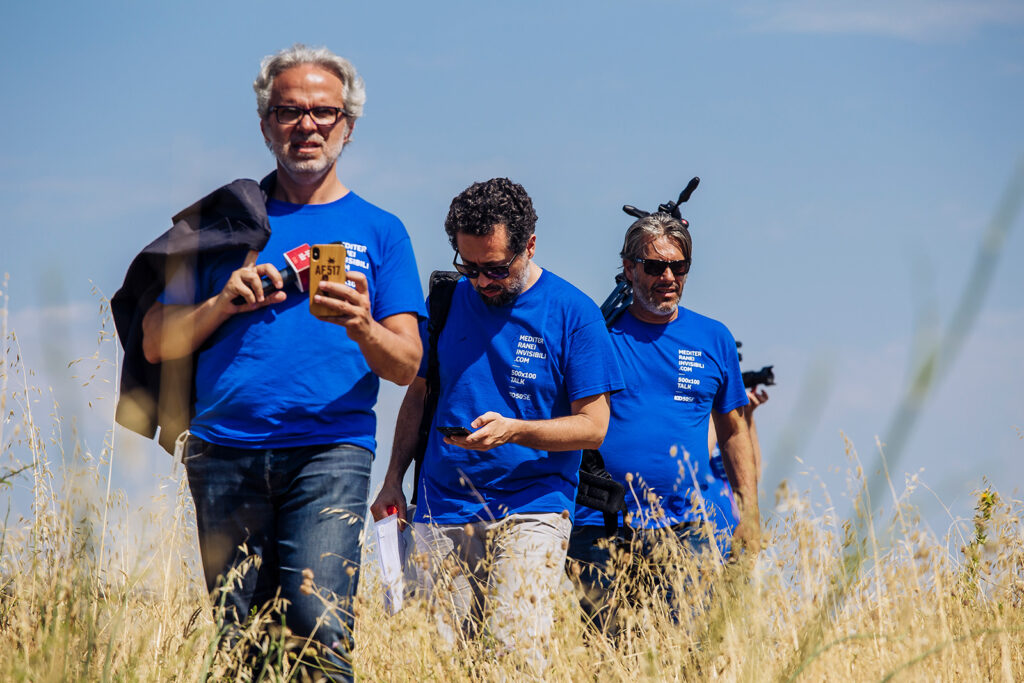
Journey across the Strait. Photo by Stefano Anzini.

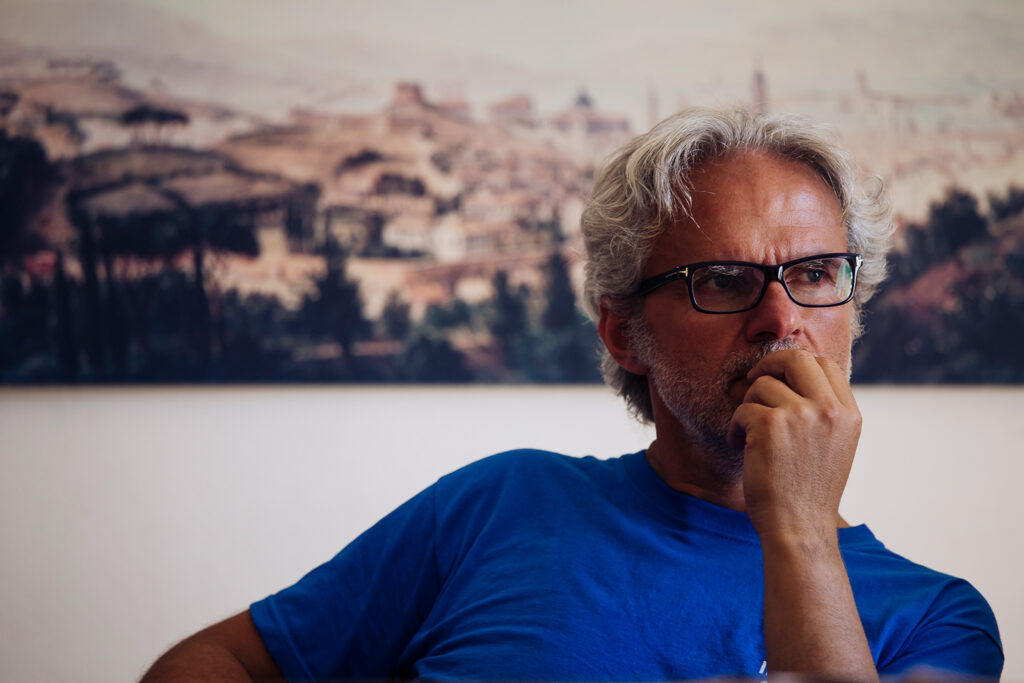
Alfonso Femia, Photo by Stefano Anzini

The exploration Invisible Mediterranean(s), with the third Journey across the Strait, resumes together with Marco Predari (500×100) and Giorgio Tartaro, journalist who followed the previous editions, capturing the invisibility not only of the Mediterraneans, but also of journeys themselves.

GIORGIO TARTARO’S NEUROIMAGING FOR INVISIBLE MEDITERRANEAN(S)

Let’s play a game.
A videogame. 
Or rather, a game of images.
To make the invisible Mediterranean visible – even in its plural form – we can imagine the bounce of a ball. A basketball, perhaps. And imagine its sound in an empty gym.
As a bearer – hopefully a healthy one – of internal Invisible Mediterranean(s), as a lake dweller who loves the sea, I imagine this ball bouncing from Greek and Latin epics to the recent image of a Mediterranean rotated ninety degrees: unrecognizable, yet fascinating, like a future highway.
From Phoenician and Roman splendours to the Maritime Republics, from the fragmented history of a richly biodiverse “boot-shaped” country to the troubled process of Italian unification, from times of excessive government to times of no government at all… It is astonishing to think that, apart from devastations and agricultural, artisanal, and industrial revolutions, many – very many – things have fortunately endured.
For instance, the desire for discovery: just as in coastal landscapes, so too in inland, pre-Alpine and mountainous ones, it reveals exemplary moments of recognition. Tradition, the will to recover, effort, commitment, attachment, people, identity.
The encyclopaedists work on these dynamics and return splendours. The fact is that Invisible Mediterranean(s) bounces very high. It elects a “Virgil 4.0” and surgically identifies heterodox contemporary heroes – those who fight against the common opinion of the obvious, who research, design, study, involve, and connect… in short, as my children would say, they really go all in
No, it is not just cool or picturesque: it is an ethical and luminous way of being in time, this telling of Invisible Mediterranean(s).
Those that some know and hide. Those that many long for and cannot find. Those that, sometimes, by sheer luck, we happen to encounter.
And then it becomes a kind of drama. Because they are like beautiful songs, refrains, synthetic dependencies you can’t quite escape.
Travel is about seeing with new eyes…new sounds, scents, energies, sensations, friends, anecdotes…in short: human beings. Women and men who, outside the uniform of formality, rejoice in telling, collecting, giving.
For me, Invisible Mediterranean(s) are everything that escapes the individual, egoism, the idea of status and social position.
Once Muhammad Al began a speech in public. He apparently didn’t quite know what to say. At some point, he said: “Me, we”.
He then reportedly reworked the “Me, We” pronounced at Harvard in 1965 into “Me, Whee”  a joyful “me!”, or rather “I? Hooray!” Perhaps suggested by his team or by circumstance.
Personally, I prefer the first version. Which is also my point of view on the Invisible Mediterranean(s), seen from the kaleidoscopic position of the Inner Mediterraneans: it is, fully and legitimately, an “I,we”. A-Sea Our Sea.

YOU CAN START AGAIN FROM THE SOUTH, BY MARCO PREDARI

Invisible Mediterranean(s) is part of the broader project of Marco Predari, 500×100, which was launched five years ago with the aim of investigating, through dialogue, paths of built and conceptual architecture. It has progressively strengthened and expanded, moving from its first Milan-based experience at the Salone del Mobile to other national contexts, including Venice, Rome, Pisa, and the South.

It represents an important commitment for a company such as Universal Selecta, a leading organization that this year won the Compasso d’Oro in the “Office Furniture and Accessories” category. The company supports the process of growth in Southern regions through the encounter and alignment between politics and architecture, also through the 500×100 platform.

As a company, we share initiatives rich in content in Puglia, Sicily, and Campania, and we believe that the entire South can be transformed from an area of development into a territory for validating effective experiences.

medinv-journal_sicilia-8.jpg

UNVEILING THE INVISIBLE IS AN EXERCISE THAT OFTEN DEPENDS ON ACCESS TO PLACES: A RIGHT DENIED IN SOUTHERN ITALY with Francesco Miceli

Francesco Miceli, President of the Order of Architects of Palermo, tells us how architecture, historic villages, the territory, and all enhancement projects clash with the harsh reality of inadequate infrastructure. This is not (just) a problem, but a denied right to access and enjoyment

Let us start from a basic assumption: Southern Italy is a resource, thanks to the quality of its territory and the extraordinary richness of its historical and cultural heritage (all Souther regions have a high density of cultural assets, as recorded by ISTAT according to their size). Unfortunately, despite this immense heritage, no effective policy is being implemented to properly protect and enhance it, confirming Italy as one of the least generous countries in Europe in terms of cultural funding. There is no real strategy for promotion or preservation, nor any effort to build a network capable of connecting these scattered small-scale realities and strengthening their interaction and visibility toward the outside world.  
Isolated communities live out their fate either as centers of excellence (in some cases) or, more often, of abandonment and decay. They fail to recognize the affinities shaped by history – from their Greek roots to Arab and Norman influences – because there is no physical relationship, no real connection linking them together.
The cultural heritage of Southern Italy, like that of any other place, cannot simply be reduced to a list of sites: it must be integrated into a broader territorial policy strategy that uses culture also (and not only) as a driver for intelligent tourism. Therefore, beyond actions focused on individual sites, it is necessary to intervene at the territorial level in order to guarantee accessibility to these cultural assets.
Accessibility to cultural heritage, as well as to public spaces, is closely tied to the issue of citizens’ rights. Developing infrastructure across the territory means enabling every individual citizen to access it. The lack of accessibility represents a denial of the right to enjoy historical and cultural heritage.

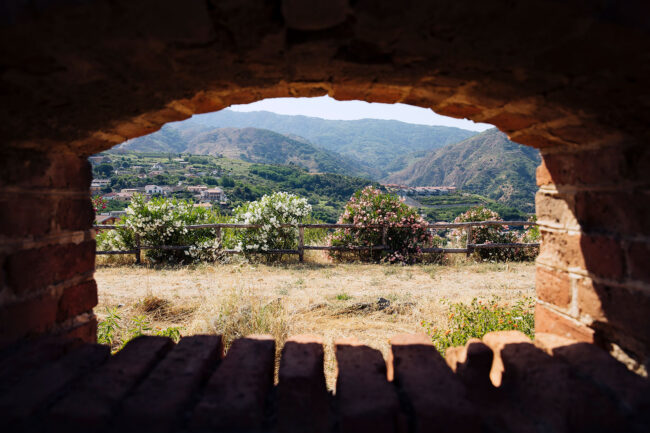
Photo by Stefano Anzini.

If we begin from the issue of rights – the right to experience the city, its historical heritage, and access its services – we open up an entire range of further questions, because this broadens the reflection on what cities, smaller towns, and villages are today.
Cities emerged and developed throughout the twentieth century primarily as places of consumption. The logic of the modern city is not centered on the citizen, but rather on a concentration of people often coming from other contexts, sometimes rural ones.
Economic forces concentrate people where opportunities to “consume” are created.
The spread of COVID-19 is prompting a reinterpretation (though not necessarily a transformation) of the city, which can instead become a place of cultural innovation and the exercise of rights.
A process of reconfiguration in this sense – interpreting the city as an element of civilization rather than merely a place of consumption – would mean rewriting and adapting the prevailing models adopted up to now, starting with architecture itself and restoring to it a strategic and political role.

Over the past ten years, three adjectives have progressively been associated with the city, almost with a cathartic function: smart, resilient, and sustainable. The so-called “smart city” is, in reality, a rather aseptic expression aimed at governing the logic of consumption in a different way; “resilient” and “sustainable” complete this semantic triad.
We must ask ourselves whether the purification of the city truly passes through these three meanings, or whether they are simply linguistic expedients used to disguise an identity that has, in fact, remained unchanged.  The reflection is broader: the rethinking of the urban center involves a new form of urban physiliogy, particularly in Southern Italy, where environmental sustainability has always compensated for unsustainable building practices, and resilience is part of the South’s very DNA, given its ability to recover from earthquakes, structural decay, and floods over time.
Certainly, today a new awareness is emerging, and digitalization has become a key element in the organization of the city. Within this transformation, architecture must confront its own time, attempting to provide answers.

Unveiling the invisibility of the places in our Mediterranean is one of the possible responses.  
Invisible Mediterranean(s) is an important initiative because it tells the story of an unseen South – not an easy one, but one with extraordinary cultural, tourist, and landscape potential.
It is an exploration that starts from the ground up, investigating territorially marginal realities that are nonetheless rich in content and in unusual, almost forgotten models, giving value to what can no longer be found elsewhere.
Sicily, in particular, holds strong potential to translate these models into a working hypothesis.
The three “catartic” words in the South become everyday acts of survival.
An exceptionally powerful testimony of this was given by Pier Paolo Pasolini in “La lunga strada di sabbia”, the diary of a journey in 1959 along the Italian coasts from Ventimiglia to Palmi, where, upon reaching the South, he describes expectation and joy at their highest intensity. The route toward Vallo Lucano leads him to write: “Here beauty directly produces wealth. People live in a kind of quiet ease, letting beauty work for them”.

Photo by Stefano Anzini

However, the most authentic bond with the territory is increasingly difficult to maintain for smaller towns: the relationship between urbanity and rurality becomes ever more complex, to the point of being torn apart and distorted. Palermo is a paradigmatic example of this condition. The interweaving of agricultural fragments within the outskirts of the consolidated city can become a major resource. These too are invisible places – but a different kind of invisibility from that which characterizes hidden villages. They are invisible because there is no willingness to look at them, yet they are strategic for rethinking the city: not to be transformed into new building developments, but to build a connective identity and enhance their value. This means not denying environmental sustainability, the intelligence of place, or its resilience, but rather reinforcing and bringing them to light.

In the South of the Mediterranean, identity also exists in the outskirts: this is a fact that must be recognized and emphasized in order to redeem their degradation and underuse, and to extend the right to public and urban space.
Urban space is both a concept and an expanded right – an important design dimension for defining any model. It is not an independent variable, but something that deeply influences the everyday life of the individual.
In his talk on “Architettura e Salute”, delivered to the Consiglio Nazionale degli Architetti, Paesaggisti e Conservatori in July 2018, the psychiatrist Vittorio Andreoli explained with scientific rigor how human behavior is influenced by three factors: biology (the physical being, “flesh”), personality, and environment – both natural/geographical and relational – and how, for this reason, it is necessary that the natural environment and the relational environment be coeherent with one another.

All of this is architecture – architecture in Southern Italy.


CONTRADICTIONS AND OBJECTIVES: WHY IS THE SOUTHERN ITALIAN MEDITERRANEAN A POOR REGION, EVEN THOUGH WEALTH DEPARTS OR PASSES THROUGH HERE ON ITS WAY TO EUROPE? with Giuseppe Ida

Reflections by Giuseppe Ida, lawyer and mayor of Rosarno, speaking about transshipment, functional integration, and … the South, not just turism

Imagining that the Mediterranean and the South can contribute to the overall balance of the country and of Southern Europe is not an unrealistic dream.

The Mediterranean is a crossroads of cultures; restoring its centrality is a possible goal – indeed, it is the revival of a model already experiences in the past. Certainly, physical infrastructure is the first element that can help rebuild the centrality of Southern Italy. One example is the Port of Gioia Tauro, the third largest in Europe and the largest in Italy for transshipment – the transfer of cargo from one ship to another, usually through unloading in port and reloading. This takes place in hub ports where many shipping routes with different origins and destinations intersect. In the area surrounding the port, the movement of goods and the exchange of culture intersect and integrate.

One immediately perceives the contradiction between the habitual tendency to think of poverty as the harshest expression of Southern Italy, even though in reality it is precisely from our Mediterranean that wealth departs or passes through on its way to Europe.

The strengthening of physical infrastructure could generate lasting local wealth and place our Mediterranean at the center of the European development process, engaging with and balancing other transshipment hubs, for example. This strengthening should arise through a balanced participation of the public sector and private investors. But when strategy and planning are lacking, investments end up being wasted or undermined. This magnificent South, despite having such a highly efficient port, lacks an adequate railway system to transport goods and likewise lacks a road network capable of supporting the port’s expansion by land transport. Infrastructure and culture, in close connection with institutional strategies, are the fundamental pillars of a process aimed at making the South a leading force in Europe.

Today, the meaning of the South is almost entirely equated with tourism, but can tourism alone make it a leading force in Europe? And what kind of tourism are we talking about? What is the twenty-year vision for the Mediterranean?

For many parts of Southern Italy, tourism still remains an unrealized potential, and this consideration immediately brings us back to the previous issue: the development of what is still an underdeveloped tourism sector also depends on the growth of infrastructure and of the territory’s economy as a whole. It is difficult to imagine achieving results in the short term. Added to this is the fact that, in Calabria, youth unemployment has reached extremely high levels, despite the existence of real employment potential. Responsibility lies equally with regional and central political leadership that has been profoundly inattentive and has failed to allow these untapped opportunities to develop.

Certainly, Calabria can restart from its port system. During the lockdown period, Italian ports recorded a 30% decrease in traffic. Our port of Gioia Tauro, however, recorded a 40% increase, because goods destined for all of Southern Europe depart from here. Beyond this, stepping away from a strictly Calabrian and Italian perspective, it is essential to observe that the European vision of the entire Mediterranean is shaped through its ports.

A topic with limited media appeal and considerable complexity, seaports require cross-disciplinary expertise in logistics, technology, economics, and international relations. Insufficient attention is given to the value of ports, and the surrounding territories fail to connect with the broader economy. This also occurs in other Mediterranean countries – the so-called PIGS (Spain, Italy, Greece, and Portugal) – all countries considered key drivers of Europe’s growth.

In reality, precisely because of the unexpressed yet concrete and quickly activatable potential of these territories, if Europe wanted to become stronger and expand its capacity for inclusion, translating it into development, it should invest more in these regions.

Today, the Mediterranean and Southern Europe are not seen as places of development nor as crossroads of culture, because multiculturalism that is poorly managed and lacking integration turns into poverty. And, by ‘betraying’ its potential for opportunity, it becomes a burden to be carried. A vicious circle is triggered, whose dramatic outcome is the lack of investment in Europe’s periphery, precisely because it is seen as non-productive…a dead weight. In this vision, negativity spreads in concentric waves that affect the villages of which Calabria is so rich – places of history and culture that, in just a few decades, have been transformed into realities of sadness and depopulation. 

The regional administration of Calabria has committed itself to a policy of enhancing the villages that preserve our elderly, our customs, that intangible evanescence which is perpetuated through belonging to the territory. However, for now, except in a few exceptional cases, it remains a denied form of intangible heritage. In other contexts, for example, transhumance – the traditional practice of seasonal livestock migration – has been inscribed on the UNESCO Representative List of the Intangible Cultural Heritage of Humanity. The enhancement of villages falls within a strategic tourism plan that centralizes infrastructure, not as alienation, but as a form of valorization of the territory.

Photo by Stefano Anzini

Photo by Stefano Anzini