


Pietro Taccone and his family could be the protagonists of a film: a melting pot of cultures, where the cool Anglo-Saxon spirit intertwines with passionate Neapolitan roots, followed by a long period in Milan and then a return to Southern Italy – bringing with them the energy, expertise, and discipline needed to transform Calabria into a truly European region.
Pietro begins speaking about the South, recalling its glorious past: not as a learned historical synopsis, but as a premise for the potential re-emergence of the territory.
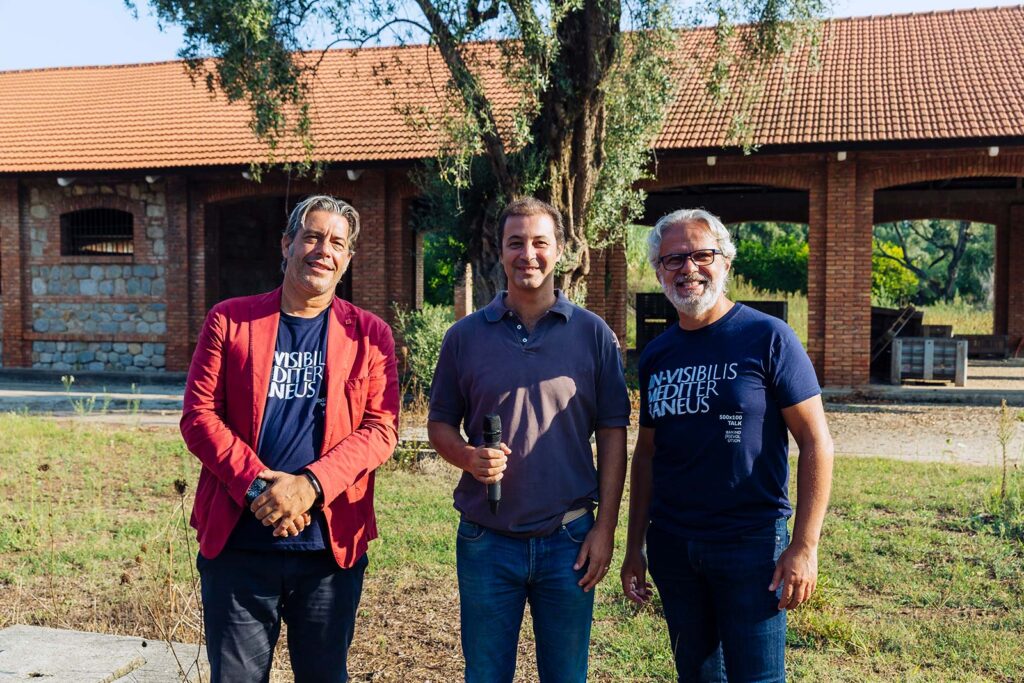 From left to right: Giorgio Tartaro, Pietro Taccone, and Alfonso Femia during Invisible Mediterranean(s) – Journey across the Strait III, talk session on 20 September 2020. Photo by Stefano Anzini.
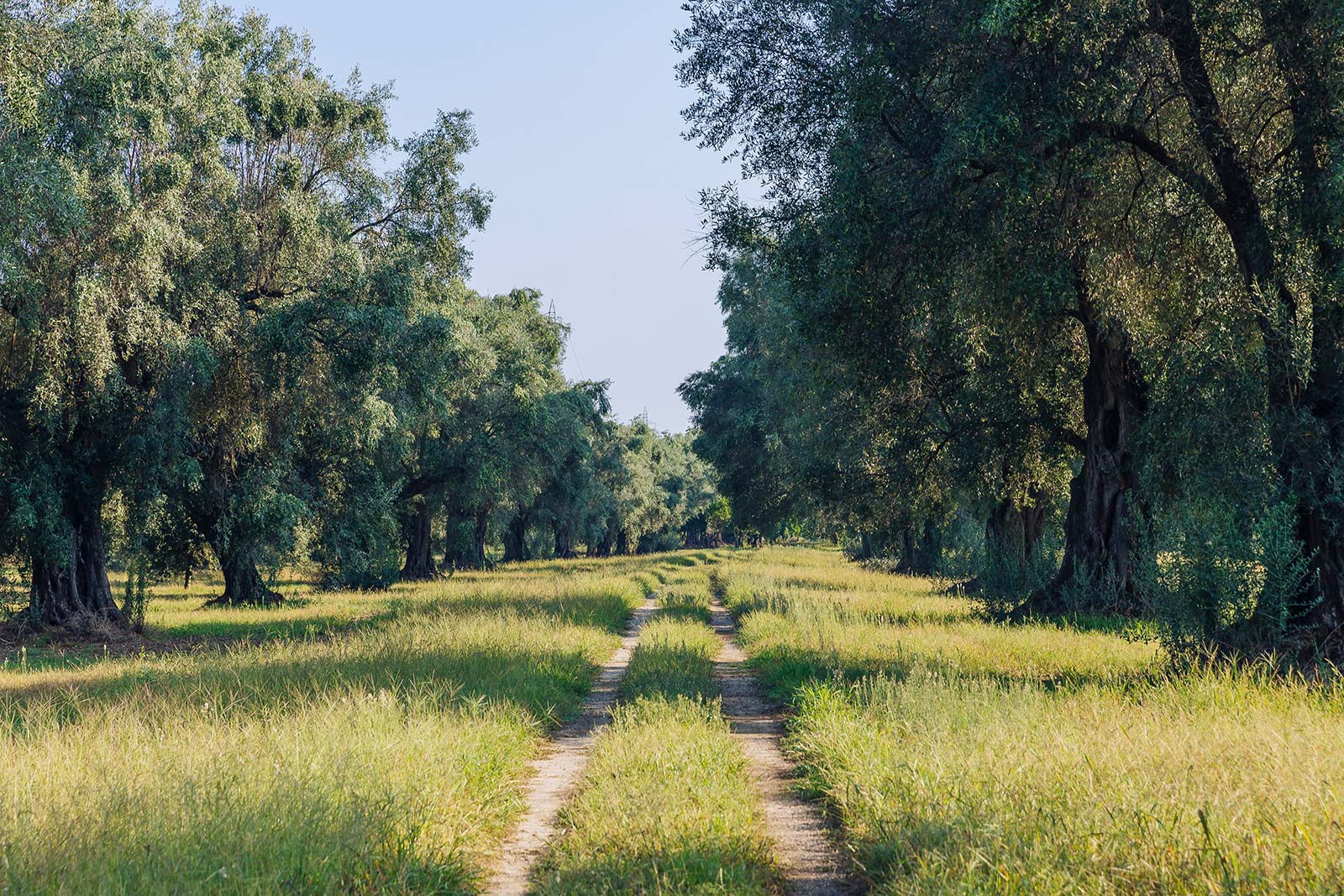
In the 18th and 19th centuries, Naples and the Kingdom of the Two Sicilies were leading European powers, with remarkably progressive governments. In 1839, the first double-track railway link in Italy was built to connect Naples and Portici. Shipyards, metalworking, texitle, food-processing, and sulfur-extraction industries, along with agriculture, wow highly developed and firmly established. with commercial relations extending throughout Europe. Then, in the post-unification period, a dark era followed, and people began speaking of the “Southern Question”. The South became simpy “the South”. Our farm is what remains of an estate that originated earlier, in the 1700s, and that generated employment and prosperity throughout Calabria. It was a 40,000-hectares in the Plain of Gioia Tauro where olive cultivation is predominant. We have centuries-old olive trees dating back to the late 18th century. We work continuously to innovate the production process and refine a product with outstanding qualities. We have preserved most of the ancient olive trees, while mechanizing fruit harvesting as early as the 1980s through the use of shaker machines. Before this innovation, olives from centuries-old trees were used to produce “lampante” oil, so called because throughout the 19th century and the early 20th century it was used for lighting and exported to Russia. Other oil was exported to France and England for soap production, including the famous Marseille soap. The centuries-old trees, reaching heights of up to 20 meters, did not allow for the early harvesting of the olives. Harvesting occurred only after natural falling once the fruit had fully ripened, resulting in a degraded product with excessively high acidity levels. The olives could not be used to produce extra virgin oil. To achieve a leap in quality, it was enough to anticipate the harvest. Managing these trees is complex because of their size, but shaker machines have enabled us to harvest olives before full ripening, obtaining fruit with excellent organoleptic characteristics in both aroma and flavor. In this way, we entered a high-end niche market. Calabria was actually the first region to import shakers from California, whose mechanical action is carefully calibrated so as not to damage the trees. However, harvesting olives from centuries-old trees still requires a large workforce because of the “sesto ducale” layout – that is, the wide spacing between one tree and another. For this reason, we decided to plant part of the land with younger, smaller trees spaced six meters apart. This allows for more efficient management of cultivation, both from a phytosanitary perspective and in terms of harvesting, using umbrella shakers that require only two workers per tree instead of the six to eight needed for the ancient trees. Replacing old trees is costly and, rightly so, subject to landscape preservation regulations. Managing these olive groves is by no means simple, and many olive growers rely on state subsidies whenever they are available. On our farm, 50% of the old olive groves have been preserved, with careful attention paid to maintaining the same native varieties – Ottobratica and Sinopolese – in order to preserve the unique character of the territory. Our olive oil is distributed throughout Europe and the United States. Olive growing as once a flourishing and prosperous economy, and today it seeks to regain the splendor of the past and assume a significant role within an international context. Supporting agricultural development is part of a broader process of economic transformation in our region, one that can truly stand alongside the country’s industry, tertiary sector, and services, making it competitive and a meaningful player within the European and globalized landscape. Our company employs 50 people engaged in overseeing the entire supply chain, from cultivation to bottling. We live in a small village established in the 1700s in the Plain of Gioia Tauro: the village of Cannavá, which has been redeveloped with a focus on hospitality, tourism, and cultural activities. The heart of the village is Masseria Santa Teresa dating back to the 1830s and composed of a series of buildings arranged around a quadrangular square. It is a system centered on agriculture as its core identity, one that also sustains itself through the added functions of hospitality and cultural engagement.
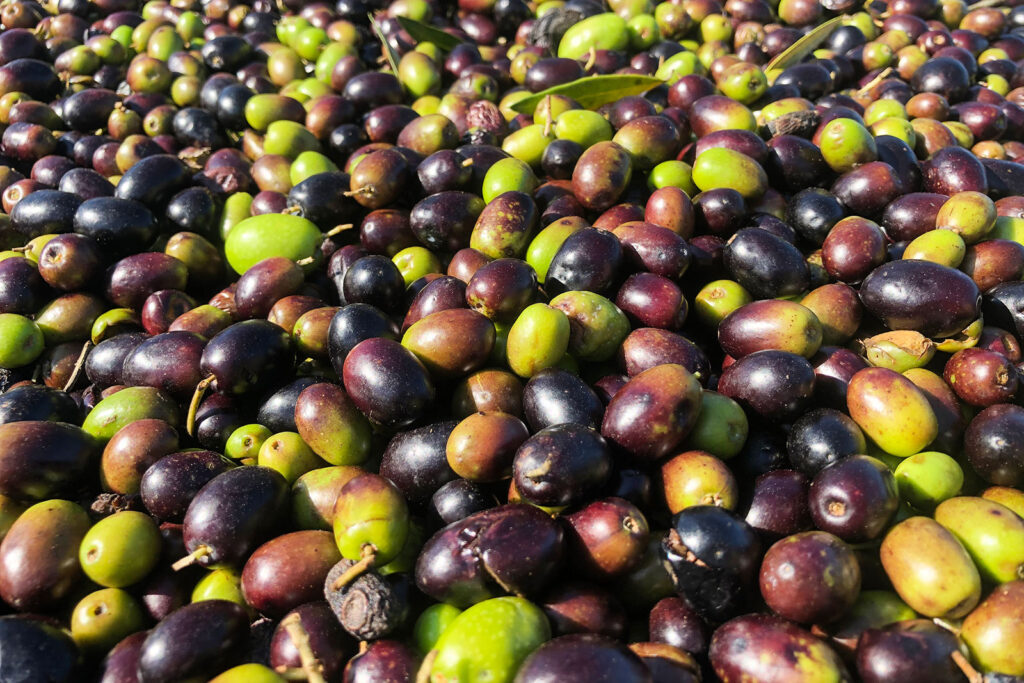
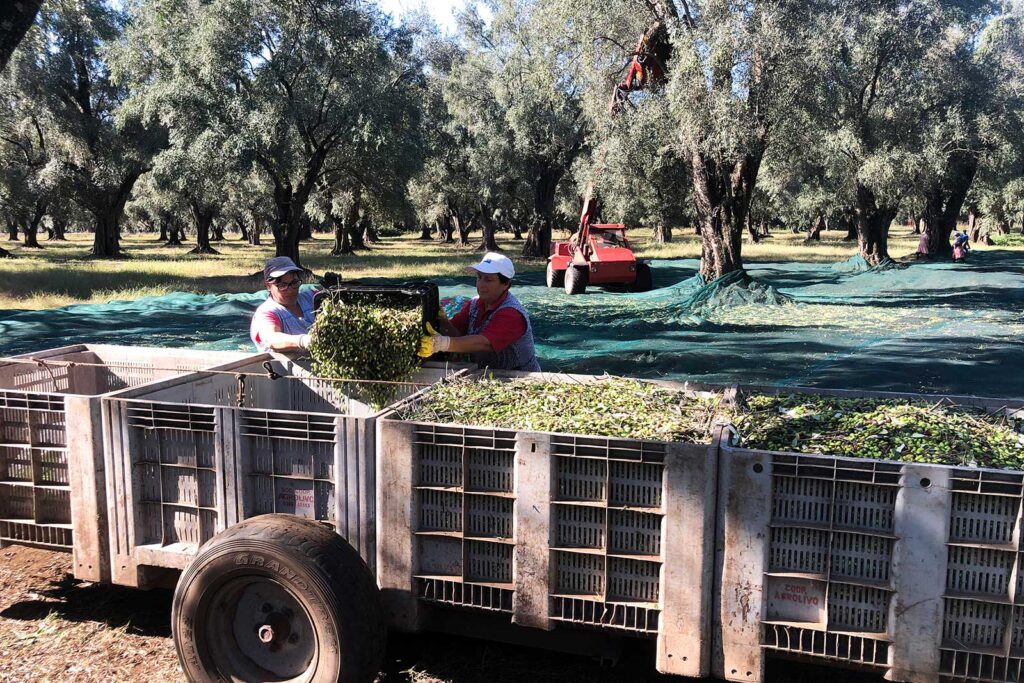
Is the revival of Calabria through the land and olive trees too romantic a vision? Perhaps things are a little more complex in Calabria, but mano agricultural businesses are adapting to contemporary challenges, embracing technology and emerging as important realities in terms of employment and economic impact. There is remarkable dynamism: many have successfully renewed themselves by following European directives, investing in biogas systems for livestock farming and renewable energy through the use of pruning residues that can be transformed into wood chips. All of Calabria is engaged in this transformation: in the Lamezia area through citrus cultivation; in the Crotone area through wine production, which is gaining significant recognition nationally and internationally; and in the Reggio Calabria area through bergamot production for the French and international perfume industry. Along the Reggio Calabria coast, Calabrian mangoes are also cultivated. This demonstrates that starting again from the land and from agri-culture is neither merely an idea or simpley a project, but a reality that already exists.
Do infrastructure gaps, including those within the region itself, penalize you? Are they a determining factor in development prospects? The issue of missing roads must be evaluated and weighed in the proper terms. Calabria is a mountainous region: Sila, Pollino, and Aspromonte are our mountains, and mountains are difficult to manage everywhere. What would be extremely important is the rigorous maintenance of the existing neytwrk, wihich currently suffers from major deficiencies in this regard. We are actually in a better position than some other territories. The Salerno-Reggio Calabria motorway functions, even though the thirty-year reconstruction process caused enormous inconvenience and disruption. The Tyrrhenian coast is well connected to the rest of the country, and there are also two major high ways leaiding to the Ionian coast. The need to develop infrastructure must take into account the geomorphological structure of the territory. One cannot simply exploit the issue of missing roads without carefully assessing the benefits in relation to the investments required and the environmental and territorial risks involved. Our disadvantage lies in being geographically “at the end” of the peninsula: regardless of the means of transport, we still have to travel 1,200 kilometers to reach Italy’s gateways to Europe, the major distribution centers, and the main logistics hubs. What could have been our greatest strengths has been completely undermined by its function and by the lack of railway connections. The Port of Gioia Tauro is a missed opportunity. To build it, an extraordinary environmental landscape was sacrificed, and yet it provides no real service to its own region. It is an international transshipment port, a closed and highly specialized system. Our natural shortcut to Europe and other countries – the sea – is effectively reserved for another exclusive function.
Is our provocation – placing the South at the center of the process of revitalizing both Italy and Europe as a whole – a realistic prospect? I am convinced that it is possible, by using agriculture as a driver for generating sustainable local economies. Calabria does not possess the territorial or environmental conditions necessary to develop large-scale industrial sectors. Attempts at industrialization have produced only the remains of unfinished factories and abandoned industrial blights. The only industry that truly makes sense to develop is a rural one, capable of creating stable local employment with a strong international outlook. To achieve this, local politics must support these projects by following European directives and making proper use of European funding opportunities. It must also recognize that agricultural planning, by its very nature, does not follow the five-year cycle of political elections, but instead requires a much longer-term vision. Mistimed decisions, a poor understanding of real needs, and a lack of specific expertise have led to misguided choices, effectively leaving agricultural entrepreneurs alone to pursue – and at times even fulfill – the dream of establishing their territory on the world stage.
The opening photo is by Stefano Anzini.