


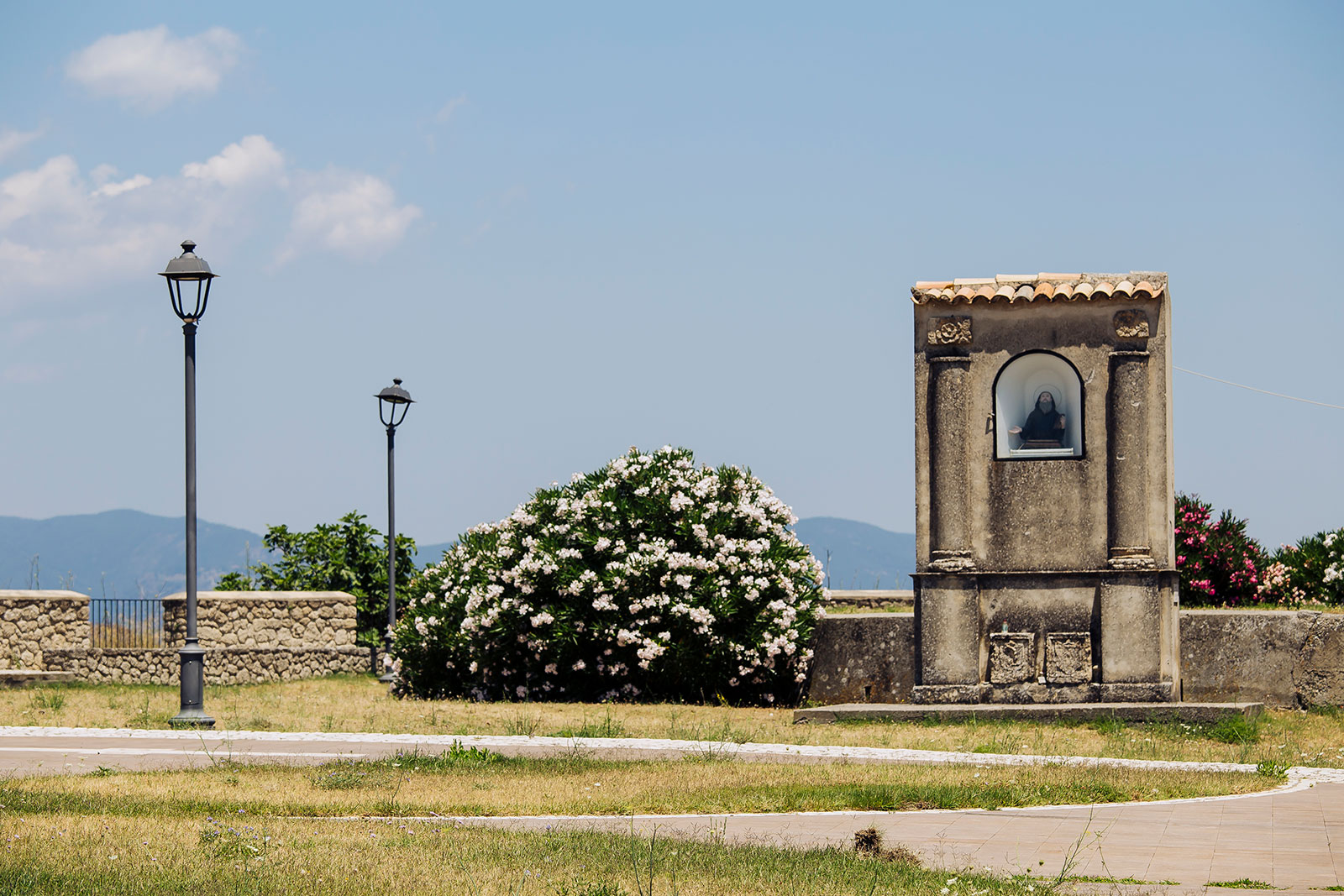
Salvatore Greco, architect and council member of the Order of the Architects of Reggio Calabria, overturns the preconceived narrative of a poor Calabria. Its supposed poverty exists only in the eyes of the those who are unable to see.
“Calabria is wealth”
Salvatore Greco opens with this stement, immediately and decisivly removing one of the many stereotypes surrounding Calabria as a “poor region”. It is a beautiful narrative by Greco one that does not indulge in sentimentality but instead develops a rigorous analysis grounded in observation and the memory of places. An alternating vision – close-up and from a distance – that returns the most honest and passionate portrait of the South.
Calabria is rich in perceptions. Its highly distinctive morphology is itself a form of wealth.
It is a mountainous region, made of mountains that face each other across the seas (the Ionian and the Tyrrhenian), and the physical space between the coasts and the Aspromonte is filled with countless stories.
Eight hundred kilometers of coastline, pastoral culture and cuisine…other narratives and forms of wealth.
Another form of wealth is the Calabrian “unfinished”: the rebar of pillars emerging from slabs, awkward volumes rising up, unfulfilled promises of houses – behind every house there is a social story, and this is wealth. Further wealth is the suspended sense of time, as if it stops and then resumes.
A sad form of wealth, but still wealth, is that of lands abandoned due to economic necessity, hydrogeological instability, earthquakes, and floods.
There is also the wealth of ghost towns, where only the past exists, while present and future are merely illusory intentions: the village of Amendolea and its river, the Cretto di Burri in Gibellina, which tells not what once existed, but its disappearance, the aftermath of the earthquake. The linguistic richness of the Grecanic area (certainly not a “minority” – a word that feels wrong and contradicts its enchantment and fascination).
Again, suspended time. All of this is wealth.
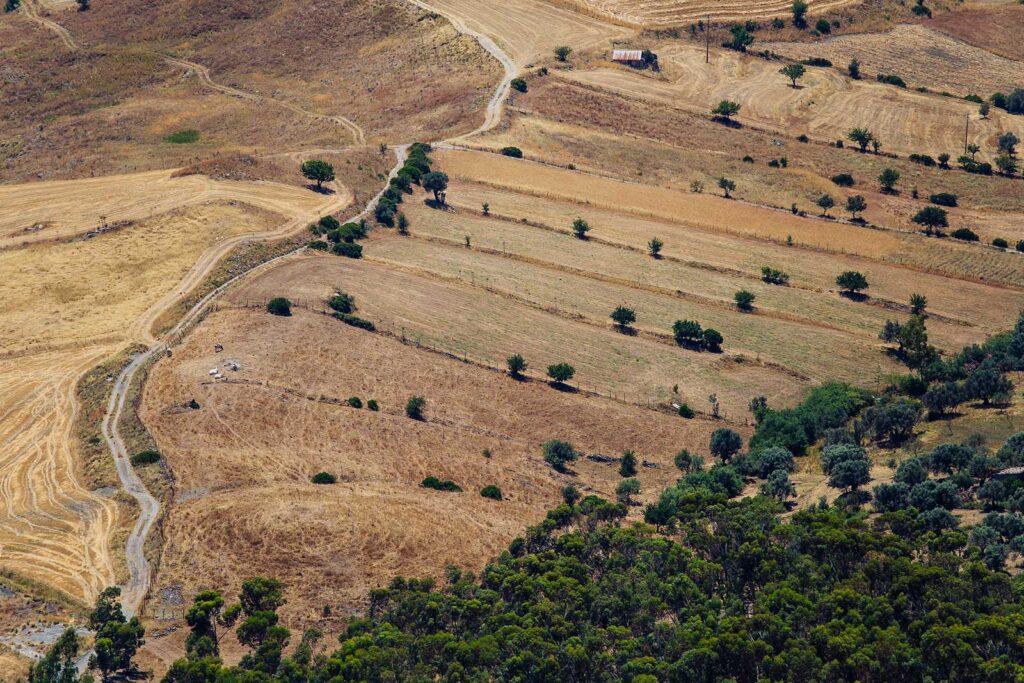
Then we move into the question of how to use and invest this extraordinary value.
A first reflection is that some of these situations have been preserved precisely because they have remained inaccessible.
And while invisibility and inaccessibility can certainly have negative connotations, I believe it is preferable to maintain an extreme form of protection rather than resorting to misguided interventions or restoration approaches that turn villages into something resembling and “Indian reservation”.
That would mean losing wealth rather than gaining it – making room for a form of consumption that empties places out, a throwaway use of territories.
Change, “progress”, even in its most aggressive forms, has reached Calabria filtered through its environmental character and geography – sometimes hostile – and this has caused less damage than in other regions.
We must encourage a delicate form of tourism, one that is not offensive or arrogant.
Landscapes transformed into postcard panoramas end up aligning with an undifferentiated mass of postcard-like landscapes.
The danger is that the richness of values is reduced to a merely transitory purchasing power – and the lost forever.
Can the authenticity of the Calabrian territory be reconciled within a European framework? The provocation we are putting forward with Invisible Mediterranean(s) is that of restarting the country (and Europe as well) from the southern Mediterranean.
These are not separate positions, but shared objectives grounded in respect for identity.
In Calabria there is no strong opposition between countryside and city; our wealth comes from the rural world and can be interpreted and strengthened within a European perspective. We are cities, villages, and communities: we must relaunch the vision of the world within and through communities.
For this reason, I believe a surgical level of attention is needed in how tourism is directed. And we must do this ourselves, as Calabrians.
Many things have been “dropped from above” onto us – for example investments in the steel industry, despite its crisis (with Taranto already struggling as a competitor). The Port of Gioia Tauro later managed to transform itself into a transshipment hub, but generating little local spin-off. The port is in fact a ZES–Special Economic Zone–which means that production and processing take place and exchange happens within the port itself. However, the lack of adequate rail infrastructure and railway terminals hinders the development of a potential local economic ecosystem.
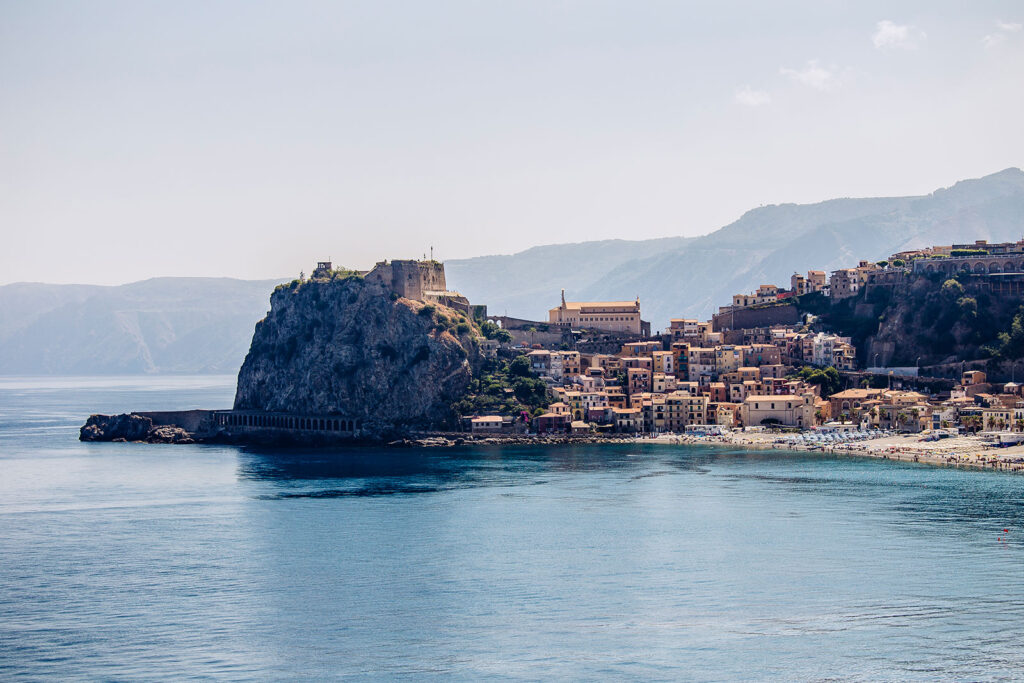
We simply need to return to being what we once where, without anachronistic positions, within a framework of real change.
Calabria is in constant motion, but too often the course it takes is the wrong one.
We can speak a great deal about conservation– about architecture, landscape, and places. But places and landscapes exist through their transformation. To trivialize concepts and apply labels – first “sustainability”, now “resilience” – while pretending not to understand what real mutation means, overlaying inadequate models onto communities, is precisely to take the wrong direction.
In Calabria there are two dawns and two sunsets: the sun rises over the Ionian Sea and over the Tyrrhenian Sea, and the water is made of two seas and of the fiumare. Geography is what shapes history. And it is from here that we must begin.
Politics – which is a fundamental component in triggering architectural processes – must detach itself from models that do not work and embrace the regenerative capacity inherent in territories.
Nik Spatari, an internationally renowned artist and recently deceased, founder of Musaba, the art park in Mammola, spoke of the “archaic future” of Calabria – an idea that is less visionary and more deeply rooted in reality.
“I wish greater fortune to this my, and our, ultramediterranean Calabria”.
With Nik Spatari.