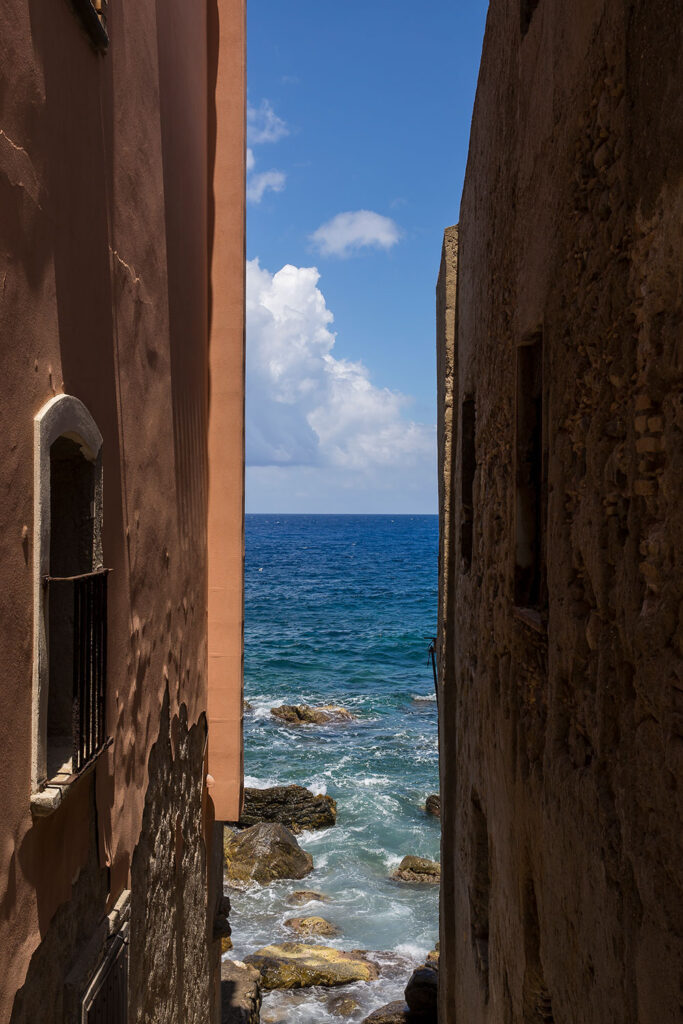


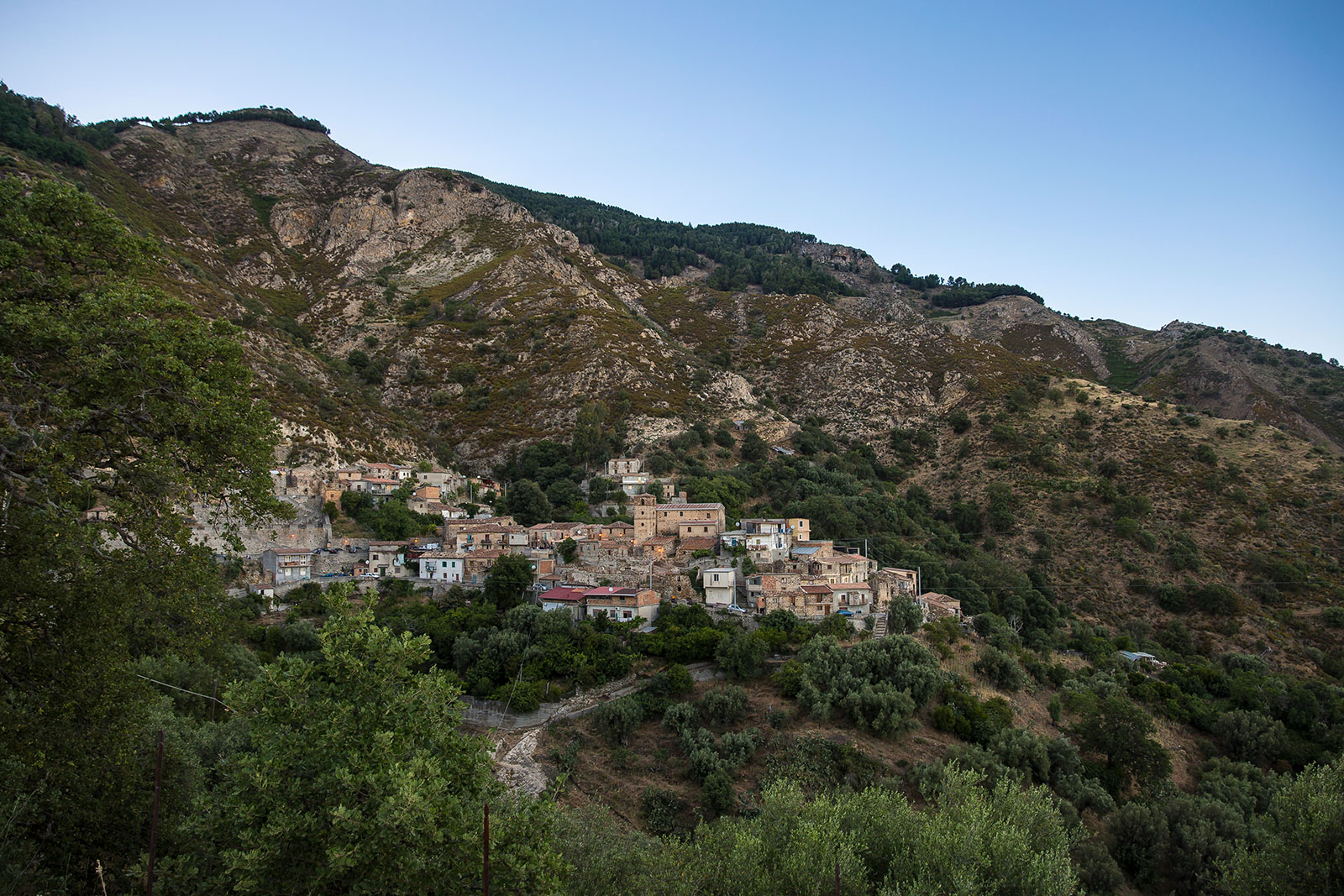
Francesco Messina, architect and contract lecturer at the University of Ferrara, addresses the concept of “limit”: the limits of cultural policy, of environmental policy, and of an attitude of self-imitation that prevents major transformation in the extraordinary space between Sicily and Calabria.
Invisible Mediterranean(s) is a narrative that makes it possible to discover territories that would otherwise remain in the background. Above all, it is a form of ‘proof of existence’., because without knowledge, storytelling, and representation, places and landscapes would not exist beyond their physical boundaries. The Journeys Across the Strait have the merit of going beyond the limit of invisibility.
The limit is the most serious problem of our territories: the Strait of Messina has a geographical and political specificity, a point of tension between the island and mainland dimensions of Italy, a large water space where the distance between the two shores is ‘dialectically’ variable. The journey becomes a syncrasis between these cultures – Sicilian and Calabrian – which find in the Strait a unique form of synthesis and propulsive energy, something that concerns the entire Italian South.
Landscapes are revealed, places are identified, and their knowledge is amplified, extending it to the entire local community and to Italy, in a global expansion where, finally, the limit is broken down.
Invisibility is a limit linked to the difficulty of physical connections between places, a condition that feeds and perpetuates itself through the constraints imposed by a culture of conservation which, in a distorted cognitive process, overlaps with certain environmental policies.
Thus, a geographical limit is transformed into a major political limit that discourages development projects and encourages the abandonment of territories sorrounded by increasingly high mental walls.
All levels of infrastructure are missing, starting from the physical one – and I am not referring only to exceptional engineering works such as bridges and viaducts, but also to basic roads.
In Sicily there is greater sensitivity; in Calabria, the two coasts – Ionian and Tyrrhenian – do not communicate with each other.
The revival of Calabria depends on these connection nodes between east and west, and between the interior, the mountains, and the coasts.
Architecture must intersect with infrastructure projects, acting on the territory to bring out its value and transform it into a driver for tourism flows.
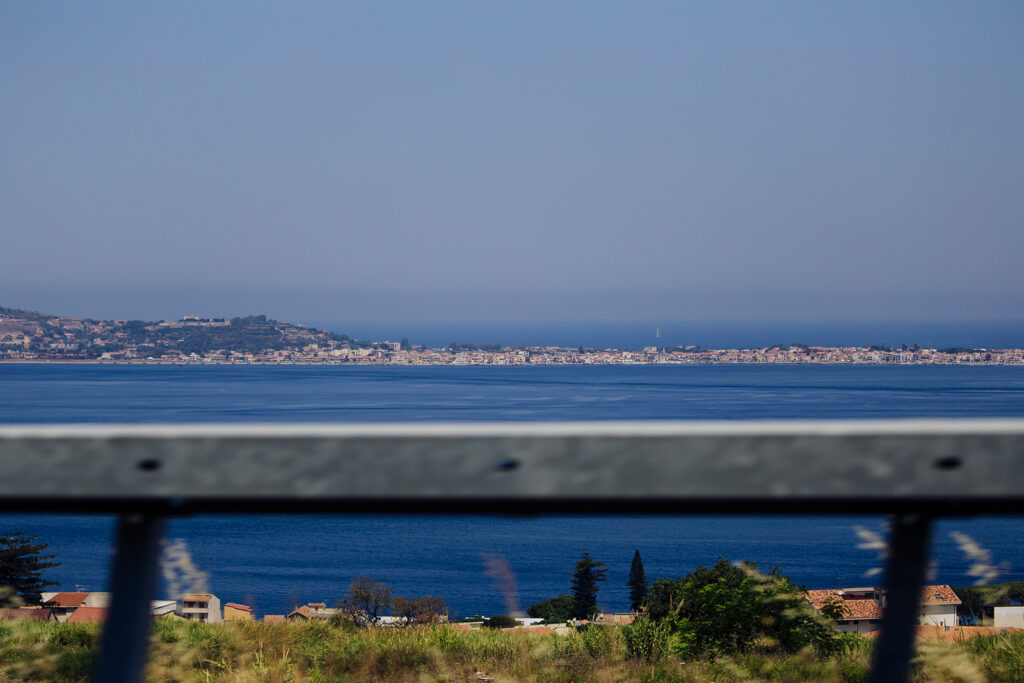
Tourism is a key element for places with unique environmental characteristics. But architecture has the responsibility to look toward the everyday life of a territory …
A country’s strategy can coordinated through architecture, which brings together, within an overall vision, the regeneration of places without allowing certain functions to prevail at the expense of others, and without creating single “vocations”.
Calabria region, in particular, must restart from architecture because it is dense with contradictions; it has been scarred by illegal construction that has continued, unpunished, for years. Architecture recognizes beauty everywhere, even where the “ordinary” eye sees only ugliness, and design is the best tool for redemption.
Redemption and regeneration feed one another, creating places for social life, public and accessible spaces. And precisely the lack of places where people can gather, engage, and find orientation is another serious limitation for communities. On the part of central government, there is a total lack of attention to real needs, and even local politics struggles to understand the true priorities.
Do decision-making and operational processes seem slower in Southern Italy than elsewhere? Is there a different sense of time in Calabria and Sicily?
Contrary to this common perception, I distance myself from the cliché of the “slow time” of the South: time is the same in both the North and the South. The difference is that in the South, Time expands in order to settle, to be absorbed, and metabolized. In the unique space between Sicily and Calabria, there is no such thing as “disposable” time – a consumable kind of time that leaves no trace of reflection or growth. In the South, Time always leaves something behind.