


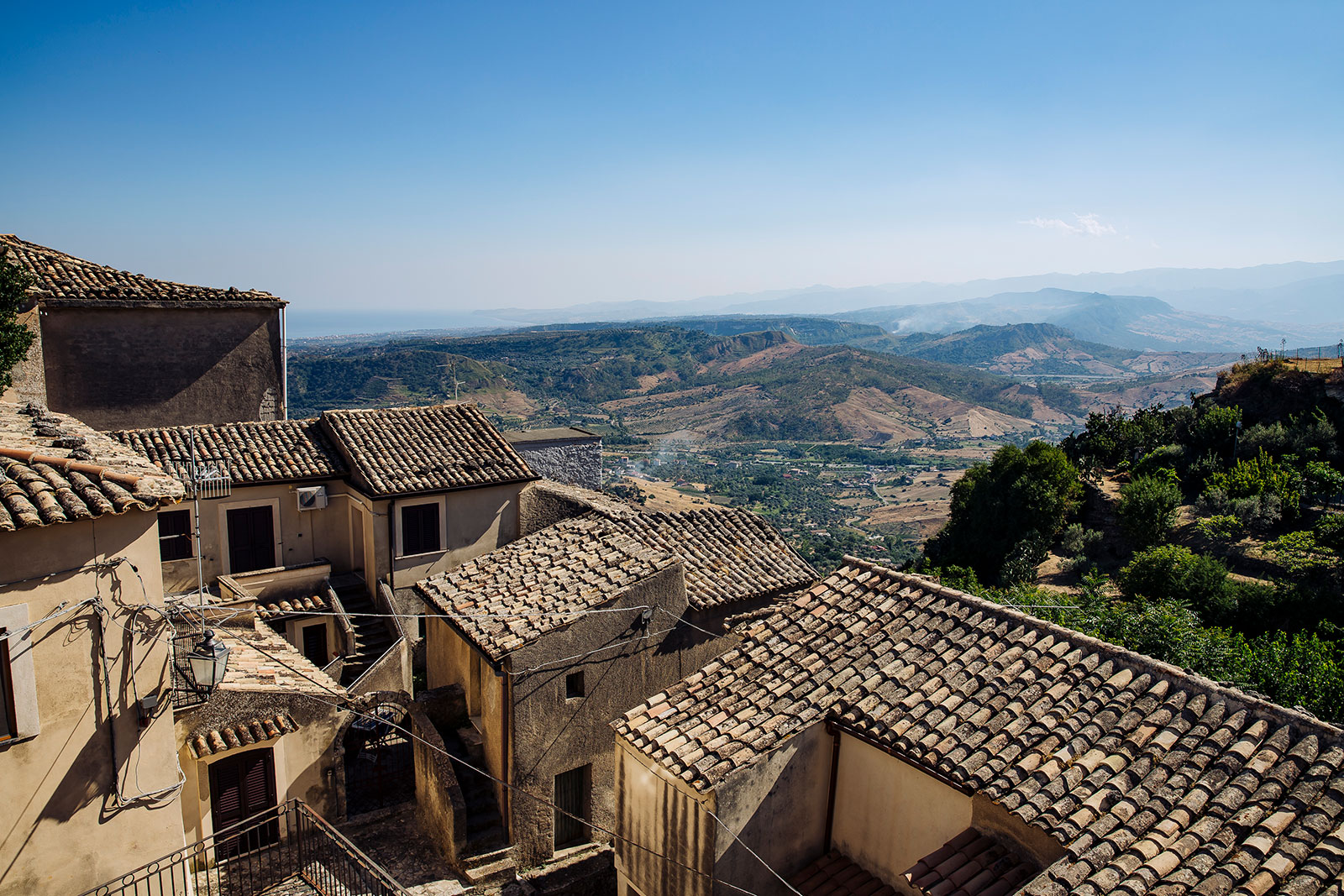
Giovanni Multari, architect and professor at University of Naples Federico II, believes that regeneration should be a program implemented through small steps, relying on alternative solutions: if the Bridge is not built, let’s immediately redevelop Villa San Giovanni. If industry is not working, let’s invest everything in agri-“culture”.
Invisible Mediterranean(s) is dialogue, comparison, and investigation. It is a journey and a revelation of the invisible dimensions of Sicily and Calabria. It is all of this, but above all it is a way to recognize and reaffirm the strong identity of shy places seeking a sustainable synchronicity with contemporary time.
The Mediterranean is a vast theme belonging to many cultures, marked by different geographies and united by ‘invisible’ aspects, contradictions, and harmonies. The Mediterranean of the Strait is a hidden and reserved place, despite still being a major crossroads and a transnational hub.
At the heart of this Mediterranean, of the South, Rosarno, the plain, and the port of Gioia Tauro form an extraordinary aggregation of masterful visual and olfactory euphonies, together with striking dissonances and urban distress.
Gioia Tauro is a geometric center, but also a generator of economic and political meanings. A place of failed strategies and missed opportunities.
The Port of Gioia Tauro is a giant facing only toward the sea, turning its back on the land because it generates little local impact, is self-sufficient in its function and organization, and is more inclined to look toward the Suez Canal or Strait of Gibraltar than toward its own plain.
Expanding the gaze outward, the richness of extraordinary places immediately emerges – places that have always nourished Calabria. A predominantly agricultural world, whose Calabrian environmental context makes it fertile ground for an evolution that can positively intertwine with architecture.
In Calabria and throughout the South, architecture takes on the meaning of care for the land and for communities; it becomes agri-culture.
We must invest in the traditions we have, enhance them, and make them known: recent pandemic events have confirmed Calabria’s capacity to be an extraordinary reservoir of energy and have highlighted that the region can be self-sufficient.
Infrastructure difficulties still exist, but we are working on them step by step: for example, our mountains are no longer inaccessible. The Club Alpino Italiano has mapped most of the trails and opened the way to a form of tourism that is passionate and respectful of places.
In these mountains lie areas only partially shaped by human activity, revealing an authentic heritage of culture and traditions. It is a unique monumental reality, that of the Sila mountain range, which contrasts with the coastline – a threshold element of the Mediterranean – where design is directed toward the essential themes of ecology and the environment.
In this unusual summer, the first phase of coexistence with coronavirus, Calabria experienced a moment of great redemption, lived across its entire territory, visited by tourists from all over Italy and even by some European visitors. A sign of attention, appreciation, a first step toward taking – by right – a place within a European geography, also through tourism.
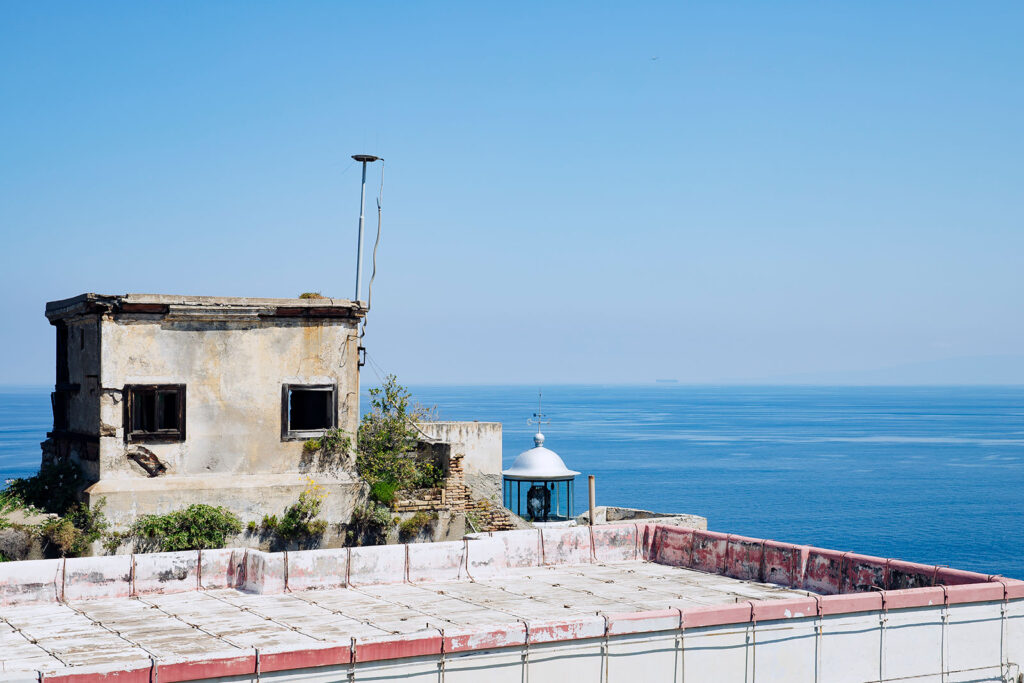
Where do we go after tourism?
Urban regeneration processes are not only made of large-scale transformations. Alongside major works – complex and difficult to implement – there is a small, continuous effort that also reaches the less visible territorial fringes and opens up unknown cultural and physical channels of communication.
We already have an infrastructure system in place that works, and it must be integrated with what is still missing.
The Ionian backbone suffers more, while the Tyrrhenian one is very dynamic, and from these different speeds of places emerges an unusual beauty, the awareness of a diachronic condition that generates positive evolutions out of contradiction: Paola, Crotone, Lamezia Terme, Catanzaro, Reggio Calabria.
There are territorial conditions that can be improved without major transformations, regenerating from the ground up and involving communities and citizens.
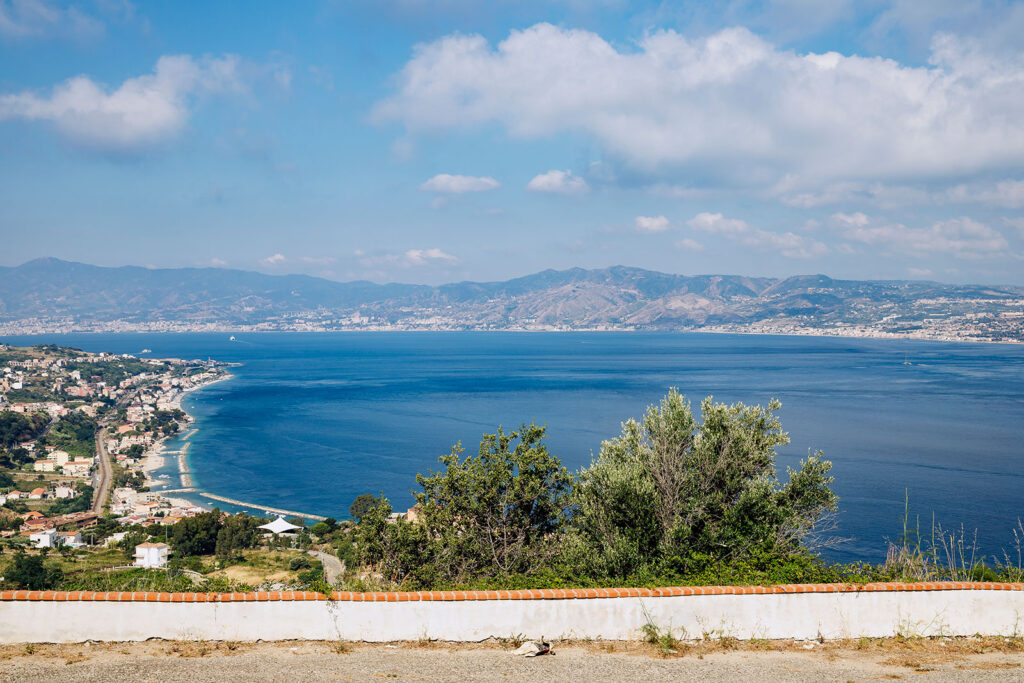
Let’s take a step back: how do the different “souls” of the same territory coexist?
Sometimes they are separate, sometimes they intersect. The Port of Gioia Tauro should be better connected with the plain. And if the best industry in Calabria is agriculture, then the agricultural system must be highlighted and enhanced, from cultivation to forestry, considering that it generates a significant economic impact, with exports across Europe.
But above all, precisely in order to reconcile these different identities, we must never stop and proceed in small steps: if the Strait Bridge is not built, let’s redevelop Villa San Giovanni, equipping it as a place of transit, imagining a large marina, and replicating the same program in Messina, to improve the efficiency of the two gateways.
Before thinking about new projects, we should survey what already exists: abandoned places and unfinished construction sites.
Let’s create a table of people who live in the communities; we do not need prefabricated solutions imposed from above.
Let’s involve a network of local businesses, breaking away from a system governed by patronage politics that has damaged Italy as a whole and especially the South.