


Messina is a painful city. So painful that it is hard to perceive its beauty. In Reggio, the new promenade with Tresoldi’s work, a sign of urban growth and hope, is confronted with rubbish abandoned at the corners of the streets.
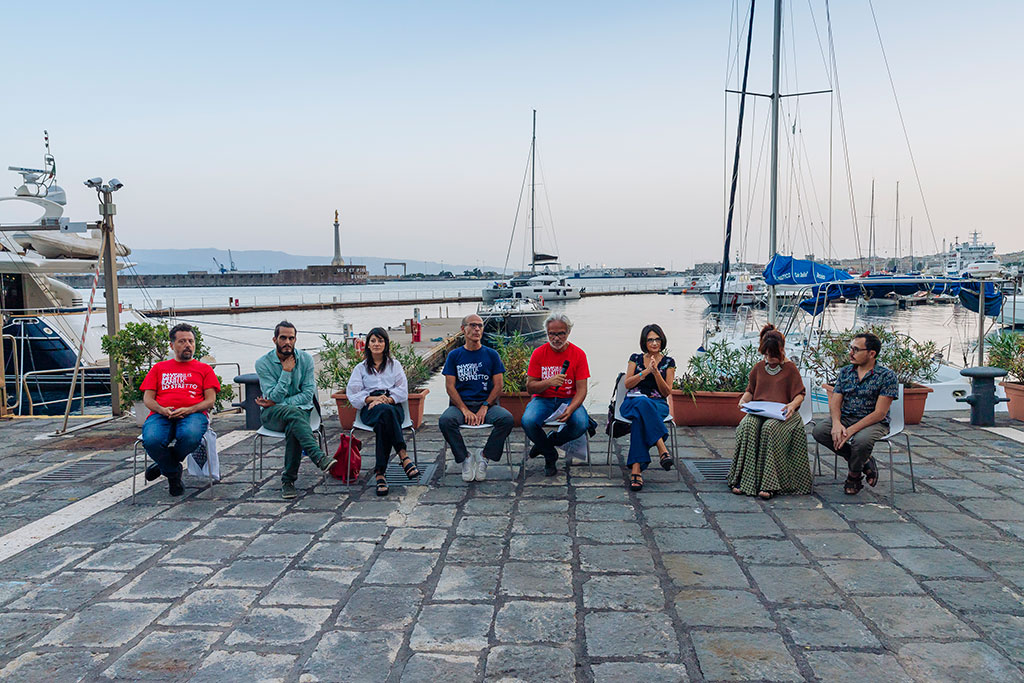
With Anna Mallamo, journalist for Gazzetta del Sud, we discuss one-sided visions that corner the Strait, but also a future made possible by its Beauty.
The Fondazione Italia Patria della Bellezza launched a call titled “Comunicare Bellezza”, a support program for cultural and territorial projects throughout Italy – a way of putting into practice a value that has historically been appreciated through its artistic, environmental, and cultural expressions, yet which does not traditionally belong to the sphere of primary individual and social needs.
Around the word “beauty”, a language dense with prefabricated layers and meanings is often used.
Beauty lies in tourism, in history, in landscape, in design, in science and technology, in manufacturing and food. In books, poetry, and photography. In men, women, boys and girls, animals, and plants.
Almost always, it is beauty as an adjective – a visual or intellectual attribute assigned to a defined subject.
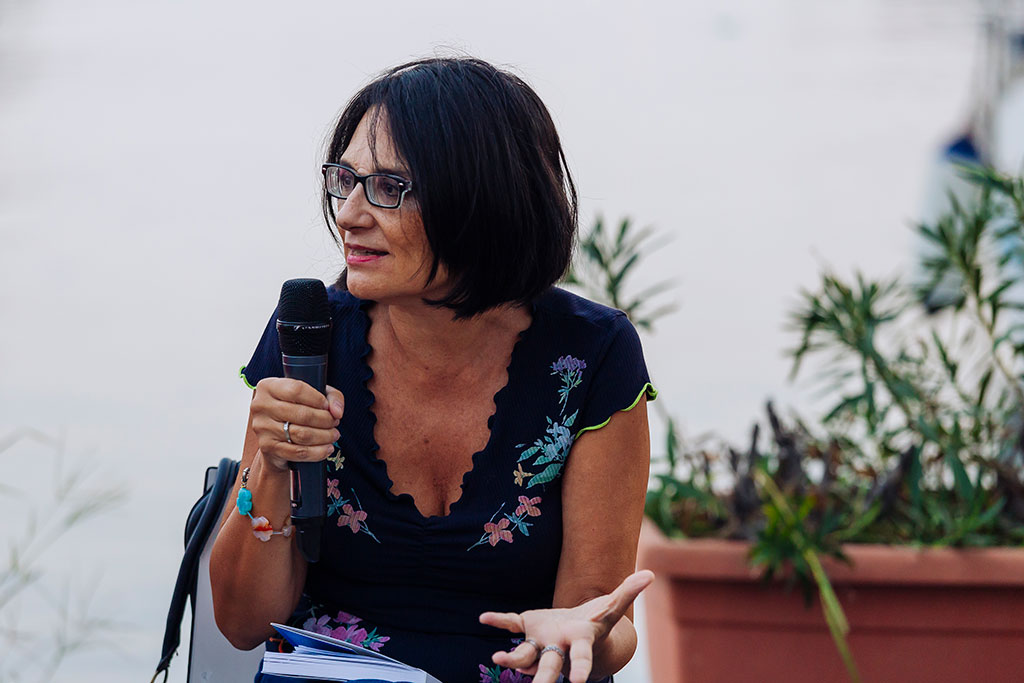
Anna Mallamo, journalist for Gazzetta del Sud, Reggio-born, Messina by adoption, and a citizen of the Strait by passion, believes that beauty is as necessary as food, water, and air – essentially as necessary as the things that keep us alive. Anna argues this starting from the effects produced by its opposite: desolation, decay, and abandonment.
She says, “Landscape is a determinant of the soul”, and it almost seems an inevitable statement when speaking about the lands of Scylla and Charybdis. “I find myself fighting every day against the oblivion that pervades those who live in the Strait and causes a progressive and selective blindness: decay prevails, people avert their gaze from the landscape, and thus they lose their soul.
And from that moment on, you are only able to see and describe what is ugly, and within that narrative there is a kind of complacency in pain and tragedy that leads to inaction.
The perspective closes in: the Strait becomes a territory either to abandon or simply to endure.”
Future and the Strait: how can a connection be created between time and place, a connection that seems to be missing?
The only apparent solution seems to be the bridge that people have dreamed about since the mid-twentieth century, never built – and this alone has become a good reason for complaint. In recent decades, the bridge itself has become “the meaning”, in a desperate search for a collective signifier, the only possible form of redemption.
It is clear that many other forms of emancipation exist: the seafront promenade of Reggio Calabria, with Tresoldi’s installation, is one example, because the people of Reggio – not only tourists – appreciate it and make it part of their lives, supporting local businesses and generating wealth and employment. Even so, just around the corner there are piles of uncollected rubbish, and when you turn your back to the sea, the curtain of buildings you see becomes a fabric of unravelled signs with which you must contend every day.
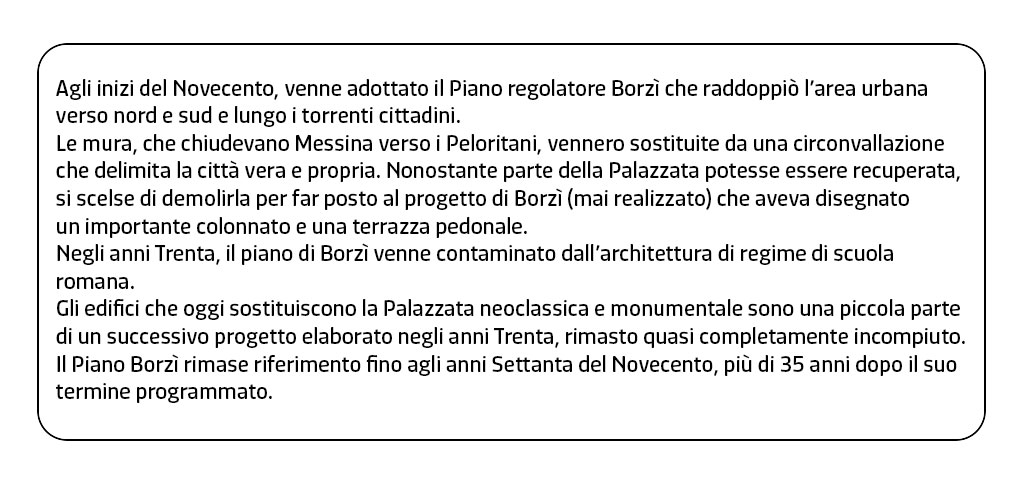
In the past, Messina was a great city. At the time of the 1908 earthquake, it was the third largest port in the Mediterranean. I do not intend here to provide a condensed history, but, for example, before 1908, there was a 9-kilometre-long seafront known as the Palazzata – a continuous sequence of buildings constructed at the beginning of the nineteenth century, better known as the Teatro Marino, which housed a range of functions: residences, silos, and warehouses.
An avant-garde architectural vision, which replaced an earlier Palazzata of much older origin, damaged by the 1783 earthquake.
At the end of the 18th century, it was decided to rebuild the Palazzata and, more broadly, the entire city preserving its previous layout and appearance. However, after 1908, different choices were made.
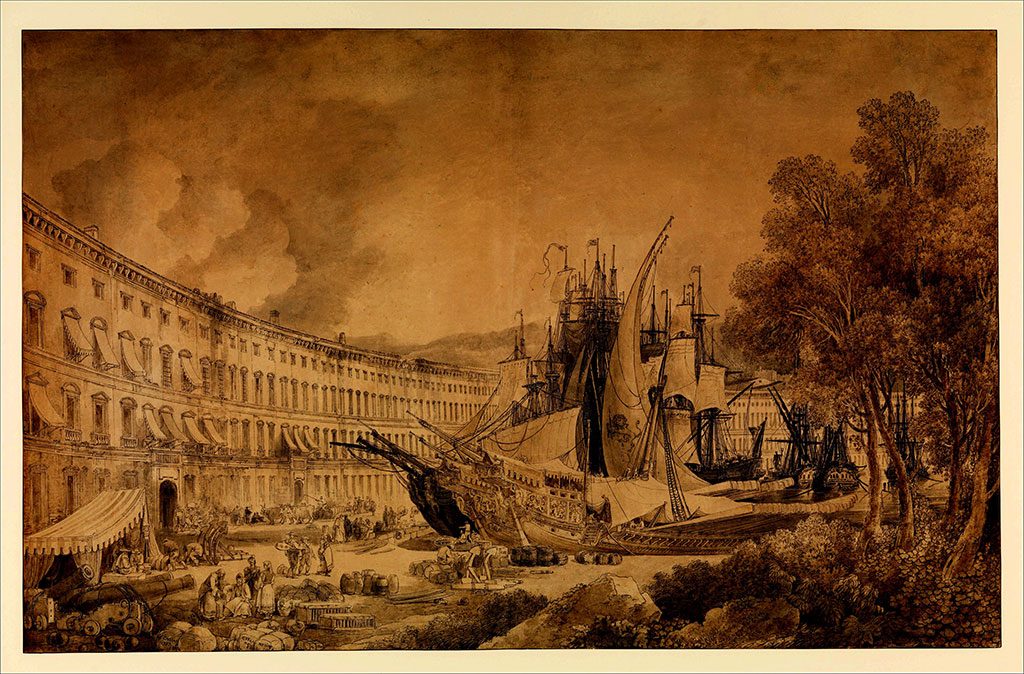
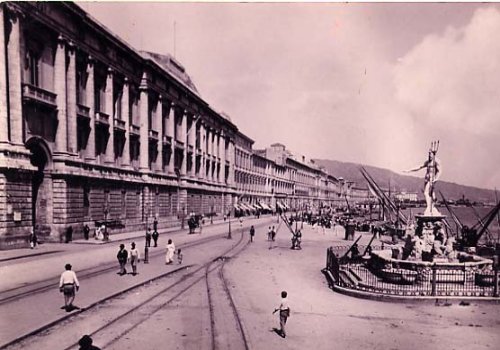
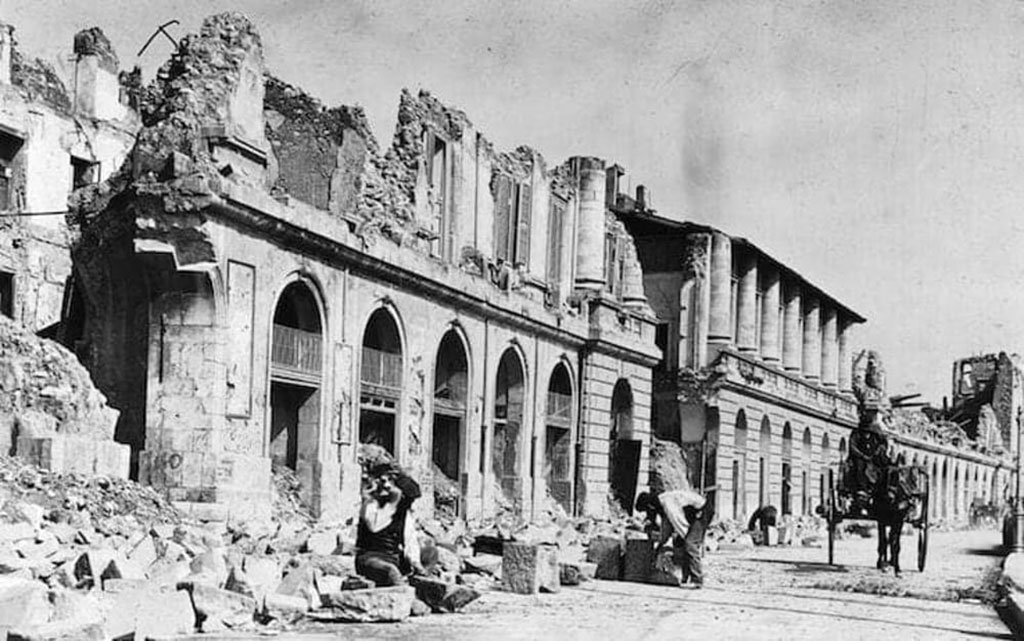

It is a decades-long, almost century-long lack of vision on the part of Messina’s administration. Twenty years ago, for instance, the tram line was built alone the seafront, despite the existence of a less invasive route that had already been identified. It was a short-sighted decision, especially considering that in recent decades coastal cities have worked to remove barriers between the city and the sea. Reggio and its promenade, geographically close, are a clear example of this. The tram on the seafront has further diminished an already struggling Messina
Messina’s past is its landscape: hills flattened, hills rebuilt.
The people of Messina move between the memory of the past and what the gaze itself generates – two forms of memory that produce a permanent sense of uprooting.
Before 1908, there was a saying in Messina used to describe a highly negative situation: “to do more damage than 5 February” (the day of the 1783 earthquake). This is not only a reference to popular culture; it almost represents an anthropological evidence of how the “damage” suffered offered the people of Messina a pretext not to fight back, an alibi not to react, turning inaction into a way of life. With the second earthquake, even more so, identity was lost in the collapse, and there is no desire to recover it.
What has been built – the geometry, the heights, the materials of the buildings – acts on people’s perceptual sensitivity, generating daily feelings of either positivity or discomfort. One is subjected to, and gradually becomes accustomed to, the most disturbing elements, to visual dissonances, and to the lack of connections between the fragments of the city, the greenery, and the sea.
This happened in Messina.
How does it work for those who stay?
“Restanza” – a word effective both in sound and meaning – is a complicated and risky choice.
Vittorio Teti – an anthropologist – speaks of the “adventure of staying” (in the South, editor’s note): “the effort, the harshness, the beauty, the ethics of ‘restanza’ are no less decisive and foundational than the adventure of traveling. The two adventures are complementary and must be understood and narrated together.”
The risk is one of habituation and diminishing vision, eventually leading to complete blindness.
Creating a cultural condition that compels “the people of the Strait” to look at the Strait – to know it and to recognize it – means designing a radical cultural intervention, one that activates a continuous rather than episodic process of revitalization, ultimately capable of bringing about lasting change.
The abiility to perceive the beauty of the Strait, of Messina, and of Reggio must be constantly encouraged, for it has long been stifled not only by its opposite – the accumulated ugliness of the landscape – but even more so by inaction.
The makers of beauty – writers, artists, architects – seek to jolt their fellow citizens into readjusting their gaze, revealing the immaterial to those who observe from afar, captivated by legends yet fearful of disappointment.
This is what Nadia Terranova has done in her novel Farewell, Ghosts and in the graphic novelCaravaggio e la ragazza (created with Lelio Bonaccorso), featuring beautiful illustrations of Messina.
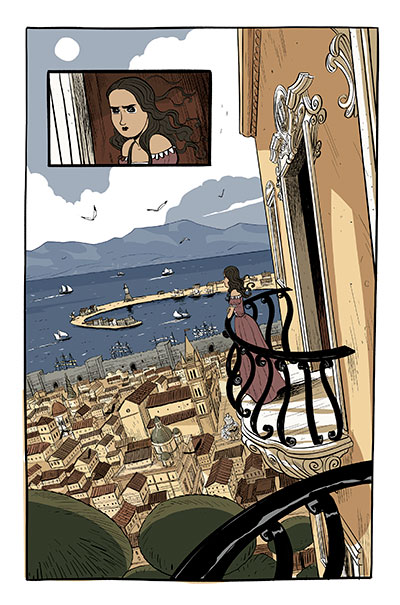
Retruning to the starting point of this reflection and to the question – how it works for those who stay – the need for beauty must find a synthesis with the economy.
Architecture is, potentially, one of the elements of balance and reconciliation: it introduces new layers and integrates the functions of everyday life into urban contexts of good formal quality, in a continuous dialogue with the built heritage of the past and with the natural environment.
From a naturalistic perspective, the Strait is a goldmine to be monetized, ideally not (only) through a “milk-the-tourism” approach, assigning a handful of square meters of coastline to sun-and sea-hungry tourists, in a B-movie-style model.
This is not what the people of the Strait need. There are alternative approaches that can be developed for a form of tourism in which the beach is a pause, not the goal: for example, territorial itineraries, routes tracing the residencies of artists, nature excursions, and so on.
This hidden beauty, which already exists, has become invisible because it has been diminished by other choices that the Strait – Messina, but also Reggio – has inflicted upon itself.
What emerges is illegal building activity and a monstrous ugliness. Even everyday living has taken on a diminished, impoverished dimension. Pervasive speculation has generated a sense of possession without beauty.
Fortunately, there are many projects underway …
Some things have been done, but many others have been left unfinished or interrupted. There are still miles of coastline to be restored. What is lacking is a political and economic vision. When a local administration is focused on defending itself, it does not invest in major works, but in reassuring the electorate in the short term.
Work is lacking; work is a priority.
It must be so.
But “work” is not an isolated category. It is the design and planning across different sectors that generates work. The people of the Strait have a short-sighted obsession with the “bridge” as a generator of employment for years to come, even before considering it as a means of connection.
Without taking into account that today, within a framework of ecological transition, this would perhaps be a choice that depletes the territories.
The construction of the bridge would increase both heavy and light vehicle traffic, a vision anchored in the past, whereas the guidelines of the European Green Deal require a reduction in road transport.
There is a lack of cultural elaboration around any vision of the future, which as a consequence fades further and further, because the conditions for a serene “staying” no longer exist. Younger generations are not given the conditions to love their places.
What do you think about the issue of conurbation between Reggio and Messina? Are there risks of forcing the concept?
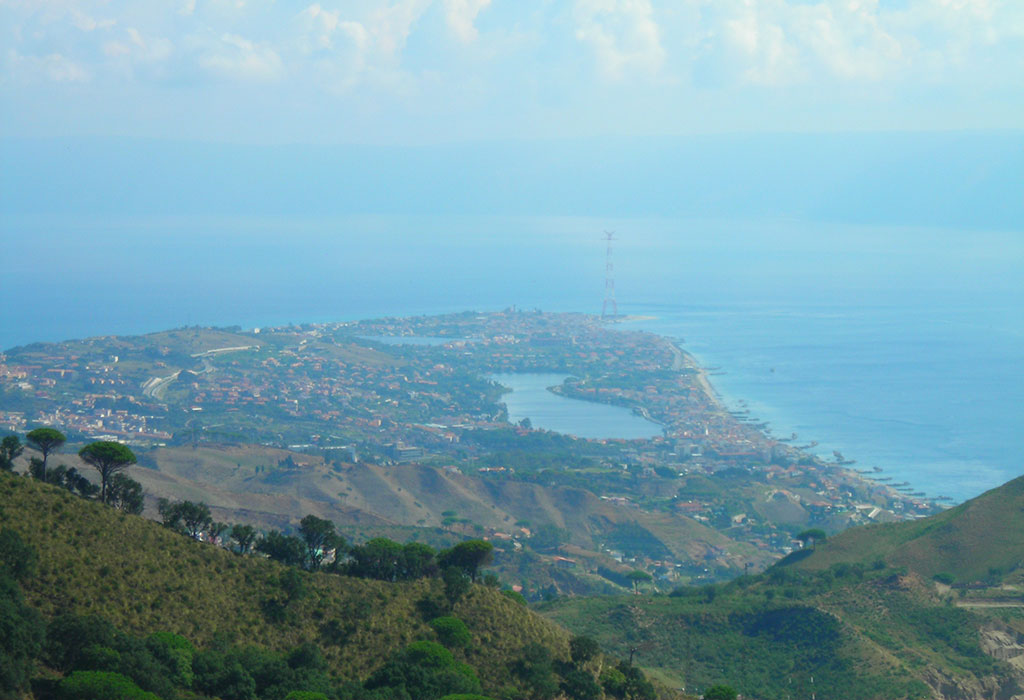
The people of the Strait share the ecological and landscape system of the Strait, but from different perspectives. From Messina, for example, we see Villa San Giovanni, not Reggio.
Sicily is an island, while Reggio lies on a peninsula. The approaches are different, but this heterogeneity is a value to be preserved.
The Strait’s ecosystem is an incredible heritage to observe, understand, and preserve.
It is important not to lose sight of the goal and to formulate good projects for a neglected territory.
To attract capital, we have so much culture, memory, and beauty – and this is what matters.
Much of the beauty of the Strait lies more in its villages than in its cities. To what extent is a “village system” imaginable?
A project based on a relationship between villages and cities, developed through physical and digital infrastructure and through securing areas from water-related risks, has great potential. From an economic perspective, it demonstrates that the beauty of the territory can generate stable wealth, independent of tourism seasonality.
More marginal cities, such as Messina, can offer much to a possible village – city pairing, not as an alternative choice – villages or cities – but as a system of relationships the operates at different scales of distance and time.
realtà culturali che amplificano le specificità del territorio in modo attivo e concreto e rappresentano il bello che avanza.
It is essential to start from cultural realities that actively and concretely amplify the specificities of the territory and represent the advancing notion of beauty.
Anna Mallamo, a “strettese” (from Reggio Calabria, she has lived in Messina for many years), works as a journalist at Gazzetta del Sud, where she heads the Culture and Entertainment section. She hosted a regular column for several years in L’Unità and runs a blog on the Huffington Post. She is very active on social media, with the account @manginobrioches.