
Articles Tagged with: Messina
JOURNAL-NADIA-TERRANOVA-MESSINA-BARCAROLO-MARCO-INTROINI.jpg

UN MARE CHE SA UNIRE SENZA PONTI. NADIA TERRANOVA RACCONTA LO STRETTO

Parte dall’immateriale, Nadia Terranova, dall’intima connessione percettiva tra l’andata e il ritorno, talmente forte da non sapere più quale sia la direzione del viaggio.

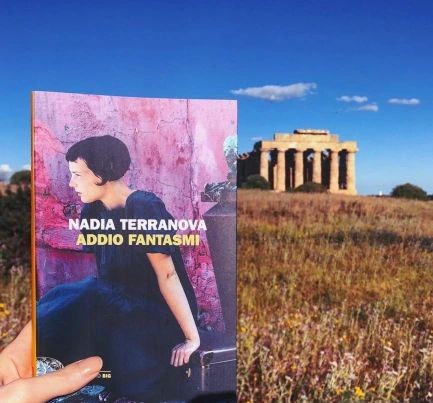
In un’intervista rilasciata qualche anno fa a Maria Stefania D’Angelo per Sicilianpost, in occasione della pubblicazione del suo libro “Addio Fantasmi”, Nadia Terranova parla di Messina, luogo in cui la storia è ambientata, sua città di nascita, lasciata per trasferirsi a Roma. “Negli ultimi anni vissuti a Messina – confessa – non andavo più al mare né mangiavo una granita: tutto mi sembrava così scontato. Ora che vivo lontana ho capito quanto io sia messinese fino alle ossa e quanto siano importanti i piccoli dettagli: una passeggiata in città o un tuffo al mare. Sono proprio questi particolari che custodiscono la bellezza della città e pulsano nel cuore dei siciliani espatriati”.
Il contributo di Nadia è particolarmente importante per il progetto di Mediterranei Invisibili che si nutre di osservazione e di ascolto, perché esprime le vibrazioni e le contraddizioni della sua città e dello Stretto attraverso uno sguardo differente che lei stessa definisce “prismatico”.

Nadia sei messinese di origine, vivi a Roma da molti anni. Quanto l’appartenenza a un luogo è data dalla sua fisicità? E cosa significa per te “il ritorno”?

La fisicità di un luogo non è il luogo. Pare una contraddizione in termini, ma ho grandi difficoltà a comprendere quale sia il luogo del ritorno. Torno a casa quando scrivo, non quando ci sono fisicamente.

L’ha detto bene Vincenzo Consolo (scrittore siciliano) “Mi sento come Ulisse in cerca di Itaca. Ormai siamo diventati degli Ulissidi, espropriati della nostra identità e alla ricerca della nostra Itaca. Quando torniamo però Itaca non c’è più; la patria è ormai diventato un luogo interiore. Vedendo la realtà siciliana fatta di ingiustizie ho deciso di spostarmi a Milano. Lo sradicamento (solamente fisico, le mie memorie sono qui) è doloroso, però alla fine necessario. Non è facile ricostruire legami in luoghi che non sono i tuoi. Ma stando qui si fa un danno a sé stessi. Bisogna però tornare e quando si torna si è più forti, forse anche meno vulnerabili, o meglio, meno “ricattabili”.

Cosa significa tornare allo Stretto attraverso la scrittura?

Lo Stretto è davvero un luogo particolare, non dà il senso dell’isola. Quando sei in altre parti della Sicilia, a Palermo, per esempio, puoi sentirti su un’isola, ma sullo Stretto è il mare che connette, unisce le due terre. Senza bisogno di ponti. Tornare nello Stretto, per me, è reinventare il luogo attraverso le parole. Il legame con lo Stretto è talmente forte che quando scendo da Roma a Messina non so se sto andando o tornando.
Lo Stretto ancora soffre per il terremoto del 1908, non è ricordo, ma persistente e dolorosa presenza. .
Tuttavia, la distruzione non ha cancellato la sua storia e quella delle due città, che risale all’origine dei tempi. Ne ha eliminato gli aspetti epidermici, ma non la possibilità della rinascita contenuta nella sua memoria.

“Deve essere stato dopo il terremoto del 1908 che abbiamo smesso di buttare le cose, incapaci per memoria storica di eliminare il vecchio per far posto al nuovo. Dopo il trauma tutto doveva convivere accatastarsi, non si poteva demolire, solo costruire  a dismisura per lo spavento, baracche e palazzine, strade e lampioni. Da un giorno all’altro la città c’era e poi non c’era più e se il disastro era accaduto, poteva accadere di nuovo, infinite volte, allora meglio addestrarsi a tenere insieme. (Nadia Terranova, Addio fantasmi)

È mutevole il carattere dello Stretto: Reggio Calabria ha conservato un forte legame con il mare, Messina ha purtroppo rinunciato alla connessione tra mare e città. Gli strettesi si adagiano tutt’oggi nella storia del terremoto, in una salvifica dimensione mitologica, ascoltando il canto delle Sirene, incrociando le leggende.
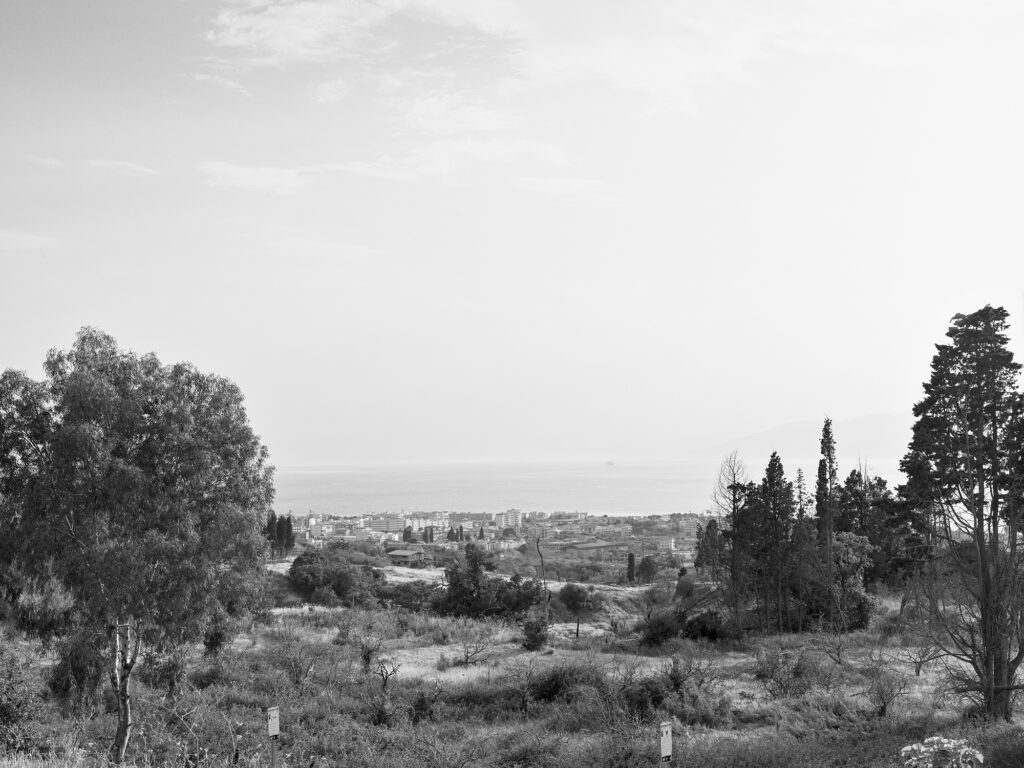
Lo sguardo da Reggio Calabria a Messina. Foto © Marco Introini.

La percezione di questo insieme narrativo e paesaggistico è fortissima, crea quasi una regressione, quel “ritorno” di cui la scrittura si appropria e restituisce, più dell’essere nei luoghi.

Quello della conurbazione di Reggio e Messina, di una visione geopolitico economica di una città amplificata è un tema mainstream. Cosa ne pensi?

La provincia di Messina è molto grande, tocca due mari e anche la città di Messina, che pure ha una sua delimitazione precisa, è ricca di sfumature.
L’identità unica è un po’ una forzatura perché ci sono differenze addirittura tra quartiere e quartiere.
Ci sono le periferie da rigenerare e poi ci sono i borghi e i paesini della costa.
Le differenze sono notevoli e i luoghi molto diversi. Ci sono comuni molto importanti, Milazzo, Taormina, Savoca, Castemola, Ficarra con identità originali che derivano dalla grande complessità dell’architettura, della letteratura e dell’arte.
Sulla soglia di confine verso l’Etna è un altro mondo ancora.
E poi ci sono i dialetti segnano fortemente le comunità e le distinguono.
L’unicità del messinese è data dalle sue differenze.
Che senso avrebbe un appiattimento calato dall’alto?
Essere un unico territorio non significa uguale in ogni sua parte.
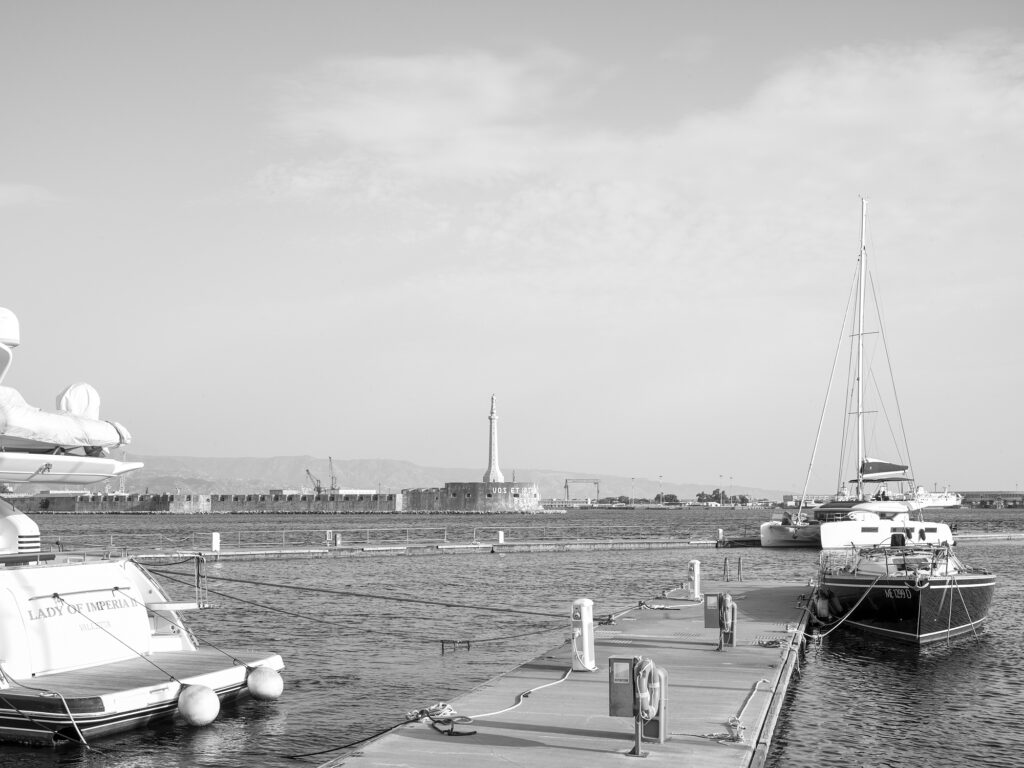
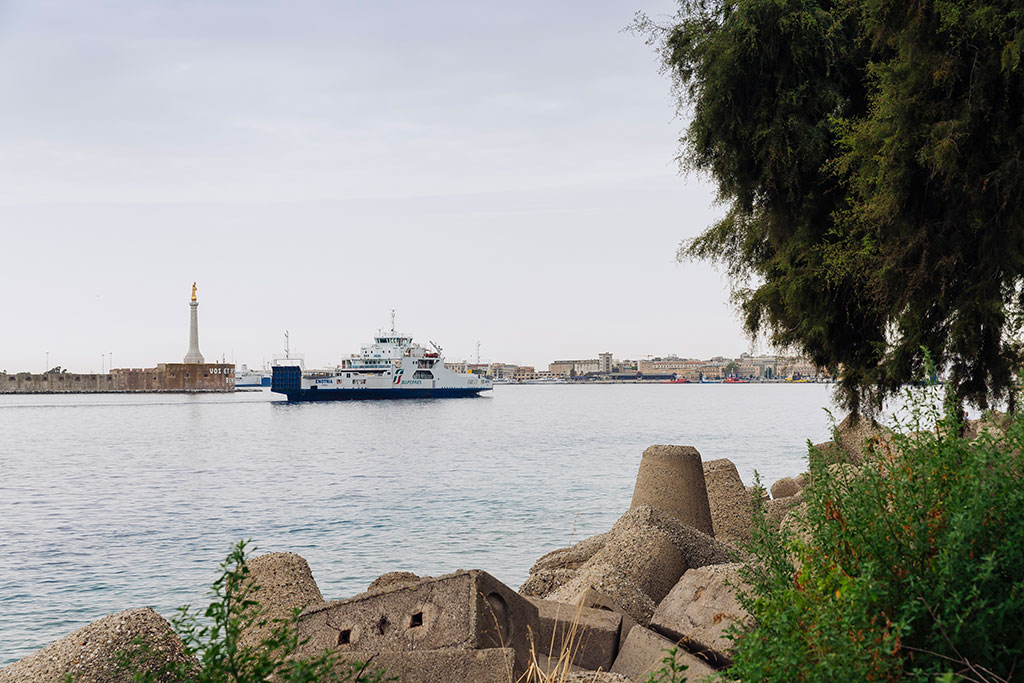
La “Madonna” della Lettera all’ingresso del porto di Messina. Foto © Marco Introini.

Qual è allora la via per “riscattare” le sofferenze dello Stretto?

Il primo passaggio è quello di cambiare il modo di guardare alla Sicilia.
Prima di scrivere, si osserva.
L’osservazione si alimenta della conoscenza della storia, del passato siciliano, calabrese, strettese.
Serve uno sguardo prismatico
La Sicilia è grande tanto che puoi scordarti di essere su un’isola, ad esempio quando sei a Enna che è il suo “ombelico”.
Serve osservare e valorizzare la bellezza, aggiornandola al presente.

Si era fatta l’ora in cui sulla costa calabrese dall’altra parte del mare si delineano nitide le autostrade e i cavalcavia, mentre di qua Messina si distende per risalire, scende in piccole valli e si apre negli angoli alle scalinate, punta al cielo come fontane e guglie si curva su stessa con cupole catalane e marciapiedi rotte, si affaccia alle finestre sui cortili popolari”. (Nadia Terranova, Addio fantasmi)

L’urbanistica, la composizione architettonica di una città mutano nel tempo, e il concetto di cambiamento, anche di quello che ancora deve venire, è nella storia di ogni città.
L’architettura contemporanea si può innestare nel pensiero futuro dei luoghi, preservando quello che esiste e in armonia con il territorio. La conformità estetica al contesto e all’esistente è una delle possibilità, ma credo che l’emozione della sorpresa sia positiva e la scrittura lo insegna.
Messina attende di cambiare in libertà, senza catenacci.
La salvaguardia dell’ecosistema dello Stretto è l’unico caposaldo, già troppe volte violato.

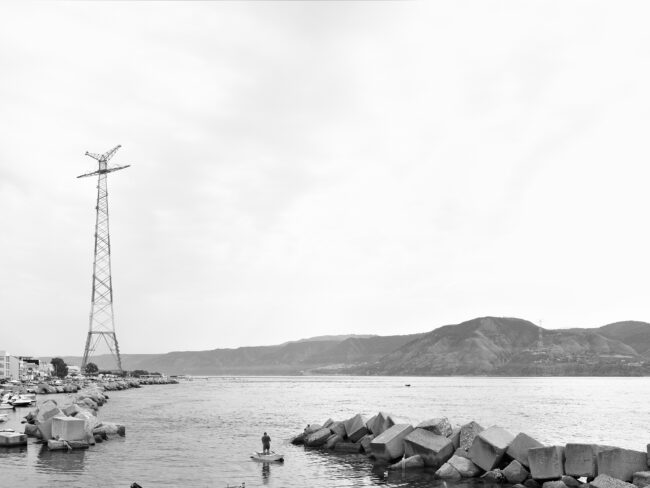
In apertura: Un enorme traliccio e una piccola barca. La costa di fronte e il molo. Cambi di scala e luoghi differenti in un unico sguardo. Foto di Marco Introini.
journal-messina-mallamo-header.jpg

WHAT IS BEAUTY FOR THE STRAIT OF MESSINA, WELL EXPLAINED BY ANNA MALLAMO

Messina is a painful city. So painful that it is hard to perceive its beauty. In Reggio, the new promenade with Tresoldi’s work, a sign of urban growth and hope, is confronted with rubbish abandoned at the corners of the streets.

With Anna Mallamo, journalist for Gazzetta del Sud, we discuss one-sided visions that corner the Strait, but also a future made possible by its Beauty.

The Fondazione Italia Patria della Bellezza launched a call titled “Comunicare Bellezza”, a support program for cultural and territorial projects throughout Italy – a way of putting into practice a value that has historically been appreciated through its artistic, environmental, and cultural expressions, yet which does not traditionally belong to the sphere of primary individual and social needs.

Around the word “beauty”, a language dense with prefabricated layers and meanings is often used.

Beauty lies in tourism, in history, in landscape, in design, in science and technology, in manufacturing and food. In books, poetry, and photography. In men, women, boys and girls, animals, and plants.

Almost always, it is beauty as an adjective – a visual or intellectual attribute assigned to a defined subject.

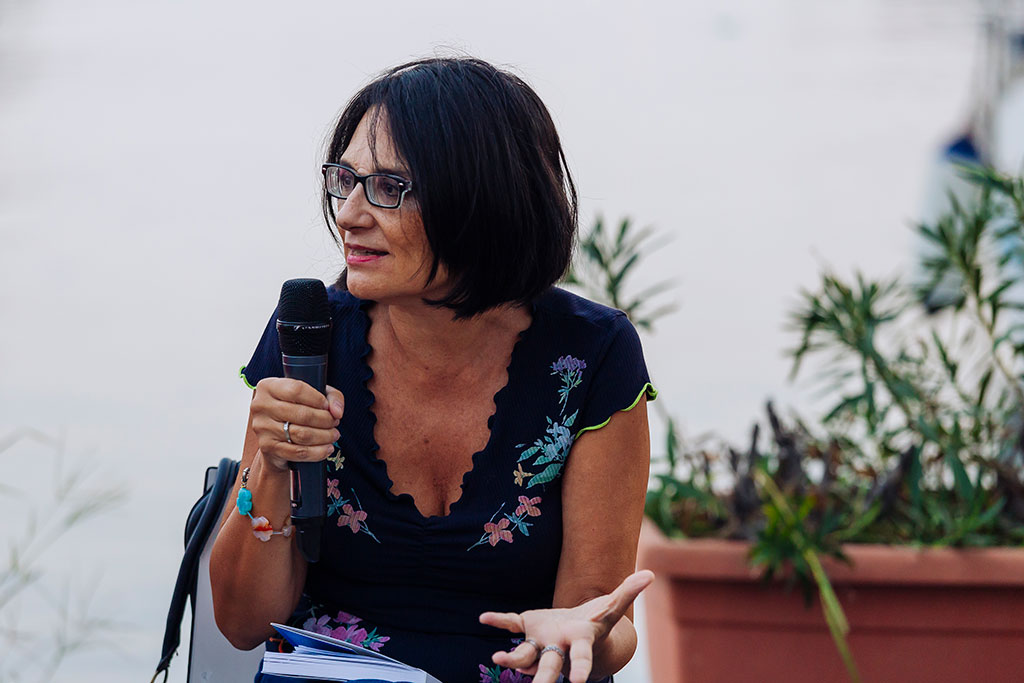
Anna Mallamo during the talk in Messina, Invisible Mediterranean(s) 2021, Journey across the Strait IV. Photo by Stefano Anzini.

Anna Mallamo, journalist for Gazzetta del Sud, Reggio-born, Messina by adoption, and a citizen of the Strait by passion, believes that beauty is as necessary as food, water, and air – essentially as necessary as the things that keep us alive. Anna argues this starting from the effects produced by its opposite: desolation, decay, and abandonment.

She says, “Landscape is a determinant of the soul”, and it almost seems an inevitable statement when speaking about the lands of Scylla and Charybdis. “I find myself fighting every day against the oblivion that pervades those who live in the Strait and causes a progressive and selective blindness: decay prevails, people avert their gaze from the landscape, and thus they lose their soul.

And from that moment on, you are only able to see and describe what is ugly, and within that narrative there is a kind of complacency in pain and tragedy that leads to inaction.

The perspective closes in: the Strait becomes a territory either to abandon or simply to endure.”

Anna Mallamo with Alfonso Femia and other participants during the talk session in Messina, Invisible Mediterranean(s) 2021, Journey across the Strait IV. Photo by Stefano Anzini.

Future and the Strait: how can a connection be created between time and place, a connection that seems to be missing?

The only apparent solution seems to be the bridge that people have dreamed about since the mid-twentieth century, never built – and this alone has become a good reason for complaint. In recent decades, the bridge itself has become “the meaning”, in a desperate search for a collective signifier, the only possible form of redemption.

It is clear that many other forms of emancipation exist: the seafront promenade of Reggio Calabria, with Tresoldi’s installation, is one example, because the people of Reggio – not only tourists – appreciate it and make it part of their lives, supporting local businesses and generating wealth and employment. Even so, just around the corner there are piles of uncollected rubbish, and when you turn your back to the sea, the curtain of buildings you see becomes a fabric of unravelled signs with which you must contend every day.

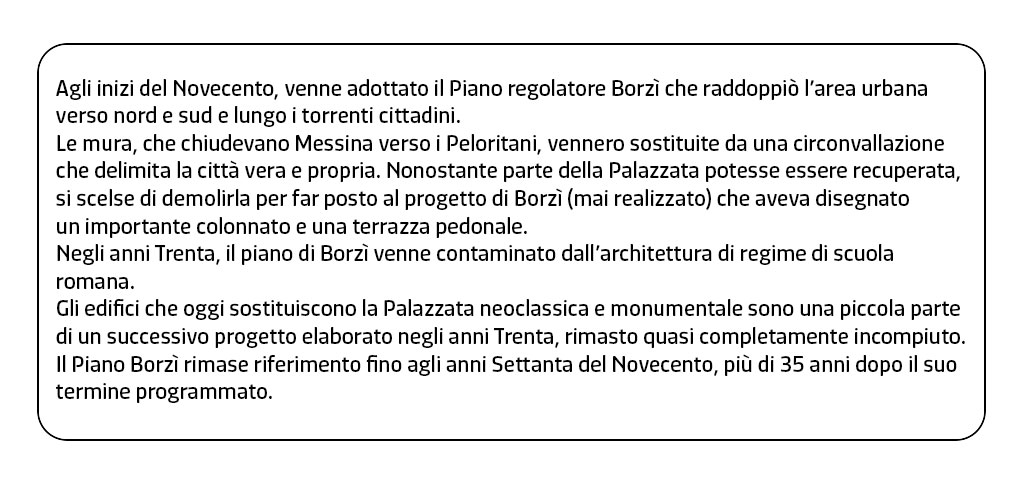
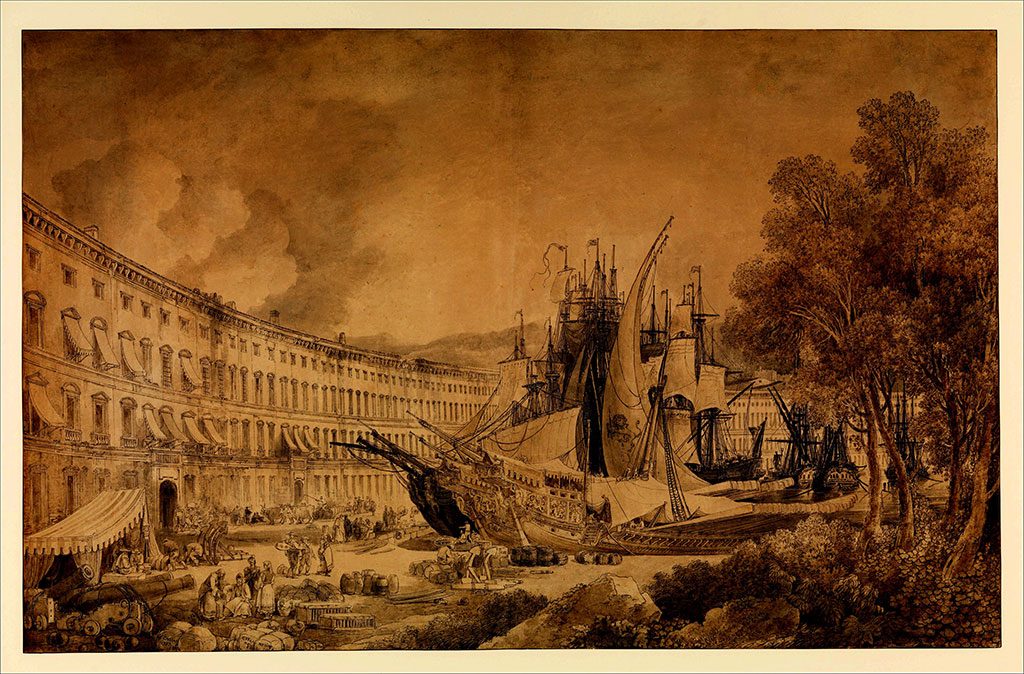
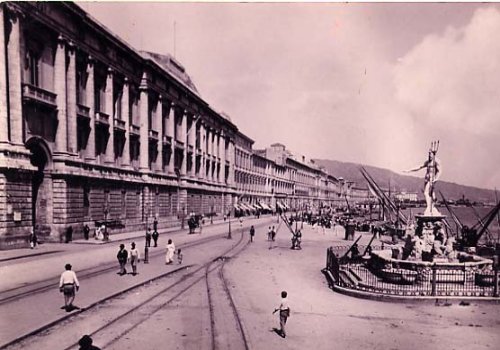
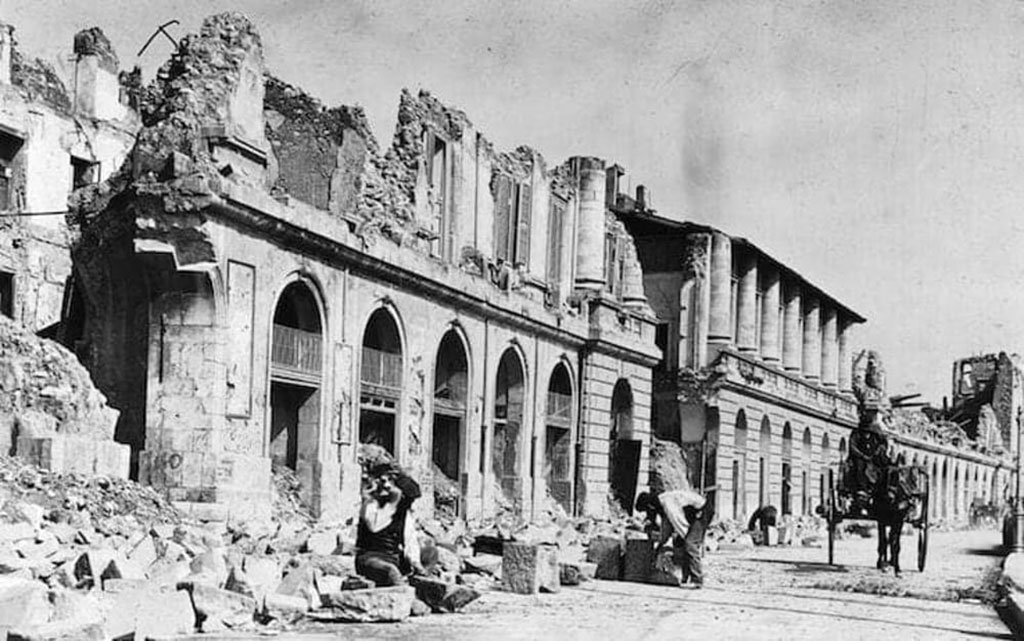
In the past, Messina was a great city. At the time of the 1908 earthquake, it was the third largest port in the Mediterranean.  I do not intend here to provide a condensed history, but, for example, before 1908, there was a 9-kilometre-long seafront known as the Palazzata – a continuous sequence of buildings constructed at the beginning of the nineteenth century, better known as the Teatro Marino, which housed a range of functions: residences, silos, and warehouses.

An avant-garde architectural vision, which replaced an earlier Palazzata of much older origin, damaged by the 1783 earthquake.

At the end of the 18th century, it was decided to rebuild the Palazzata and, more broadly, the entire city preserving its previous layout and appearance. However, after 1908, different choices were made.

The Palazzata by Simone Gullì before the earthquake of 1783, painting by Louis François Cassas ( wikipedia).

Palazzata and Neptune’s statue before the earthquake of 1908.

Palazzata after the earthquake in 1908. (wikipedia).

Palazzata of Messina, project by Giuseppe Samonà (wikipedia).

It is a decades-long, almost century-long lack of vision on the part of Messina’s administration. Twenty years ago, for instance, the tram line was built alone the seafront, despite the existence of a less invasive route that had already been identified. It was a short-sighted decision, especially considering that in recent decades coastal cities have worked to remove barriers between the city and the sea. Reggio and its promenade, geographically close, are a clear example of this. The tram on the seafront has further diminished an already struggling Messina

Messina’s past is its landscape: hills flattened, hills rebuilt.

The people of Messina move between the memory of the past and what the gaze itself generates – two forms of memory that produce a permanent sense of uprooting.

Before 1908, there was a saying in Messina used to describe a highly negative situation: “to do more damage than 5 February” (the day of the 1783 earthquake). This is not only a reference to popular culture; it almost represents an anthropological evidence of how the “damage” suffered offered the people of Messina a pretext not to fight back, an alibi not to react, turning inaction into a way of life. With the second earthquake, even more so, identity was lost in the collapse, and there is no desire to recover it.

What has been built – the geometry, the heights, the materials of the buildings – acts on people’s perceptual sensitivity, generating daily feelings of either positivity or discomfort. One is subjected to, and gradually becomes accustomed to, the most disturbing elements, to visual dissonances, and to the lack of connections between the fragments of the city, the greenery, and the sea.

This happened in Messina.

How does it work for those who stay?

“Restanza” – a word effective both in sound and meaning – is a complicated and risky choice.

Vittorio Teti – an anthropologist – speaks of the “adventure of staying” (in the South, editor’s note): “the effort, the harshness, the beauty, the ethics of ‘restanza’ are no less decisive and foundational than the adventure of traveling. The two adventures are complementary and must be understood and narrated together.”

The risk is one of habituation and diminishing vision, eventually leading to complete blindness.

Creating a cultural condition that compels “the people of the Strait” to look at the Strait – to know it and to recognize it – means designing a radical cultural intervention, one that activates a continuous rather than episodic process of revitalization, ultimately capable of bringing about lasting change.

The abiility to perceive the beauty of the Strait, of Messina, and of Reggio must be constantly encouraged, for it has long been stifled not only by its opposite – the accumulated ugliness of the landscape – but even more so by inaction.

The makers of beauty – writers, artists, architects – seek to jolt their fellow citizens into readjusting their gaze, revealing the immaterial to those who observe from afar, captivated by legends yet fearful of disappointment.

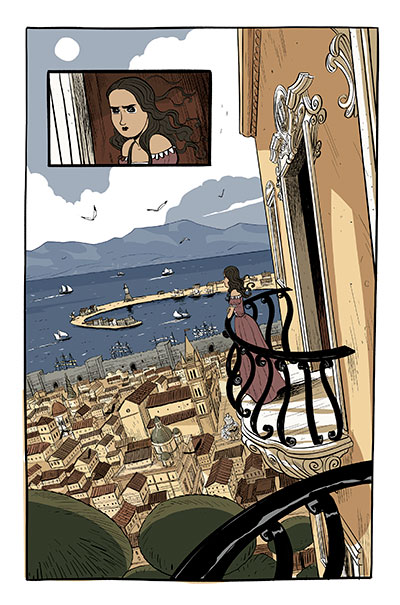
This is what Nadia Terranova has done in her novel Farewell, Ghosts and in the graphic novelCaravaggio e la ragazza (created with Lelio Bonaccorso), featuring beautiful illustrations of Messina.

Isabella on the balcony (from the graphic novel Caravaggio e la ragazza by Nadia Terranova and Lelio Bonaccorso. Illustration by Lelio Bonaccorso)

Retruning to the starting point of this reflection and to the question – how it works for those who stay – the need for beauty must find a synthesis with the economy.

Architecture is,  potentially, one of the elements of balance and reconciliation: it introduces new layers and integrates the functions of everyday life into urban contexts of good formal quality, in a continuous dialogue with the built heritage of the past and with the natural environment.

From a naturalistic perspective, the Strait is a goldmine to be monetized, ideally not (only) through a “milk-the-tourism” approach, assigning a handful of square meters of coastline to sun-and sea-hungry tourists, in a B-movie-style model.

This is not what the people of the Strait need. There are alternative approaches that can be developed for a form of tourism in which the beach is a pause, not the goal: for example, territorial itineraries, routes tracing the residencies of artists, nature excursions, and so on.

This hidden beauty, which already exists, has become invisible because it has been diminished by other choices that the Strait – Messina, but also Reggio – has inflicted upon itself.

What emerges is illegal building activity and a monstrous ugliness. Even everyday living has taken on a diminished, impoverished dimension. Pervasive speculation has generated a sense of possession without beauty.

Fortunately, there are many projects underway …

Some things have been done, but many others have been left unfinished or interrupted. There are still miles of coastline to be restored. What is lacking is a political and economic vision. When a local administration is focused on defending itself, it does not invest in major works, but in reassuring the electorate in the short term.

Work is lacking; work is a priority.

It must be so.

But “work” is not an isolated category. It is the design and planning across different sectors that generates work. The people of the Strait have a short-sighted obsession with the “bridge” as a generator of employment for years to come, even before considering it as a means of connection.

Without taking into account that today, within a framework of ecological transition, this would perhaps be a choice that depletes the territories.

The construction of the bridge would increase both heavy and light vehicle traffic, a vision anchored in the past, whereas the guidelines of the European Green Deal require a reduction in road transport.

There is a lack of cultural elaboration around any vision of the future, which as a consequence fades further and further, because the conditions for a serene “staying” no longer exist. Younger generations are not given the conditions to love their places.

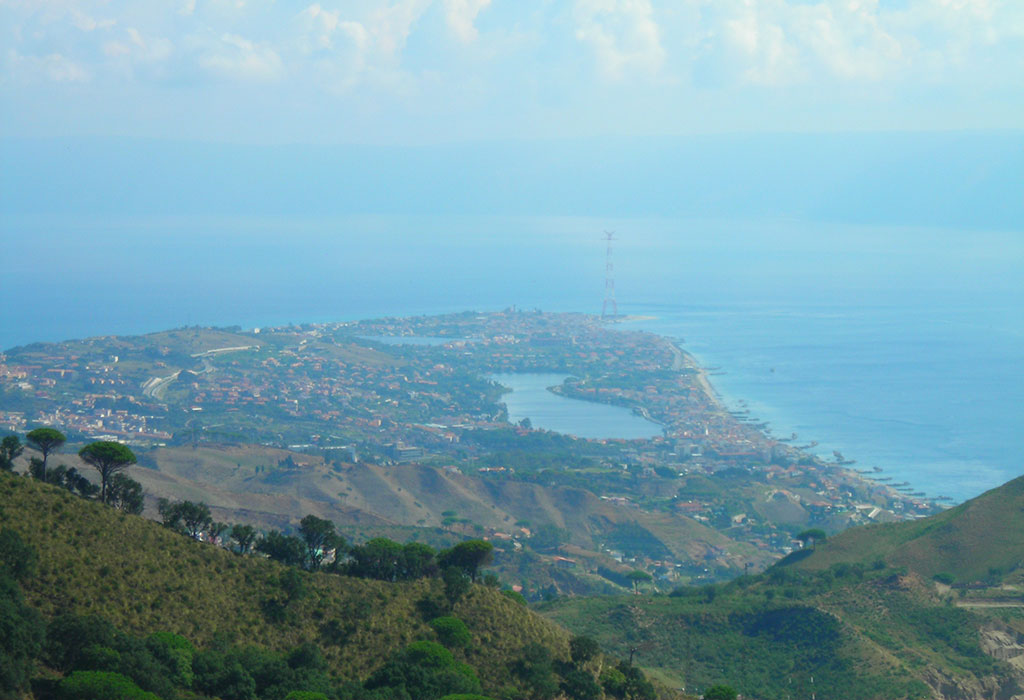
The waters of Lake Ganzirri, a few kilometers from the centre of Messina, are connected to the adjacent sea by means of canals, some of which date back to the 1830s, as well as to Lake Faro further north.(source: archeome.it)

What do you think about the issue of conurbation between Reggio and Messina? Are there risks of forcing the concept?

The people of the Strait share the ecological and landscape system of the Strait, but from different perspectives. From Messina, for example, we see Villa San Giovanni, not Reggio.

Sicily is an island, while Reggio lies on a peninsula. The approaches are different, but this heterogeneity is a value to be preserved.

The Strait’s ecosystem is an incredible heritage to observe, understand, and preserve.

It is important not to lose sight of the goal and to formulate good projects for a neglected territory.

To attract capital, we have so much culture, memory, and beauty – and this is what matters.

Much of the beauty of the Strait lies more in its villages than in its cities. To what extent is a “village system” imaginable?

A project based on a relationship between villages and cities, developed through physical and digital infrastructure and through securing areas from water-related risks, has great potential. From an economic perspective, it demonstrates that the beauty of the territory can generate stable wealth, independent of tourism seasonality.

More marginal cities, such as Messina, can offer much to a possible village – city pairing, not as an alternative choice – villages or cities – but as a system of relationships the operates at different scales of distance and time.

realtà culturali che amplificano le specificità del territorio in modo attivo e concreto e rappresentano il bello che avanza.

It is essential to start from cultural realities that actively and concretely amplify the specificities of the territory and represent the advancing notion of beauty.

Anna Mallamo, a “strettese” (from Reggio Calabria, she has lived in Messina for many years), works as a journalist at Gazzetta del Sud, where she heads the Culture and Entertainment section. She hosted a regular column for several years in L’Unità and runs a blog on the Huffington Post. She is very active on social media, with the account @manginobrioches.

journal-Messina-mondello-header.jpg

MESSINA LIES AT THE CENTER OF THE STRAIT AREA, WITHIN A POLITICAL AND REGIONAL SEPARATION THAT CONTRADICTS THE NATURAL GEOGRAPHICAL AND CULTURAL UNITY OF THE TERRITORY. SALVATORE MONDELLO DESCRIBES HOW THE CITY FUNCTIONS, WITH A GLAZE TOWARD EUROPE

Living and mobility. The port system and the water system. Identity. According to Salvatore Mondello – Councillor for Infrastructure and Public Works (with numerous delegated responsibilities) – the emergencies, urgent issues, potential, and development of Messina and the entire Strait area depend on resolving these five conditions.

Going beyond what is visible, understanding the vulnerability and complexity of a territory that was once a destination for the greatest travelers in European and world literature, and that today struggles to reclaim its place on a national and European scale: at its forth edition, Invisible Mediterranean(s) – Journey across the Strait shares this reflection with Salvatore Mondello.

The Strait of Messina is a magnet – it has always been one throughout history – a hinge of extraordinary natural beauty”, Mondello begins. “All the great travelers of the past were fascinated by the Strait. We simply need to turn the lights back on.”

What are the real strategies for “turning the lights back on” for the city?

Mondello explains that the city stretches for 32 kilometers: on one side toward the narrow strip of land along the Strait, and on the other toward the hilly landscape behind it. It lies at the center of a broader area, even though on the Calabrian Ionian side the conurbation with Reggio Calabria and Villa San Giovanni has never truly become a reality, despite the geographical configuration.

For Gesualdo Bufalino, “… Sicily has had the fate of finding itself, over the centuries, acting as a hinge between Western high culture and the temptations of the desert and the sun, between reason and magic, between the climates of sentiment and the scorching heat of passion” (from the book “Cento Sicilie”).

Mondello extends this idea from the insular scale to the urban one: Messina is a hinge of the Mediterranean both for its port system and for its geographic position. It is a territorial context (similar to that of Genoa) that encompasses and connects very different identities.

From left, Giorgio Tartaro, Salvatore Mondello and Alfonso Femia. Invisible Mediterranean(s) 2021, Journey across the Strait IV. Photo by Stefano Anzini.

And identity itself becomes a key issue in the cultural representation of the Strait, and at this moment also a matter of political urgency that reveals the city’s fragilities and contradictions. The Sicilian Region has in fact accepted the request of thirteen hamlets in the Messina area to hold an independence referendum. The aspiration is to create a new municipality, to be called Montemare, autonomous from the city of Messina. This refers to the northern portion of the territory, where the hillside villages are located.
Mondello explains that separating the administrations would make governance more complex. While fully respecting local identities – which in the past have already produced similar situations in other parts of Sicily – it is the territorial, historical, architectural, and landscape culture that expresses connections and differences, in other words identity itself, rather than the creation of separate administrations.

Heterogenity is the unnderlying framework that defines the entire city of Messina, as Nadia Terranova notes, “The uniqueness of Messina lies in its differences”.

According to Mondello, it is essential – precisely in order to “turn the lights back on” – to leverage the natural connections that already exist: Reggio Calabria and Messina are, before being Calabrian and Sicilian, cities of the Strait. The conurbation finds its meaning in the social, cultural, and economic relationships between the two territorial realities, even though common strategies have not yet been developed.

Mobility is at the center of development, and a shared strategy with Reggio Calabria is envisaged for a unified and coordinated management of the Strait, independently of the Bridge across the Strait, which is seen as a topic that is almost more European than local.
For this reason, within the PUMS, (Sustainable Urban Mobility Plan), in its most recent version drafted this past August, reference is made to a “Sea Metro” between the two shores of the Strait of Messina – Reggio Calabria and Villa San Giovanni on one side, and Messina on the other, through fast maritime transport services that allow movement between the cities. The work is oriented toward building a structural framework at both urban and extra-urban levels. The city of Messina and the Metropolitan City share a single mayor, and this contributes to the development of planning on a broader scale.

Turning off – after more than 100 years –  the spotlight on the issue of the shanty towns is an unavoidable step in order to switch it back on over the city’s positive urban aspects: moving from decay to quality of living.
The 1908 earthquake in Messina devastated 90% of the city. Temporary shacks were then built, which over time became permanent makeshift housing. Today, demolitions have begun, and urban redevelopment works are underway, along with the definition of a new urban planning standard.

Water is the other major theme that will lead Messina toward the goal of becoming a European city.
Rebuilding the relationship between Messina and its port is essential. The work carried out in cooperation with the Port System Authority, which manages Messina, Reggio Calabria, Milazzo, and Villa San Giovanni, will mark an important phase of urban development for the city.
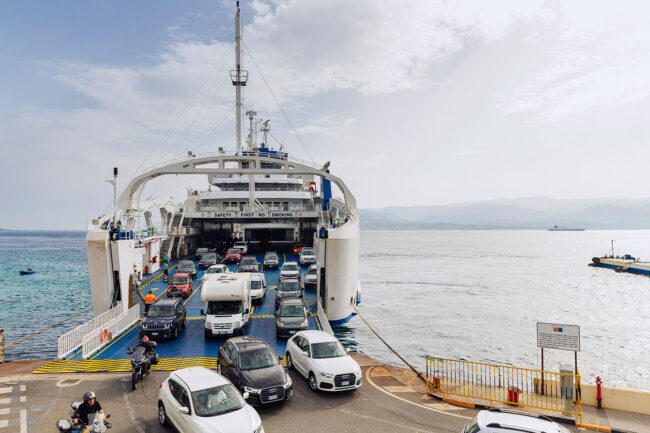
The Tremestieri port, currently being upgraded, will be able to accommodate up to seven ferries. It will expand southwards with a 320-meter breakwater jetty exposed to winds, and a 34,000-square-meter storage area.
The new port will allow ferry traffic to be removed from the Rada of San Francesco, which can then be transformed into a tourist marina. In this way, the navigability of the Strait will be ensured, and the connection between the sea and the city center will be restored through the functional redevelopment of the Rada.

Access to public water, purification, and wastewater disposal – in other words, the efficiency of the water system – is another major issue in the redemption of the Strait area.
Sicily loses  50,5% of its water through distribution networks. Water scarcity has, in the past, created even very serious problems. A process of rationalization of the overall system is now underway, including the introduction of remote monitoring systems for the water network.
The Fiumefreddo aqueduct is the main water resource available to the Messina system. Sicilian fiumare, like those in Calabria, are highly intermittent by nature due to geomorphological conditions: they appear suddenly and briefly, then disappear. Water resources, which can be collected and stored in reservoirs, are also present in the hills. The municipal administration and Amam (Azienda Meridionale Acqua Messina) are working together to develop structural interventions aimed at long-term solutions.

View of the Madonna della Lettera of Messina from the Exhibition Citadel. Photo by Stefano Anzini.

Mondello emphasizes that the city’s shift in direction depends both on housing and territorial policies and on the way the city itself is perceived – and that this latter aspect is fundamental to its transformation.
Throughout its history, Messina has experienced periods of significant development (notably in the 1970s and 1980s) as well as phases of slowdown.
Today, it is necessary to focus on quality and to plan an urban development coherent with the city’s growth, in the most appropriate way possible. This means that programming must be forward-looking, must exclude isolated “spot” interventions, and must express long-term plans that go beyond electoral cycles.
The preservation of cultural and identity heritage is certainly essential, but it is equally important to think of Messina as a European city.
“This is not a slogan,” he notes, “because if administrators and citizens, intellectuals, writers, journalists, and artists change the way they look at the city, the city itself will change”.