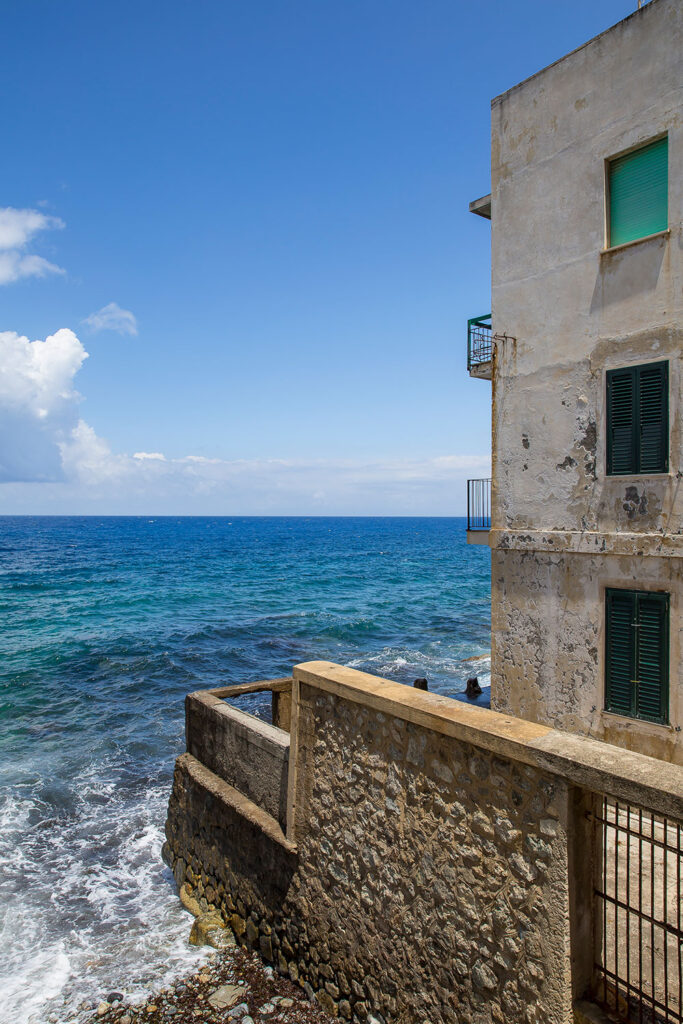


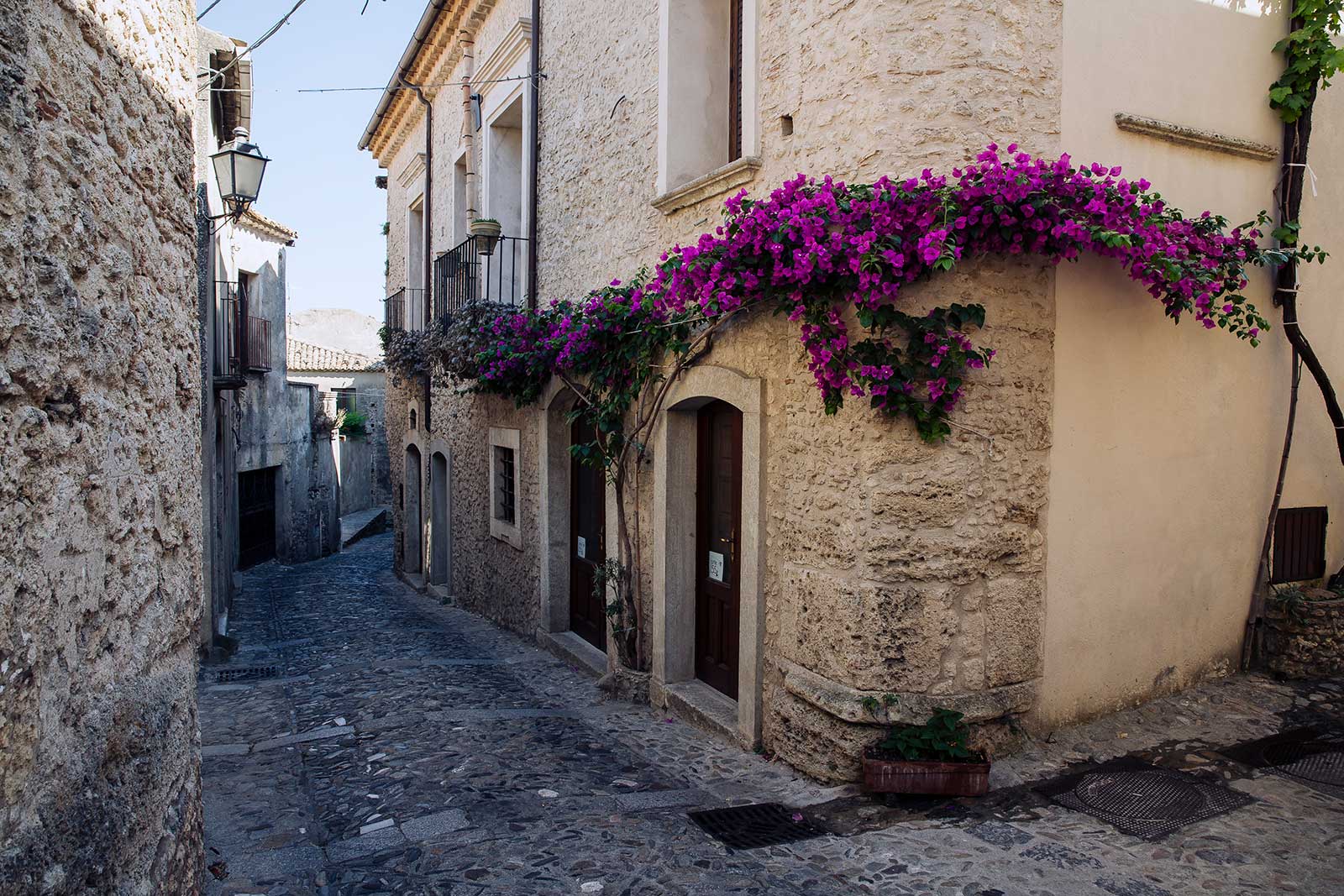
Unexpected are the reflections of Michelangelo Pugliese, architect and landscape designer, professor at the University of Naples Federico II: mutation as a stable element of the landscape, and the search for beauty everywhere – even in what is ‘ugly’
Is the South a territory?
Michelangelo Pugliese is not particularly fond of the world ‘territory’, arguing that it evokes a ‘1970s flavor’ and an overly technical, urban-planning dimension. He prefers to use the term ‘landscape’. Why?
Because, in his view, ‘territory’ tends to frame space as something primarily administered, measured, and governed through planning categories – roads, zoning, infrastructure, administrative boundaries. It carries a bureaucratic and functionalist imprint that became especially strong in post-1960s and 1970s planning culture. ‘Landscape’, instead, shifts the focus. It is not just a container of functions, but a lived and perceived space: a synthesis of natural forms, built environments, memory, perception, and everyday practices. It allows for ambiguity, change, and even contradiction – including abandonment, transformation, and informal uses – without reducing everything to a planning problem to be solved. In that sense, speaking of ‘landscape’ rather territory is also a way of resisting a purely technical or top-down gaze. It opens the possibility of reading the South not only as something to be organized, but as something already meaningful, already narrated, and constantly evolving – even in its fragilities.
The relationship between these three elements is in continuous evolution, and this immediately highlights how the expression ‘landscape restoration’ is, in itself, a contradiction in terms.
Mutation is the primary characteristic of landscape.
Calabria is a landscape that cannot be trivialized through opportunistic interpretations tied to villages, coastal areas, or mountains. Starting with villages, we are not dealing with idyllic situations, as the term itself often seems to suggest regardless of context.
In Calabria there is no widespread desire to ‘return to the villages’; this is more a media distortion or an exercise in balancing architecture and marketing narratives.
Often, villages are not only abandoned places, but also damaged by an unforgiving and often ugly form of construction – acts of architectural violence that have unfortunately sedimented over time.
The complexity of reinterpreting them also involves the theme of dwelling, which contemporary society has profoundly transformed.
As well taught in Spanish schools of architecture, the design theme is not singular but must be declared and adapted according to places and situations.
Thus, today, living in a village is different from living in a small town. The actions required must be appropriate and coherent with the historical dimension, the recent past, and future perspectives.
Certainly, the only thing that cannot be done is simply ‘returning’ as if going back to the village had, in itself, a healing or redemptive value.
If ways of living have changed, and this transformation must be supported through design actions, then with equal care we must avoid trivializing the process of updating, or turning interventions into mere salone exercises. A propositive example of a well-conceived project is Farm Cultural Park, near Agrigento, which has enhanced a degraded and abandoned place through cultural regeneration.
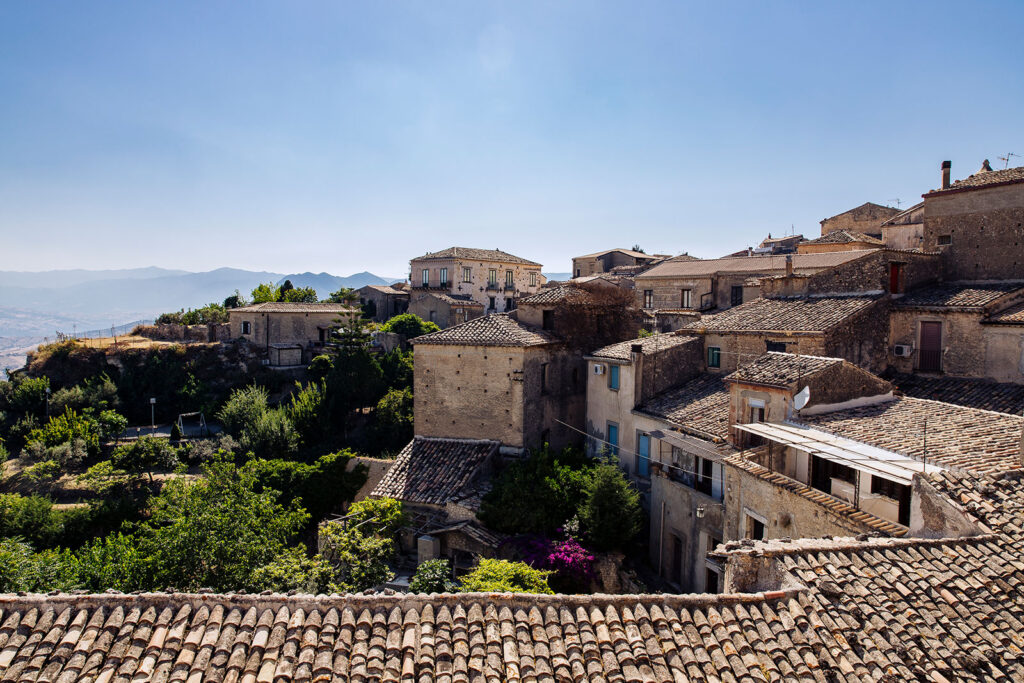
The example of Favara is remarkable, but its starting point already had some advantages: the Moorish-styly courtyards in Favara’s historic centre, and its proximity to Agrigento …
Villages to be restored do not all start from the same conditions of fascinating abandonment and decay wrapped in brambles that conceal extraordinary beauty.
However, the intensity of a suspended soul exist in all centres that were once inhabited: a hidden soul, sometimes deeply concealed by ‘uglyness’. I also believe it is an advantage to work on places where beauty is more hidden. In such cases, research can free itself from the constraints of the Soprintendenza Archeologia, Belle Arti e Paesaggio, but above all from certain cultural approaches that do not allow for the new, or take into account the unpredictability of a design thinking shaped by landscape and communities.
Our project, Invisible Mediterranean(s), has the unique merit of revealing the beauty behind ugliness, without fearing to engage with visions closer to a scenario of desolation that to the enchanted forest of Sleeping Beauty.
All of this is the authentic contemporary South: a South that coexists with ugliness and, in turn, coexists with magnificent landscapes, tongues of sea and light. It is a reality that must be valued and cannot be ignored, because it is within it that communities live – memory of the past and energy for the future, the true strength of the South.
It is the immaterial dimension that filters the beauty of landscapes and villages, making everything clear and more legible, beyond the stereotype of the postcard image.
The architect’s work thus becomes more difficult, as it requires the reconstruction of the immaterial dimension of territories, often suffocated by labels and narratives that have distorted their soul.
In this balance between needs and desires, time plays an essential role.
The time of South is different, but it is not slower, as is often said. It is a non-linear time, made of compressions and dilations: at times it condenses rapidly, at others it settles. Actions combine according to this temporal balance, from which design action emerges.
More than ever today, architecture must step down from the pedestal, be courageous, take risks, and accept even the possibility of error.