
Blog Archives
Stretto-di-Messina-journal-giancotti-header2.jpg

LO STRETTO DI MESSINA NON È SOLO UN LUOGO FISICO, FATTO DI PAESAGGI E ARCHITETTURE. SECONDO PATRIZIA GIANCOTTI, È L’IMMATERIALE LA SUA “DIMENSIONE REALE”

La lettura antropologica dello Stretto di Messina ne rivela il patrimonio immateriale. Finis terrae d’Europa, paesaggio interiore, accidente geografico: così l’antropologa e giornalista Patrizia Giancotti traccia l’inafferabile profilo di un luogo topico, denso di significati, del quale tutelare non solo la bellezza del paesaggio, ma anche i suoi “beni volatili” sul punto di scomparire

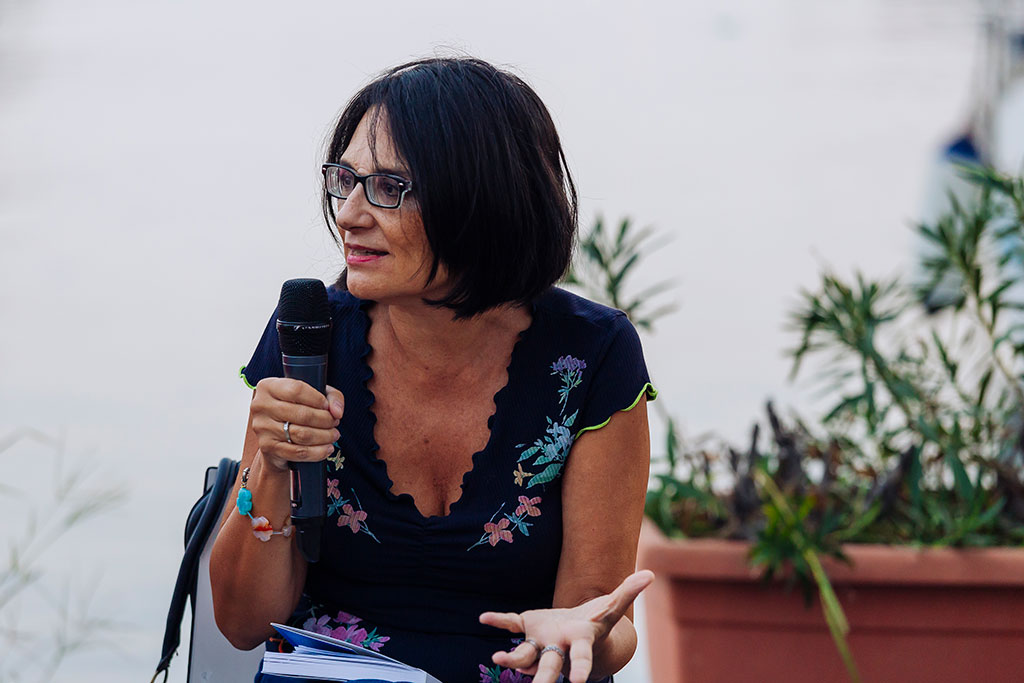
Patrizia Giancotti racconta che l’antropologia è, per lei, una passione nata lontano nel tempo, quando, adolescente, ascoltava i racconti e i canti di una anziana zia calabrese seduta accanto al focolare e ne teneva traccia e memoria in forma scritta.
Antropologia – spiega – è anche il racconto dell’immateriale e dell’invisibile, un’àncora testuale per beni culturali che stanno svanendo, che a volte vengono catturati sul punto di scomparsa.
Non è semplice narrazione: è ricerca e messa a sistema dei risultati con rigore scientifico.

Il tuo sguardo sullo Stretto di Messina è particolare. In molti riconoscono l’esistenza di un patrimonio immateriale importante, ma in realtà sfiorano il tema, preferendo la concretezza dei temi storici e culturali. Cos’è l’immaterialità dello Stretto?

Credo che per comprendere lo Stretto un approccio antropologico focalizzato sulla cultura immateriale sia davvero necessario. Parliamo di un luogo remoto per definizione, che affaccia su un mare attraversato da un cambio di continente.

È il finis terrae dell’Europa.

Ma è davvero la fine?
Nulla finisce con lo Stretto.

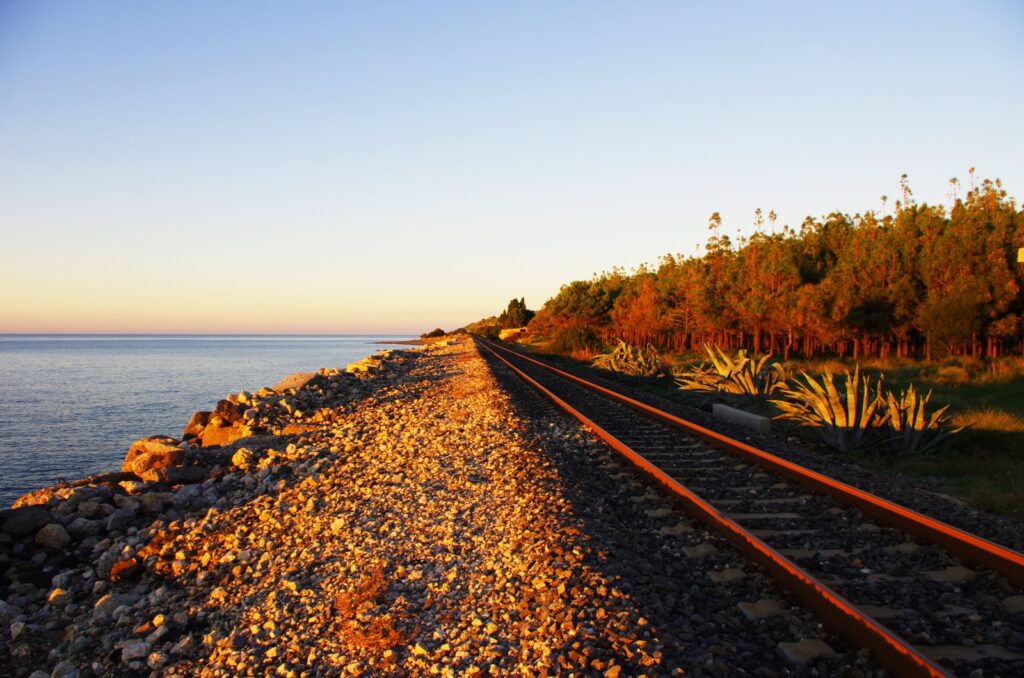
Stretto di Messina-journal-giancotti- ferrata
Cesare Pavese, in esilio a Brancaleone, chiamava il binario unico che ancora collega Taranto a Reggio Calabria, “la Ferrata”. Fotografia di Patrizia Giancotti.

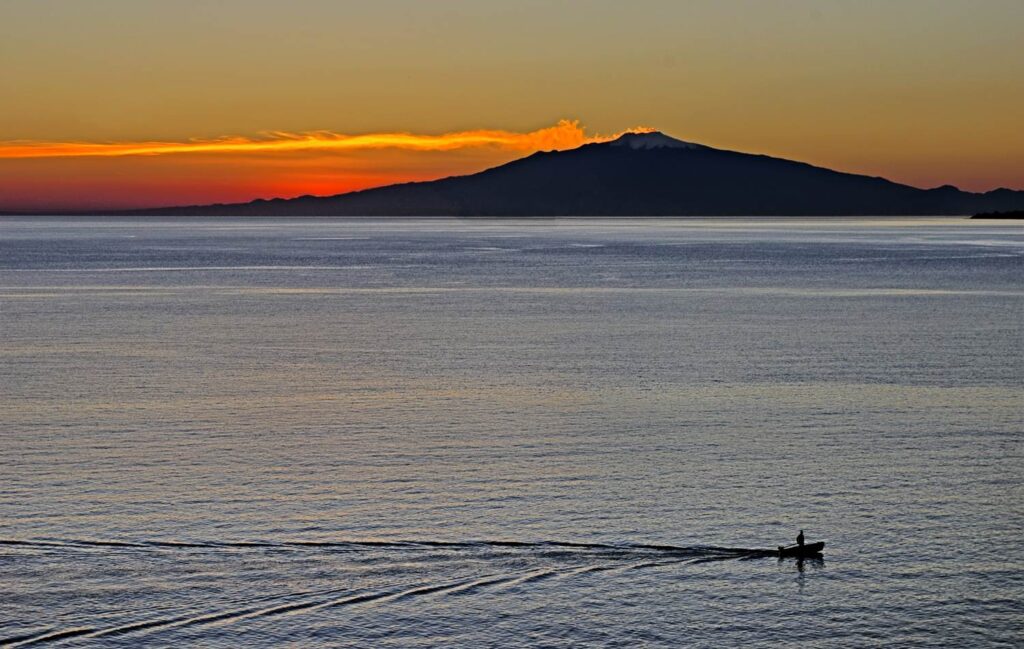
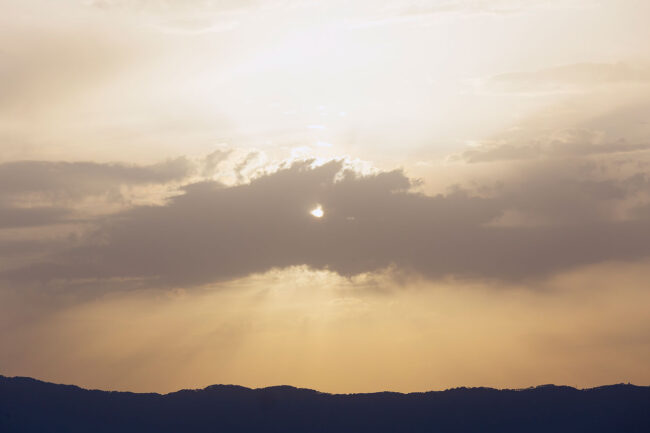
Se si arriva con una certa disposizione, magari al tramonto dopo un viaggio che ha percorso l’Italia intera, si ha piuttosto la sensazione di avvistare un altrove deflagrante, magnifico, un orizzonte mitico, compresi vulcani fumanti ricoperti di neve, sospeso e in trasformazione su questo braccio di mare. Se con lo Stretto qualcosa finisce, potremmo dire insieme a Fitzcarraldo che guarda dall’alto la foresta amazzonica, “qui finisce la realtà e iniziano le visioni”.

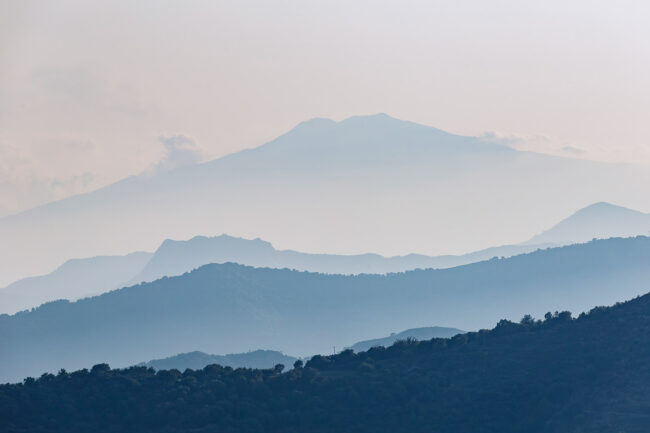
Etna da Bova Marina. Fotografia di Patrizia Giancotti.

Per la sua natura di separare e unire, lo Stretto è la rappresentazione di un rito di passaggio. Tra una costa e l’altra, tra uno stato continentale e il resto, tra una visione della realtà e il suo opposto, dove si è alternativamente platea e spettatori.
Tutto ciò da secoli alimenta il mito e accende la nostra immaginazione, ma in molti casi la realtà la supera.

Le storie e le pratiche legate al fenomeno della Fata Morgana, ai pesci oceanici, alle tagliatrici di trombe marine, alla Lupa, alla pesca del pesce spada, ai Fuochi di San Giovanni, alle tradizioni apotropaiche delle donne di Bagnara, sono anche tesori antropologici, arsenali simbolici in uso, con le loro gestualità di rito, rappresentazioni dell’immateriale ancorate al territorio, tesori, prolungamenti immateriali, “visioni” dello Stretto. Elementi che hanno anche la funzione di ricucire insieme di mantenere i legami tra isola e penisola.


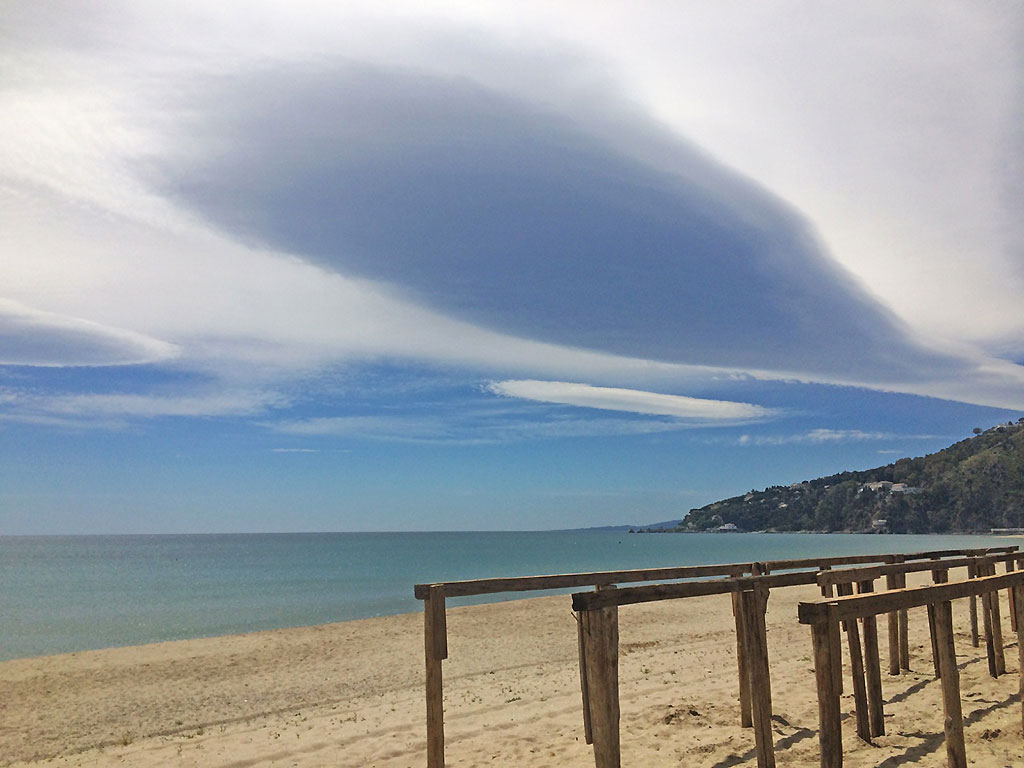
La Lupa, ad esempio, è la nebbia che si condensa tipicamente sullo Stretto e si staglia nel cielo in sagoma allungata, o di animale, provocando drastiche riduzioni della visibilità. Da questo fenomeno molto pericoloso per la navigazione, dovuto alle particolari condizioni atmosferiche e geografiche dello Stretto, scaturiscono racconti e leggende, tradizioni e attitudini in uso su entrambe le sponde.

Stretto di Messina-journal-giancotti-07
La “Lupa” sul litorale ionico cambia la forma, ma mantiene l’allungamento dello Stretto. Fotografia di Patrizia Giancotti.

.

Anche i Fuochi di San Giovanni hanno sempre fornito elementi di comunicazione tra le due rive che condividono una ritualità arcaica, l’accensione contemporanea dei falò, analoghe pratiche divinatorie, filastrocche, gestualità beneauguranti e confermano un legame profondo e complesso tra Sicilia e Calabria. Anche conflittuale.

Non bisogna dimenticare che nello Stretto confluiscono il litorale orientale e quello occidentale dell’Italia, qui si scontrano due mari, Ionio e Tirreno, con temperature, fauna ittica, movimenti e profondità diverse. Flussi e correnti percorrono migliaia di chilometri lungo le coste di tutta la penisola per fronteggiarsi proprio qui, per esplodere in mulinelli e gorghi, per di più corroborati da forze telluriche.

Tutto questo ha alimentato, da sempre, i nostri miti dello Stretto conferendo al luogo un’aura di mistero, ma anche una particolare potenza, un magnetismo, una energia particolare che, per certi versi, rende “perturbanti” le città che qui si affacciano e “particolare” il carattere degli abitanti di queste rive.

La ritualità arcaica condivisa tra le due rive racconta molto del legame profondo e complesso, anche conflittuale, tra Sicilia e Calabria.


Sono questi forti contrasti di rocce e abissi, di vento e di mare che creano paesaggi estremi, dai mille metri di profondità ai duemila di altitudine di una montagna che si è solleva dal mare e ne conserva la memoria, con conchiglie fossili sui sentieri e lo scheletro di una balena ritrovato a 800 metri di quota.

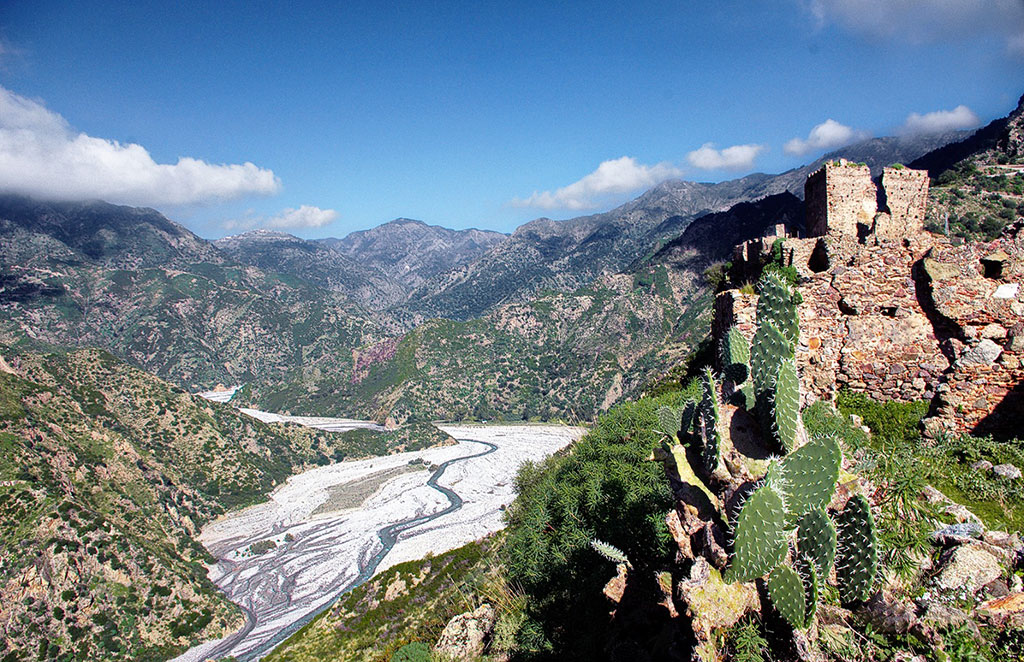
Così come le impressionanti fiumare pietrose, con le loro sentinelle, le vetuste vestigia del passato, risucchiate dall’abbandono fino a diventare accidenti geografici e le alture rocciose dalle quali tuffare lo sguardo oltremare.

Oltre degrado e cemento, anche.

Lo Stretto possiede una dimensione di confine-sconfinato, che sollecita una maieutica visionaria e misteriosa.

Tutto questo finisce per corrispondere a un paesaggio interiore. Che si porta dentro, appunto, dal quale è comunque difficile stare lontani.

Il patrimonio immateriale dello Stretto sembra difficile non solo da svelare, ma anche da raccontare. Sulle persone che abitano questi paesaggi e che, in certo senso, ne sono espressione, ha realizzato un libro: Filoxenìa …

L’invisibilità dello Stretto attiene anche al suo patrimonio immateriale, detto anche volatile, impalpabile, appunto per la sua fragilità, per la sua scomparsa incipiente. Un patrimonio inestimabile che chiede di essere messo in sicurezza, con urgenza antropologica, di essere conosciuto e valorizzato e che l’antropologo e chiamato a “catturare”, anche con specifiche strumentazioni, “macchine da presa”, registratori, apparecchi fotografici.

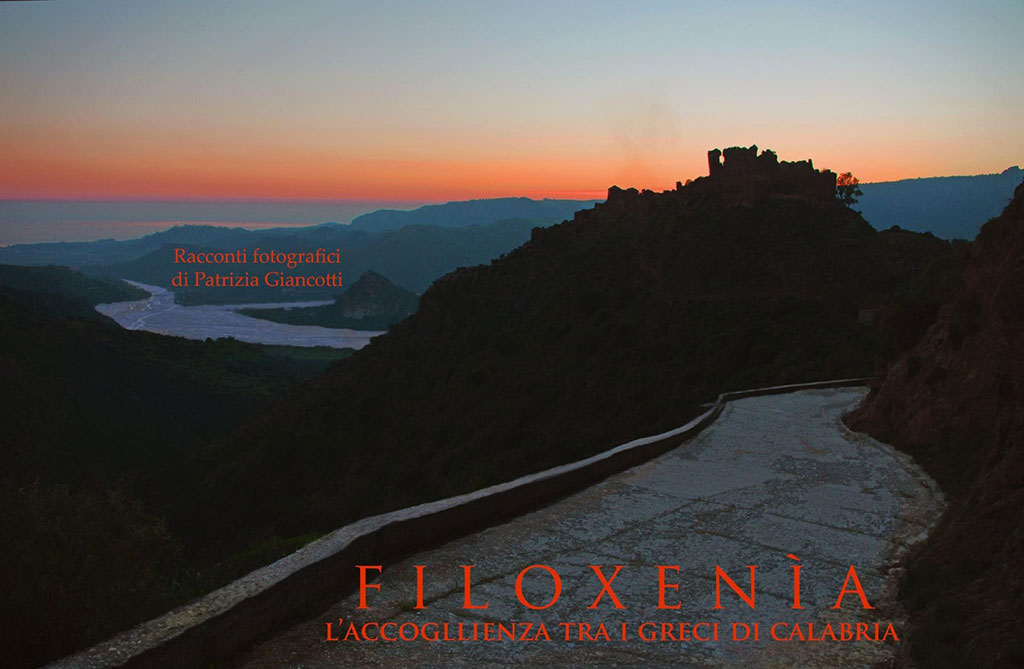
In Filoxenìa, ho esplorato i paesaggi dell’entroterra greco-aspromontano che si affacciano allo Stretto, alla ricerca dell’antico senso di accoglienza, di quella cura per lo straniero di omerica memoria: filoxenìa, l’amore per chi viene da fuori, è il contrario della più nota xenofobia. Per farlo ho ribaltato il consueto punto di vista e ho seguito le frecce che indicano i paesi dell’interno, la verticalità, la polpa antica della Calabria Greca. 
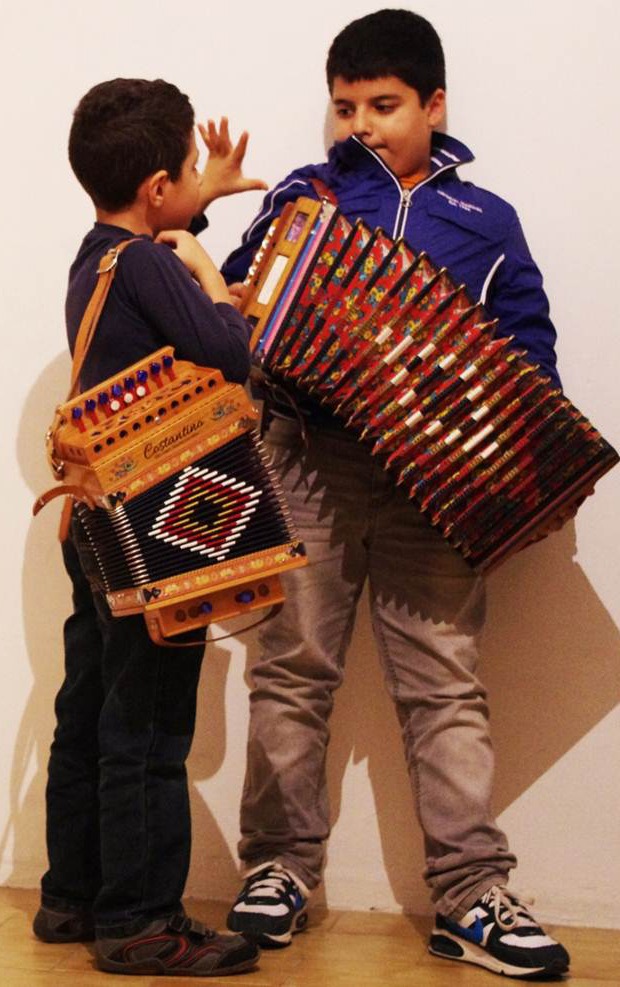
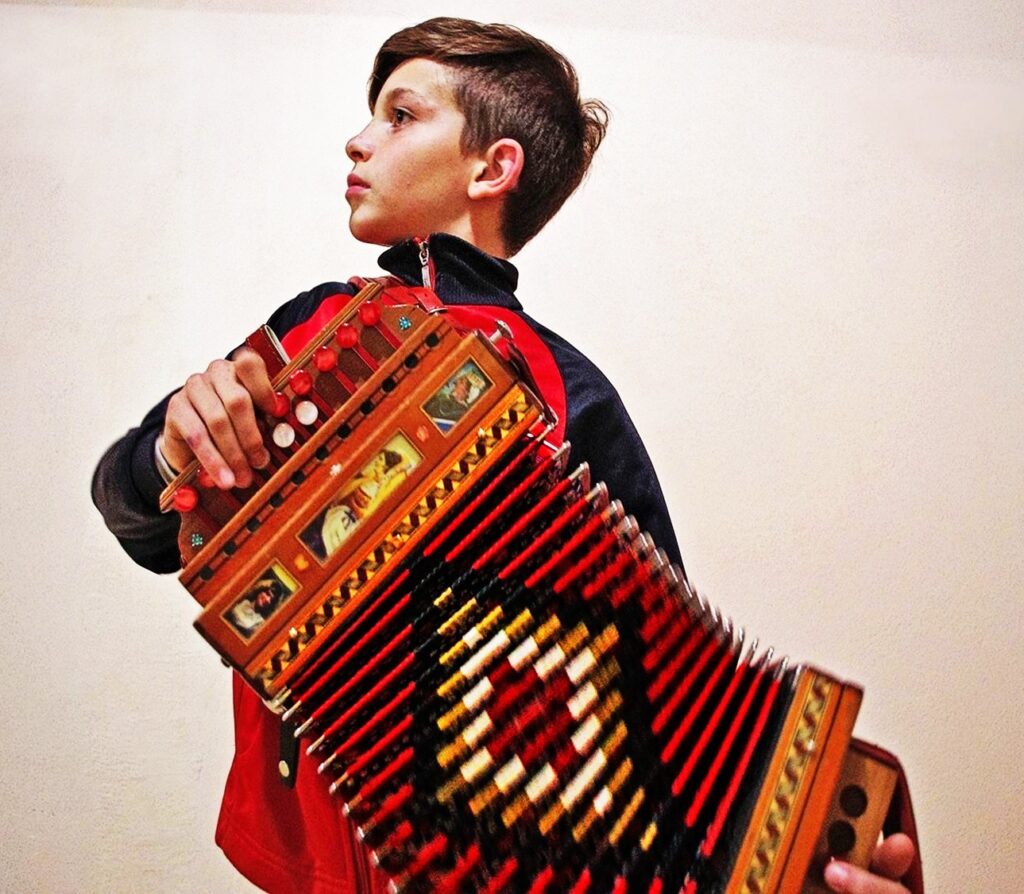
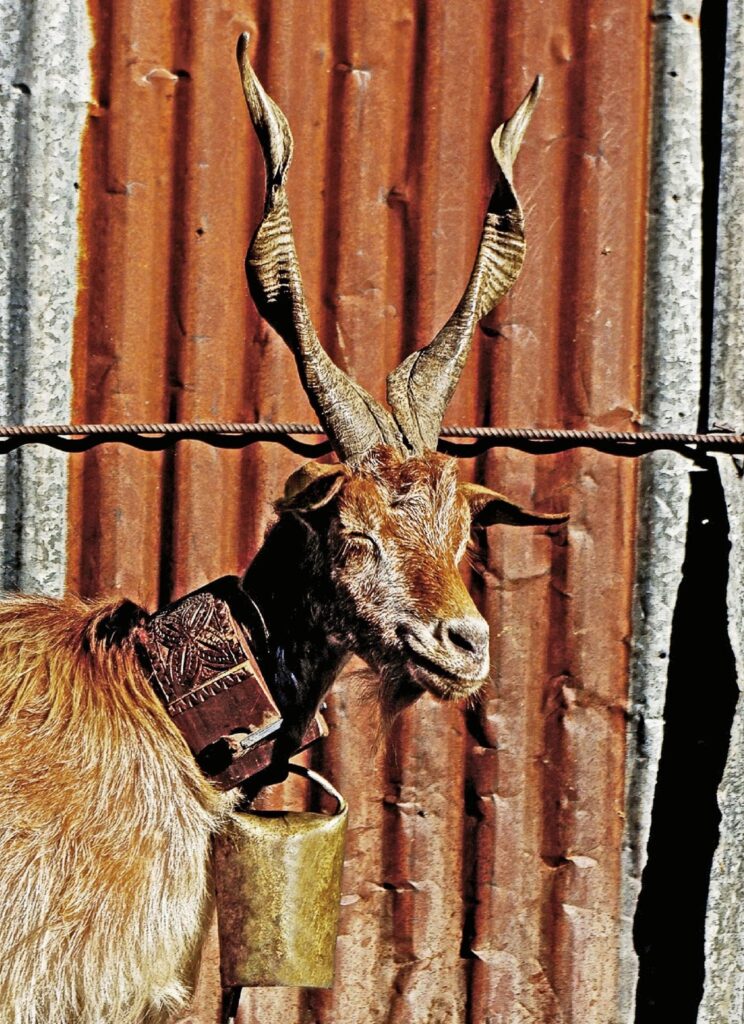
Al centro del racconto fotografico, a metà tra il reportage di viaggio e la ricerca etnografica, ho messo le persone incontrate, pastori che accordano le campane delle loro capre, cultori del greco di Calabria, mastri di ballo, impastatrici di zippuli, bizantinisti, suonatori, anziane sapienti e bambine fiere di essere calabresi, fino a farli diventare punti luminosi di quella geografia intima, affacciata allo Stretto.

Stretto di Messina-journal- giancotti-01

Come si può mettere insieme il tempo lento dell’invisibilità e dell’immaterialità con quello veloce del vivere contemporaneo?

Come mi capitò di riflettere nel corso della mia lunga ricerca antropologica tra i popoli dell’Amazzonia, ci sono certi luoghi nei quali sembra più realistico, utile e fecondo poter conciliare l’arcaico con l’iper-moderno, per trarre benefici da entrambi. Non nell’ottica del “come era bello una volta”: il nostro passato agro-pastorale, ad esempio, è anche pieno di ingiustizie e soprusi.

Sta a noi scegliere ciò che nella cultura tradizionale può essere utile e stimolante per migliorare la nostra vita, con la nuova consapevolezza dell’oggi, e cosa è meglio sotterrare per sempre.

La tutela di un’esperienza così particolare può trovare approdo nei musei?

Per cessare di essere un deposito per polverosi oggetti in fin di vita, condannati alla perdita della loro funzione sociale, il museo deve saper raccontare la comunità. Anzi deve farsi strumento di aggregazione della comunità che se ne sente rappresentata, un dispositivo al servizio della memoria viva, parlante, attuante, dove l’oggetto, se c’è, possa farsi portavoce.

Il museo deve saper comunicare, coinvolgere, emozionare, facendo appassionare le nuove generazioni fino a includerle concretamente in questa narrazione. E deve saper utilizzare nuove tecnologie, ma solo se, docilmente, si mettono a disposizione di questo intento.

Certi valori, il rapporto con la natura, la stagionalità, la conoscenza del territorio e delle piante, e, soprattutto, il senso di comunità, sono tutti elementi preziosi per migliorare il nostro vivere contemporaneo, per fortificare consapevolezza e senso di umanità, per dare valore al vivere comune, al sentirsi parte attiva, vivente, e anche trasformante di ciò che abbiamo intorno.

Sullo Stretto immagino un museo narrante, un intreccio di volti e di voci, immagini e oggetti parlanti, Sirene, Fate Morgane, tagliatrici di trombe marine, racconti di pesca e di traversate, di esperte rituali, canzoni, testimonianze vive, comunità operanti, una task force antropologica di studenti vocata alla ricerca e al recupero di ciò che stiamo perdendo, un’esperienza fluida, in progress, immersiva, aperta, un dispositivo di raccolta per chi vuole rendersi partecipe, allo scopo di dare valore a tutto questo ma anche di catturare, irretire, conquistare il visitatore alla “visione” dell’invisibile.

Fotografia di Patrizia Giancotti.

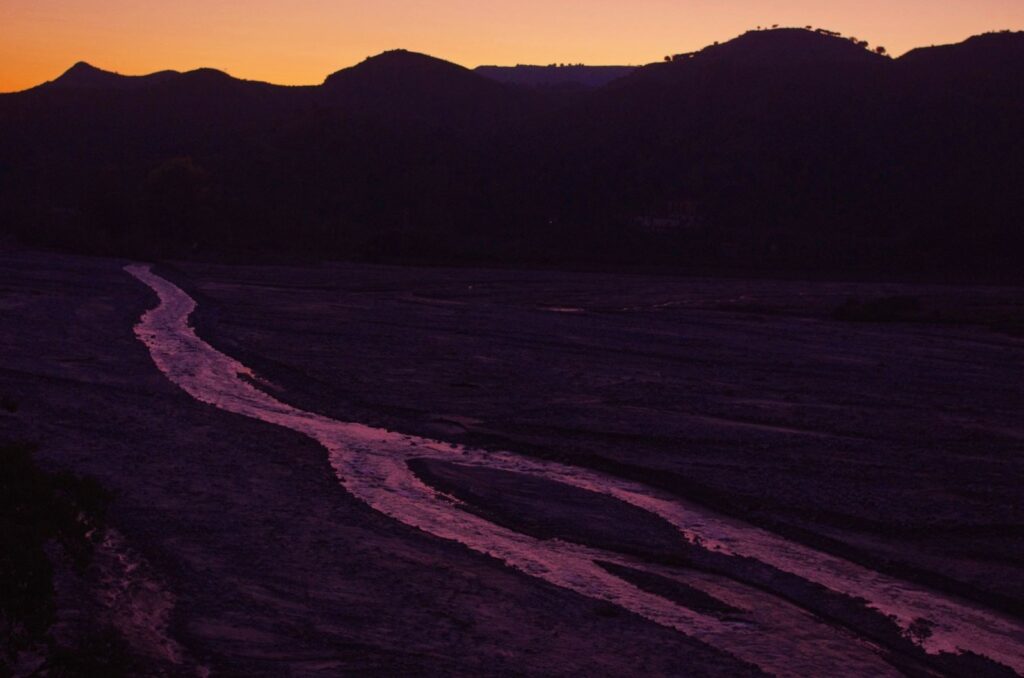
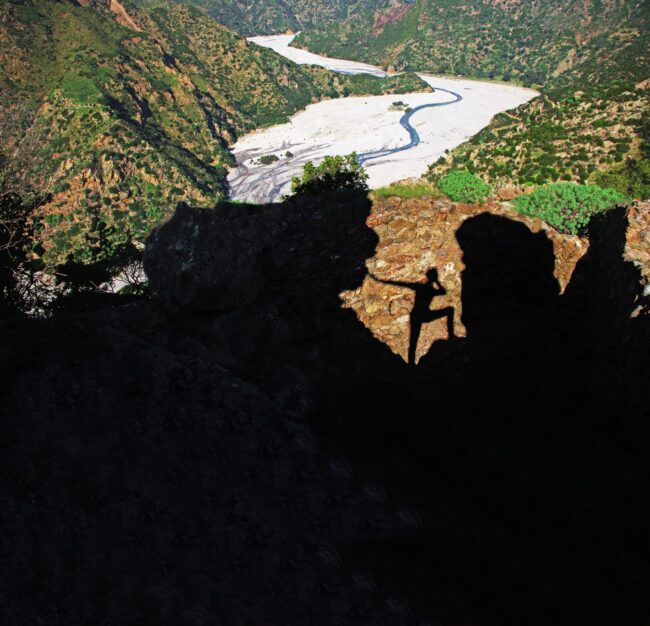
In apertura: : l’ombra di Patrizia Giancotti sulla Fiumara di Amendolea, dal libro Filoxenìa. Fotografia dell’autrice.

Patrizia Giancotti, torinese di origini calabresi, antropologa, fotografa, scrittrice, insegna antropologia all’Accademia di Belle Arti di Reggio Calabria. È autrice e conduttrice di Rai Radio 3, ha pubblicato più di cento reportage per le maggiori riviste e realizzato oltre cinquanta mostre fotografiche in Italia, Francia, Germania, Portogallo, Africa e Brasile. Ha svolto le sue ricerche di antropologia visiva in Italia e all’estero, particolarmente in Brasile dove ho vissuto oltre dieci anni, ottenendo l’alta onorificenza del Cruzeiro do Sul per meriti culturali. Ha effettuato rilevamenti di antropologia visiva nel Sud Italia confluiti in lavori foto-cinematografici-musicali. Per il GAL dell’area grecanica della Calabria, ha svolto la ricerca di antropologia visiva, confluita nel libro “Filoxenìa – L’accoglienza tra i Greci di Calabria” (Rubbettino Editore), Premio Ali sul Mediterraneo 2017, e nel ciclo di racconti radiofonici per Radio3 “Volti e voci della Calabria Greca”. Tra le sue conferenze/spettacolo itineranti, “Filoxenìa e altre storie di Calabria” e “Dal Mediterraneo al Brasile sulla rotta delle Sirene”, presentata, tra l’altro, all’Arena dello Stretto. Da quattro anni vive in un piccolo paese della Calabria.  

journal-messina-mallamo-header.jpg

WHAT IS BEAUTY FOR THE STRAIT OF MESSINA, WELL EXPLAINED BY ANNA MALLAMO

Messina is a painful city. So painful that it is hard to perceive its beauty. In Reggio, the new promenade with Tresoldi’s work, a sign of urban growth and hope, is confronted with rubbish abandoned at the corners of the streets.

With Anna Mallamo, journalist for Gazzetta del Sud, we discuss one-sided visions that corner the Strait, but also a future made possible by its Beauty.

The Fondazione Italia Patria della Bellezza launched a call titled “Comunicare Bellezza”, a support program for cultural and territorial projects throughout Italy – a way of putting into practice a value that has historically been appreciated through its artistic, environmental, and cultural expressions, yet which does not traditionally belong to the sphere of primary individual and social needs.

Around the word “beauty”, a language dense with prefabricated layers and meanings is often used.

Beauty lies in tourism, in history, in landscape, in design, in science and technology, in manufacturing and food. In books, poetry, and photography. In men, women, boys and girls, animals, and plants.

Almost always, it is beauty as an adjective – a visual or intellectual attribute assigned to a defined subject.

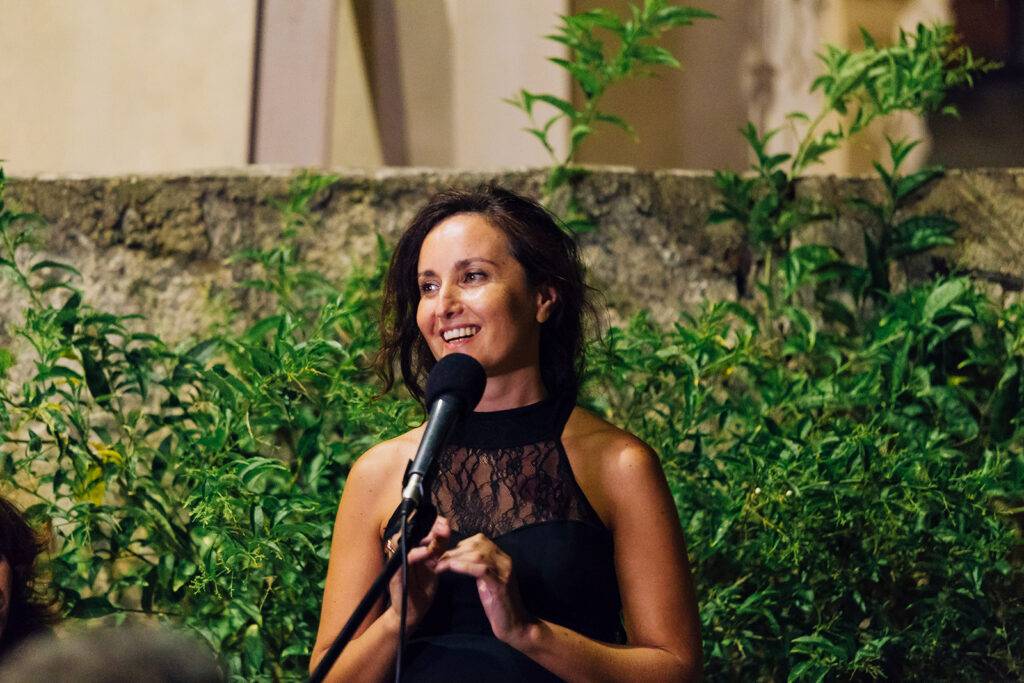
Anna Mallamo during the talk in Messina, Invisible Mediterranean(s) 2021, Journey across the Strait IV. Photo by Stefano Anzini.

Anna Mallamo, journalist for Gazzetta del Sud, Reggio-born, Messina by adoption, and a citizen of the Strait by passion, believes that beauty is as necessary as food, water, and air – essentially as necessary as the things that keep us alive. Anna argues this starting from the effects produced by its opposite: desolation, decay, and abandonment.

She says, “Landscape is a determinant of the soul”, and it almost seems an inevitable statement when speaking about the lands of Scylla and Charybdis. “I find myself fighting every day against the oblivion that pervades those who live in the Strait and causes a progressive and selective blindness: decay prevails, people avert their gaze from the landscape, and thus they lose their soul.

And from that moment on, you are only able to see and describe what is ugly, and within that narrative there is a kind of complacency in pain and tragedy that leads to inaction.

The perspective closes in: the Strait becomes a territory either to abandon or simply to endure.”

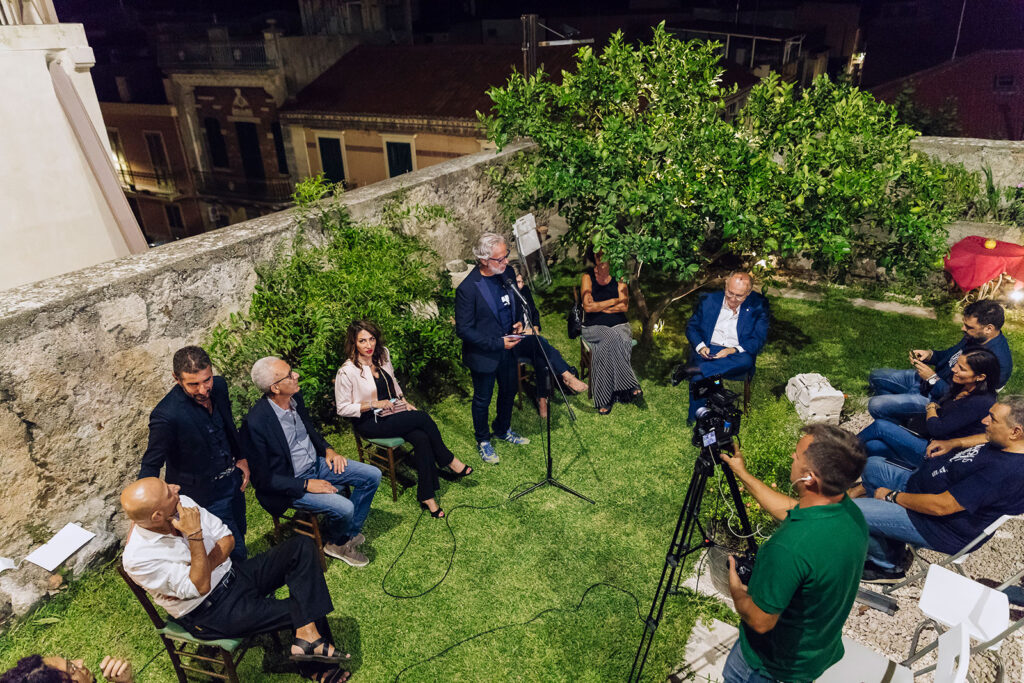
Anna Mallamo with Alfonso Femia and other participants during the talk session in Messina, Invisible Mediterranean(s) 2021, Journey across the Strait IV. Photo by Stefano Anzini.

Future and the Strait: how can a connection be created between time and place, a connection that seems to be missing?

The only apparent solution seems to be the bridge that people have dreamed about since the mid-twentieth century, never built – and this alone has become a good reason for complaint. In recent decades, the bridge itself has become “the meaning”, in a desperate search for a collective signifier, the only possible form of redemption.

It is clear that many other forms of emancipation exist: the seafront promenade of Reggio Calabria, with Tresoldi’s installation, is one example, because the people of Reggio – not only tourists – appreciate it and make it part of their lives, supporting local businesses and generating wealth and employment. Even so, just around the corner there are piles of uncollected rubbish, and when you turn your back to the sea, the curtain of buildings you see becomes a fabric of unravelled signs with which you must contend every day.

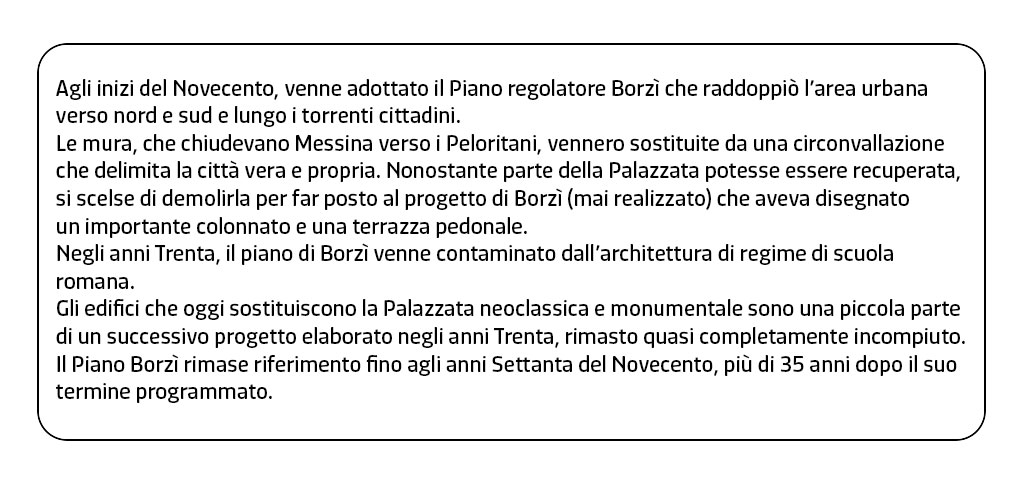
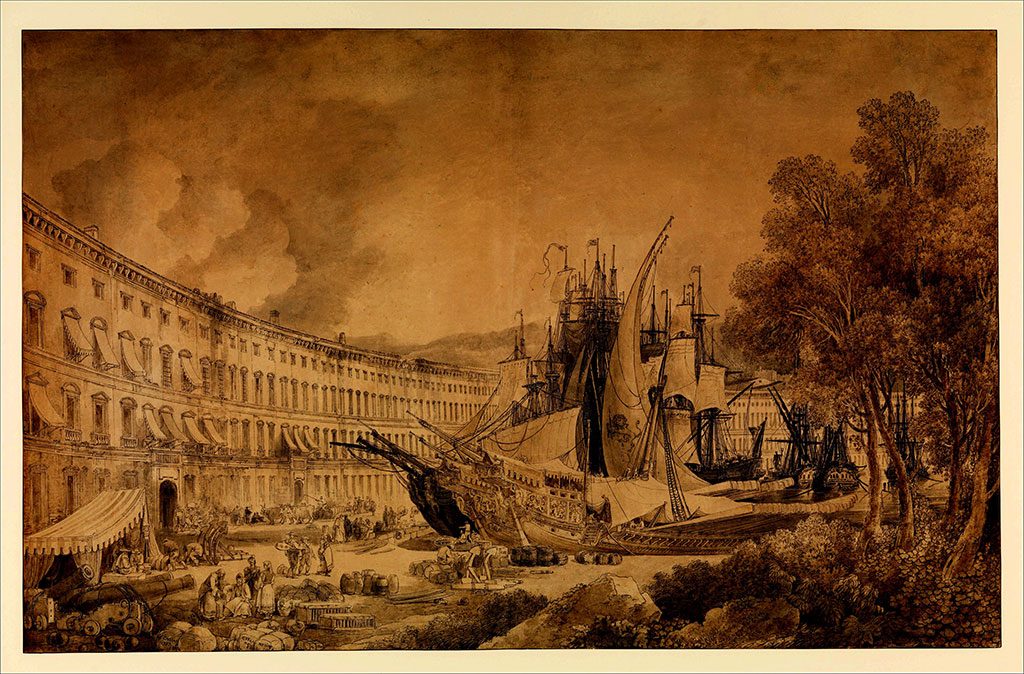
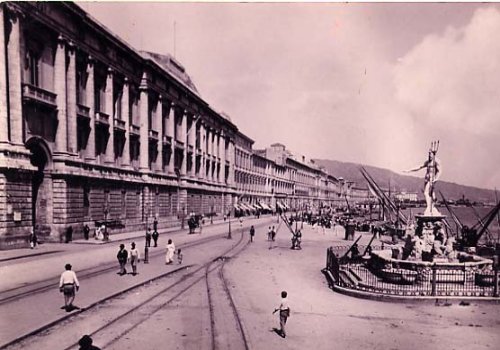
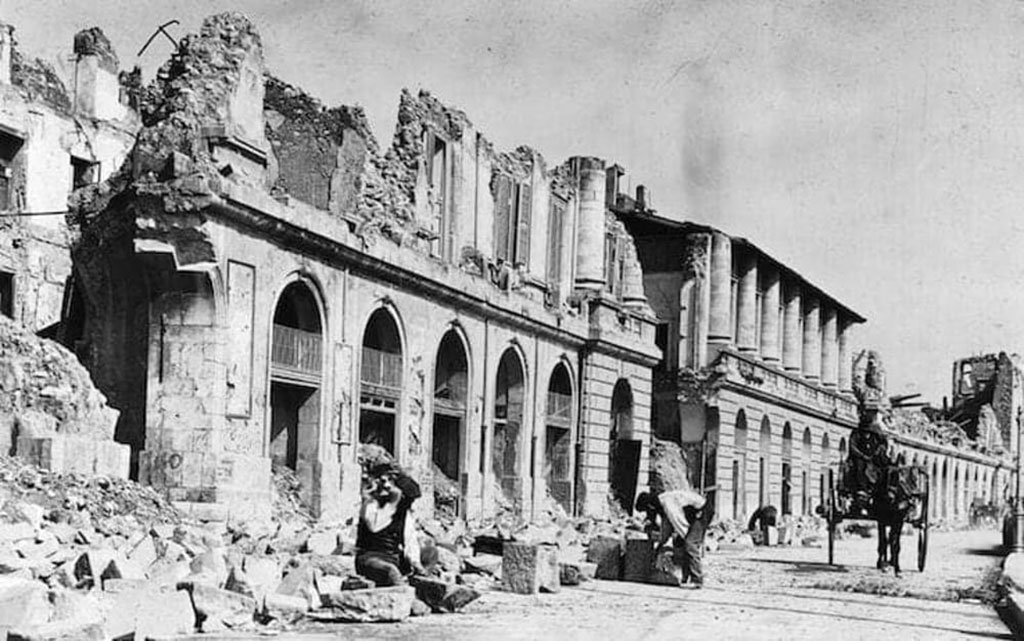
In the past, Messina was a great city. At the time of the 1908 earthquake, it was the third largest port in the Mediterranean.  I do not intend here to provide a condensed history, but, for example, before 1908, there was a 9-kilometre-long seafront known as the Palazzata – a continuous sequence of buildings constructed at the beginning of the nineteenth century, better known as the Teatro Marino, which housed a range of functions: residences, silos, and warehouses.

An avant-garde architectural vision, which replaced an earlier Palazzata of much older origin, damaged by the 1783 earthquake.

At the end of the 18th century, it was decided to rebuild the Palazzata and, more broadly, the entire city preserving its previous layout and appearance. However, after 1908, different choices were made.

The Palazzata by Simone Gullì before the earthquake of 1783, painting by Louis François Cassas ( wikipedia).

Palazzata and Neptune’s statue before the earthquake of 1908.

Palazzata after the earthquake in 1908. (wikipedia).

Palazzata of Messina, project by Giuseppe Samonà (wikipedia).

It is a decades-long, almost century-long lack of vision on the part of Messina’s administration. Twenty years ago, for instance, the tram line was built alone the seafront, despite the existence of a less invasive route that had already been identified. It was a short-sighted decision, especially considering that in recent decades coastal cities have worked to remove barriers between the city and the sea. Reggio and its promenade, geographically close, are a clear example of this. The tram on the seafront has further diminished an already struggling Messina

Messina’s past is its landscape: hills flattened, hills rebuilt.

The people of Messina move between the memory of the past and what the gaze itself generates – two forms of memory that produce a permanent sense of uprooting.

Before 1908, there was a saying in Messina used to describe a highly negative situation: “to do more damage than 5 February” (the day of the 1783 earthquake). This is not only a reference to popular culture; it almost represents an anthropological evidence of how the “damage” suffered offered the people of Messina a pretext not to fight back, an alibi not to react, turning inaction into a way of life. With the second earthquake, even more so, identity was lost in the collapse, and there is no desire to recover it.

What has been built – the geometry, the heights, the materials of the buildings – acts on people’s perceptual sensitivity, generating daily feelings of either positivity or discomfort. One is subjected to, and gradually becomes accustomed to, the most disturbing elements, to visual dissonances, and to the lack of connections between the fragments of the city, the greenery, and the sea.

This happened in Messina.

How does it work for those who stay?

“Restanza” – a word effective both in sound and meaning – is a complicated and risky choice.

Vittorio Teti – an anthropologist – speaks of the “adventure of staying” (in the South, editor’s note): “the effort, the harshness, the beauty, the ethics of ‘restanza’ are no less decisive and foundational than the adventure of traveling. The two adventures are complementary and must be understood and narrated together.”

Il rischio è quello dell’assuefazione, della mancanza di visione fino ad arrivare alla cecità totale.

Creare una condizione culturale che costringa gli strettesi a guardare lo Stretto – conoscerlo e riconoscerlo – significa progettare un intervento culturale radicale, attivatore di un processo di rivitalizzazione continuo, non episodico, finalmente risolutore.

La capacità di vedere la bellezza dello Stretto, di Messina, di Reggio va sollecitata di continuo, perché è da troppo tempo soffocata non solo dal suo contrario, il brutto stratificato, ma ancora di più dall’inazione.

I costruttori di bellezza – scrittori, artisti, architetti – provano a dare dei colpi di frusta per riassestare lo sguardo dei loro conterranei, per rivelare l’immateriale a chi osserva da lontano, affascinato dalle leggende, timoroso di restare deluso.

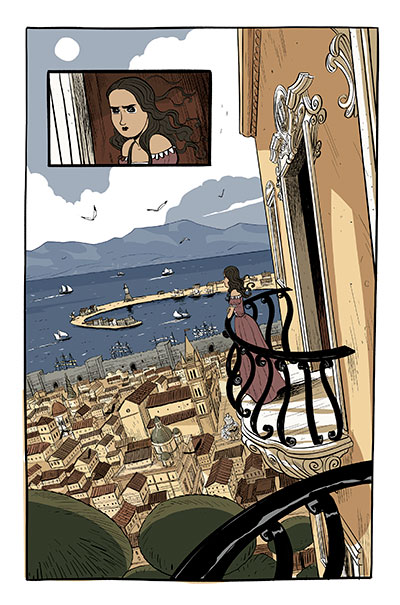
Come ha fatto Nadia Terranova nel libro Addio Fantasmi e nella graphic novel Caravaggio e la ragazza (in tandem con Lelio Bonaccorso), con bellissimi disegni di Messina.

Isabella al balcone (dal libro illustrato Caravaggio e la ragazza di Nadia Terranova e Lelio Bonaccorso. Disegno di Lelio Bonaccorso)

Tornando al punto da cui è partita questa riflessione e alla domanda – come funziona per chi resta – la necessità della bellezza deve trovare una sintesi con l’economia.

L’architettura è, potenzialmente, uno degli elementi di equilibrio e conciliazione: innesta ex novo e integra le funzioni del vivere in contesti urbani di buona qualità formale in dialogo permanente con il costruito del passato e con l’ambiente naturale.

Sotto il profilo naturalistico, lo Stretto è una miniera d’oro da mettere a reddito, possibilmente non (solo) con la logica del “turismo da mungitura”, assegnando una manciata di metri quadrati di litorale a turisti assetati di sole e mare, sul modello B-movie.

Non è questo che serve agli Strettesi. Ci sono alternative che possono essere messe in campo per un turismo in cui la spiaggia sia pausa, non obiettivo: per esempio percorsi territoriali, percorsi sulla traccia delle residenze di artisti, escursioni naturalistiche ….

Questa bellezza celata, che già esiste, è diventata invisibile perché è stata mortificata da altre scelte che lo Stretto – Messina, ma anche Reggio – ha inflitto a se stesso.

Quello che emerge è l’abusivismo e una bruttezza mostruosa. Persino l’abitare ha una dimensione misera. La pervasiva speculazione ha generato un senso del possesso senza bellezza.

Ci sono, fortunatamente, molti progetti in corso …

Qualcosa è stato fatto, ma molte cose sono state lasciate a metà o interrotte. Ci sono ancora chilometri di costa da recuperare. Manca una visione politica ed economica. Quando una giunta è concentrata a difendere se stessa, non si impegna in opere importanti, ma nel rassicurare l’elettorato nel breve.

Il lavoro manca, il lavoro è priorità.

Deve essere così.

Ma “il lavoro” non è una categoria isolata. È la progettualità in settori diversi che produce lavoro. Gli strettesi hanno una miope ossessione sul “ponte” come generatore di occupazione per anni a venire, prima ancora che come elemento di connessione.

Senza considerare che oggi, in una logica di transizione ecologica, si tratterebbe, forse, di una scelta depauperante per i territori.

Con la costruzione del ponte aumenterebbe il traffico sia dei veicoli pesanti, sia dei veicoli leggeri, una visione ancorata al passato, mentre le linee guida del Green Deal europeo impongono di ridurre il trasporto su gomma.

Manca l’elaborazione culturale per qualsiasi scelta di futuro che, come conseguenza, si affievolisce sempre di più, perché non esistono le condizioni di una “restanza” serena. Le giovani generazioni non sono messe nella condizione di amare i loro luoghi.

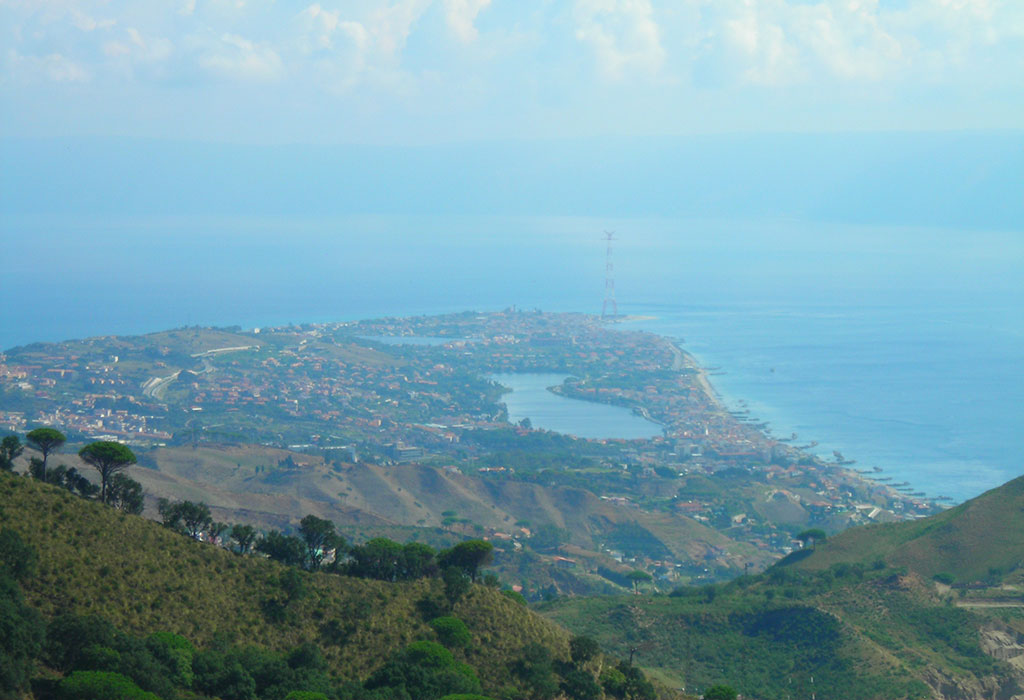
Le acque del lago di Ganzirri a pochi chilometri dal centro di Messina sono in comunicazione con il mare adiacente per mezzo di canali, alcuni risalgono agli anni Trenta dell’Ottocento e con il lago di Faro più a nord.(fonte: archeome.it)

Cosa pensi del tema della conurbazione tra Reggio e Messina? Ci sono rischi di forzature?

Gli strettesi condividono il sistema ecologico e paesaggistico dello Stretto, ma da punti di vista differenti. Da Messina, per esempio, vediamo Villa San Giovanni, non Reggio.

La Sicilia è un’isola, Reggio sta in una penisola. Gli approcci sono diversi, ma questa eterogeneità è un valore da conservare.

L’ecosistema dello Stretto è un patrimonio incredibile da osservare, comprendere, conservare.

È importante non trascurare l’obiettivo e formulare buoni progetti per un territorio avvilito.

Per attirare il capitale, abbiamo così tanta cultura, memoria, bellezza ed è questo che importa.

Molta della bellezza dello Stretto sta più nei borghi che nella città. In che misura è immaginabile un sistema borghi?

Il progetto di una relazione tra borghi e città, sviluppato sulle infrastrutture fisiche e su quella digitale, sulla messa in sicurezza dai rischi idrici, ha grandi potenzialità. Sotto il profilo economico è la dimostrazione che la bellezza del territorio può creare ricchezza stabile, indipendente dalla stagionalità turistica.

Le città più marginali, come Messina, possono dire molto su un possibile binomio borghi-città, non come scelta alternativa, borghi o città, ma come sistema di relazioni che si attiva a scale differenti per distanza e tempo.

È fondamentale partire dalle realtà culturali che amplificano le specificità del territorio in modo attivo e concreto e rappresentano il bello che avanza.

Anna Mallamo, “strettese” (reggina, vive a Messina da molti anni), lavora come giornalista alla Gazzetta del Sud, dove dirige il settore Cultura e spettacoli. Ha tenuto una rubrica fissa per alcuni anni su “L’Unità” e ha un blog sull’Huffington Post. È molto attiva sui social, con l’account @manginobrioches.

journal-Messina-mondello-header.jpg

MESSINA LIES AT THE CENTER OF THE STRAIT AREA, WITHIN A POLITICAL AND REGIONAL SEPARATION THAT CONTRADICTS THE NATURAL GEOGRAPHICAL AND CULTURAL UNITY OF THE TERRITORY. SALVATORE MONDELLO DESCRIBES HOW THE CITY FUNCTIONS, WITH A GLAZE TOWARD EUROPE

Living and mobility. The port system and the water system. Identity. According to Salvatore Mondello – Councillor for Infrastructure and Public Works (with numerous delegated responsibilities) – the emergencies, urgent issues, potential, and development of Messina and the entire Strait area depend on resolving these five conditions.

Going beyond what is visible, understanding the vulnerability and complexity of a territory that was once a destination for the greatest travelers in European and world literature, and that today struggles to reclaim its place on a national and European scale: at its forth edition, Invisible Mediterranean(s) – Journey across the Strait shares this reflection with Salvatore Mondello.

The Strait of Messina is a magnet – it has always been one throughout history – a hinge of extraordinary natural beauty”, Mondello begins. “All the great travelers of the past were fascinated by the Strait. We simply need to turn the lights back on.”

What are the real strategies for “turning the lights back on” for the city?

Mondello explains that the city stretches for 32 kilometers: on one side toward the narrow strip of land along the Strait, and on the other toward the hilly landscape behind it. It lies at the center of a broader area, even though on the Calabrian Ionian side the conurbation with Reggio Calabria and Villa San Giovanni has never truly become a reality, despite the geographical configuration.

For Gesualdo Bufalino, “… Sicily has had the fate of finding itself, over the centuries, acting as a hinge between Western high culture and the temptations of the desert and the sun, between reason and magic, between the climates of sentiment and the scorching heat of passion” (from the book “Cento Sicilie”).

Mondello extends this idea from the insular scale to the urban one: Messina is a hinge of the Mediterranean both for its port system and for its geographic position. It is a territorial context (similar to that of Genoa) that encompasses and connects very different identities.

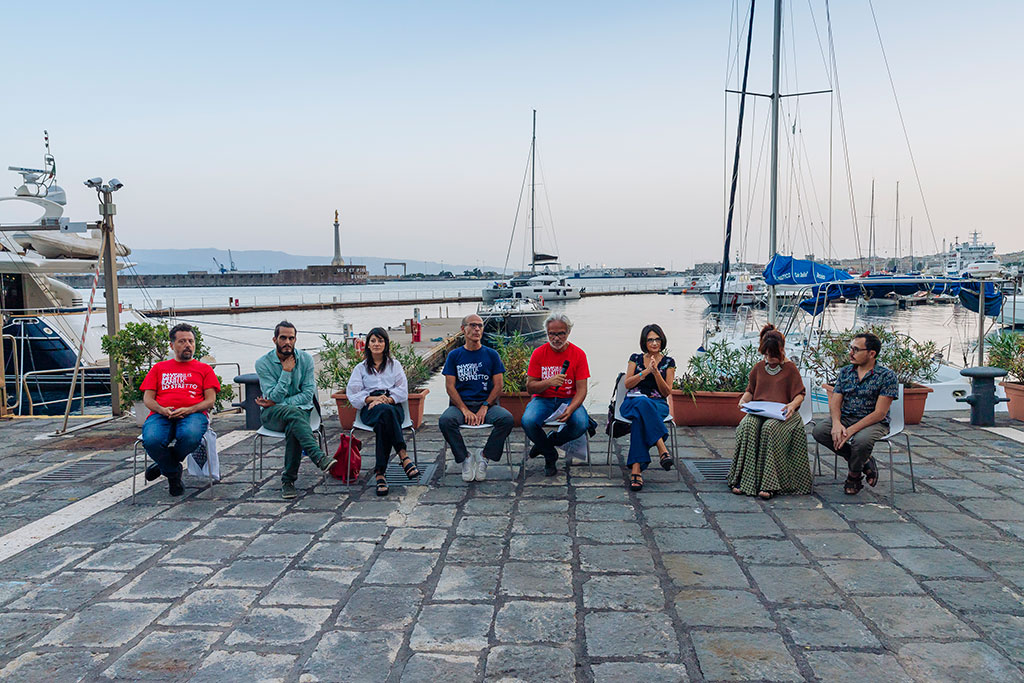
From left, Giorgio Tartaro, Salvatore Mondello and Alfonso Femia. Invisible Mediterranean(s) 2021, Journey across the Strait IV. Photo by Stefano Anzini.

And identity itself becomes a key issue in the cultural representation of the Strait, and at this moment also a matter of political urgency that reveals the city’s fragilities and contradictions. The Sicilian Region has in fact accepted the request of thirteen hamlets in the Messina area to hold an independence referendum. The aspiration is to create a new municipality, to be called Montemare, autonomous from the city of Messina. This refers to the northern portion of the territory, where the hillside villages are located.
Mondello explains that separating the administrations would make governance more complex. While fully respecting local identities – which in the past have already produced similar situations in other parts of Sicily – it is the territorial, historical, architectural, and landscape culture that expresses connections and differences, in other words identity itself, rather than the creation of separate administrations.

Heterogenity is the unnderlying framework that defines the entire city of Messina, as Nadia Terranova notes, “The uniqueness of Messina lies in its differences”.

According to Mondello, it is essential – precisely in order to “turn the lights back on” – to leverage the natural connections that already exist: Reggio Calabria and Messina are, before being Calabrian and Sicilian, cities of the Strait. The conurbation finds its meaning in the social, cultural, and economic relationships between the two territorial realities, even though common strategies have not yet been developed.

Mobility is at the center of development, and a shared strategy with Reggio Calabria is envisaged for a unified and coordinated management of the Strait, independently of the Bridge across the Strait, which is seen as a topic that is almost more European than local.
For this reason, within the PUMS, (Sustainable Urban Mobility Plan), in its most recent version drafted this past August, reference is made to a “Sea Metro” between the two shores of the Strait of Messina – Reggio Calabria and Villa San Giovanni on one side, and Messina on the other, through fast maritime transport services that allow movement between the cities. The work is oriented toward building a structural framework at both urban and extra-urban levels. The city of Messina and the Metropolitan City share a single mayor, and this contributes to the development of planning on a broader scale.

Turning off – after more than 100 years –  the spotlight on the issue of the shanty towns is an unavoidable step in order to switch it back on over the city’s positive urban aspects: moving from decay to quality of living.
The 1908 earthquake in Messina devastated 90% of the city. Temporary shacks were then built, which over time became permanent makeshift housing. Today, demolitions have begun, and urban redevelopment works are underway, along with the definition of a new urban planning standard.

Water is the other major theme that will lead Messina toward the goal of becoming a European city.
Rebuilding the relationship between Messina and its port is essential. The work carried out in cooperation with the Port System Authority, which manages Messina, Reggio Calabria, Milazzo, and Villa San Giovanni, will mark an important phase of urban development for the city.
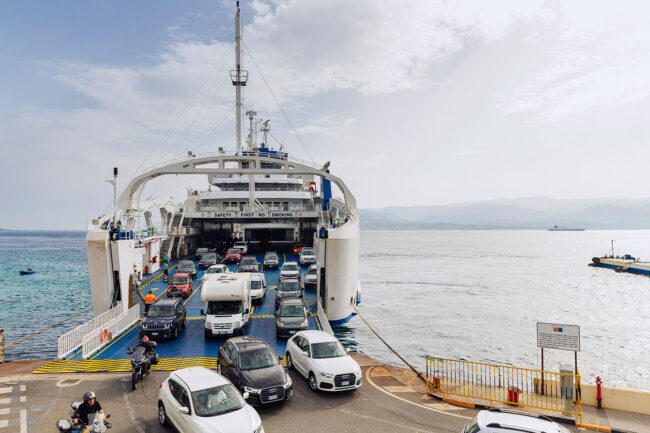
The Tremestieri port, currently being upgraded, will be able to accommodate up to seven ferries. It will expand southwards with a 320-meter breakwater jetty exposed to winds, and a 34,000-square-meter storage area.
The new port will allow ferry traffic to be removed from the Rada of San Francesco, which can then be transformed into a tourist marina. In this way, the navigability of the Strait will be ensured, and the connection between the sea and the city center will be restored through the functional redevelopment of the Rada.

Access to public water, purification, and wastewater disposal – in other words, the efficiency of the water system – is another major issue in the redemption of the Strait area.
Sicily loses  50,5% of its water through distribution networks. Water scarcity has, in the past, created even very serious problems. A process of rationalization of the overall system is now underway, including the introduction of remote monitoring systems for the water network.
The Fiumefreddo aqueduct is the main water resource available to the Messina system. Sicilian fiumare, like those in Calabria, are highly intermittent by nature due to geomorphological conditions: they appear suddenly and briefly, then disappear. Water resources, which can be collected and stored in reservoirs, are also present in the hills. The municipal administration and Amam (Azienda Meridionale Acqua Messina) are working together to develop structural interventions aimed at long-term solutions.

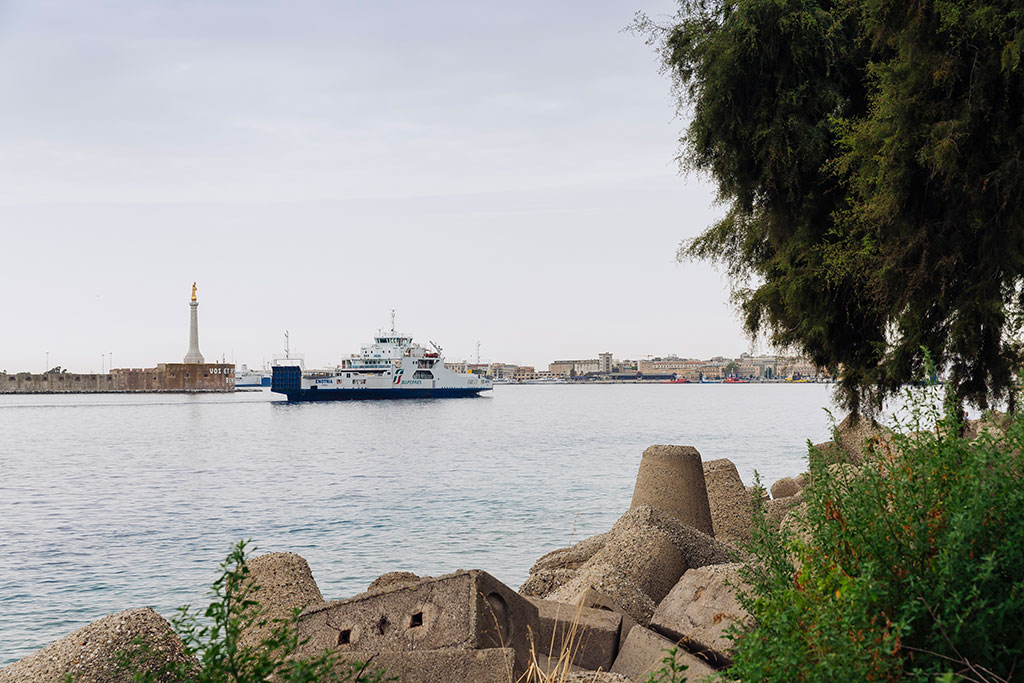
View of the Madonna della Lettera of Messina from the Exhibition Citadel. Photo by Stefano Anzini.

Mondello emphasizes that the city’s shift in direction depends both on housing and territorial policies and on the way the city itself is perceived – and that this latter aspect is fundamental to its transformation.
Throughout its history, Messina has experienced periods of significant development (notably in the 1970s and 1980s) as well as phases of slowdown.
Today, it is necessary to focus on quality and to plan an urban development coherent with the city’s growth, in the most appropriate way possible. This means that programming must be forward-looking, must exclude isolated “spot” interventions, and must express long-term plans that go beyond electoral cycles.
The preservation of cultural and identity heritage is certainly essential, but it is equally important to think of Messina as a European city.
“This is not a slogan,” he notes, “because if administrators and citizens, intellectuals, writers, journalists, and artists change the way they look at the city, the city itself will change”.

200920_Mediterranei-Invisibili_©Stefano-Anzini_IMG_6338

THE SOUTH LIES AT THE EDGE OF EUROPE: IT STRUGGLES MORE TO MAKE ITS VOICE HEARD BUT, IN THE PAST, IT MADE A GREAT CONTRIBUTION TO THE COUNTRY’S HISTORY. AND NOW IT IS PREPARING TO START AGAIN FROM AGRI-CULTURE with Pietro Taccone

Pietro Taccone and his family could be the protagonists of a film: a melting pot of cultures, where the cool Anglo-Saxon spirit intertwines with passionate Neapolitan roots, followed by a long period in Milan and then a return to Southern Italy – bringing with them the energy, expertise, and discipline needed to transform Calabria into a truly European region.

Pietro begins speaking about the South, recalling its glorious past: not as a learned historical synopsis, but as a premise for the potential re-emergence of the territory.

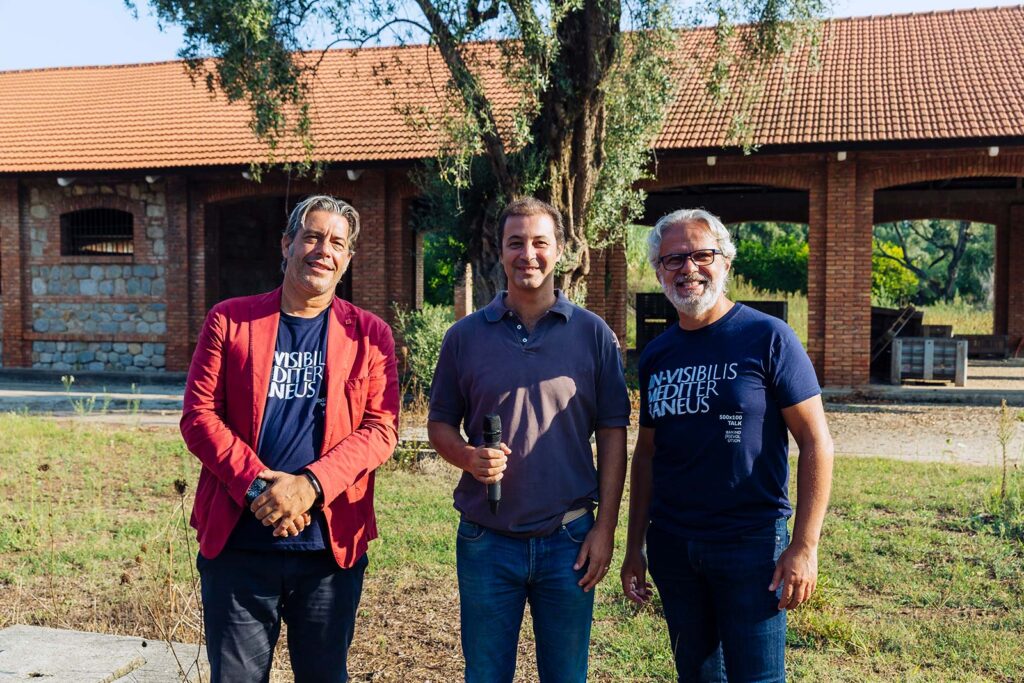
200920_Mediterranei-Invisibili_©Stefano-Anzini_IMG_6291From left to right: Giorgio Tartaro, Pietro Taccone, and Alfonso Femia during Invisible Mediterranean(s) – Journey across the Strait III, talk session on 20 September 2020. Photo by Stefano Anzini.
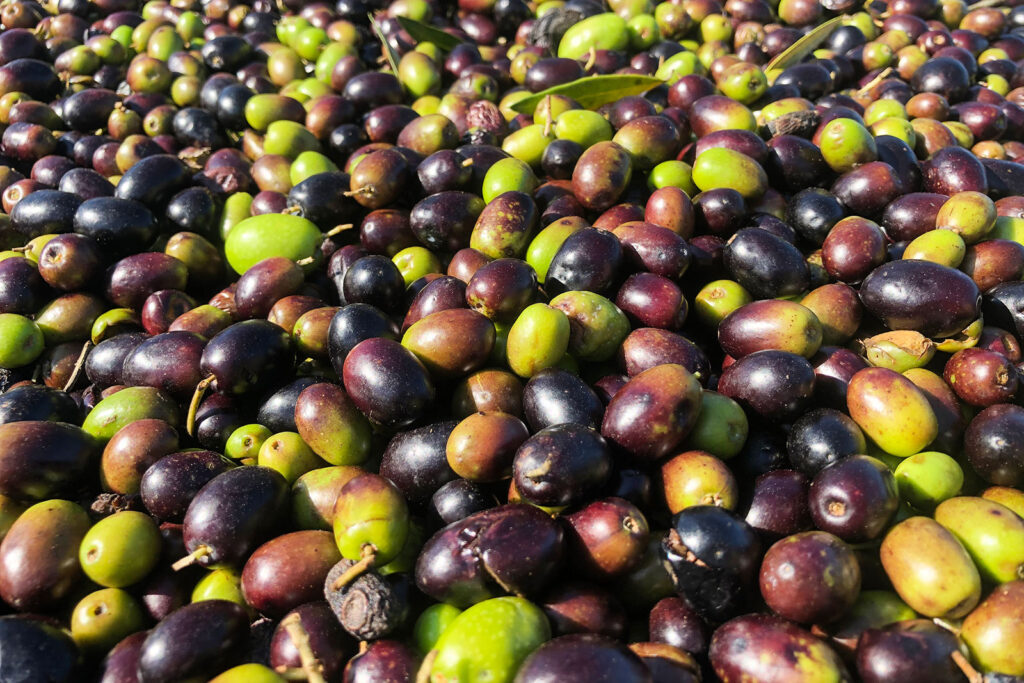
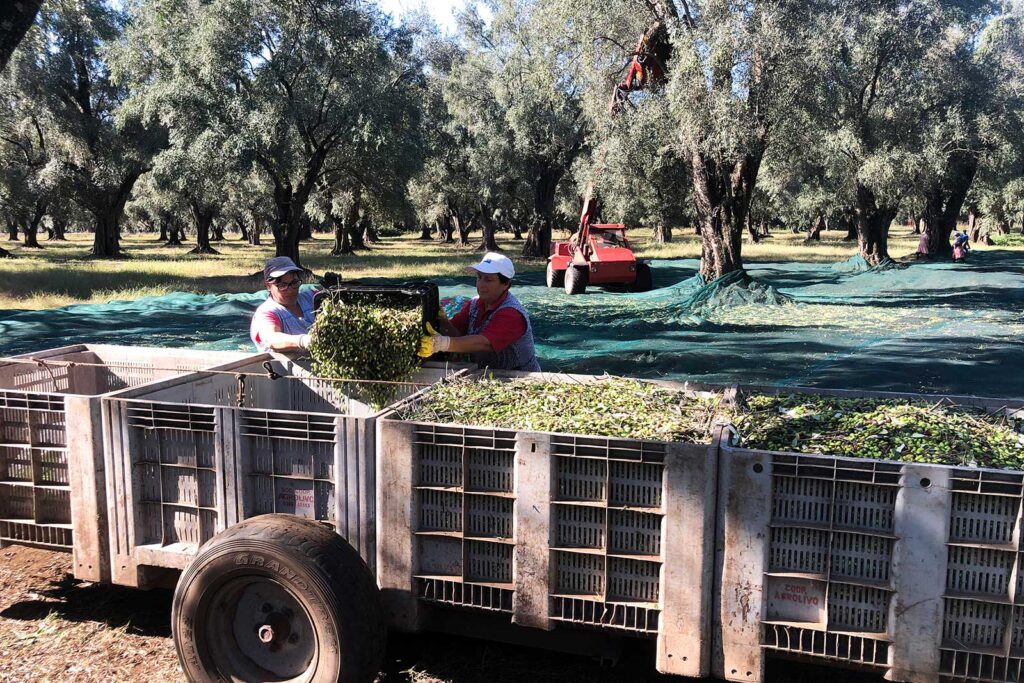
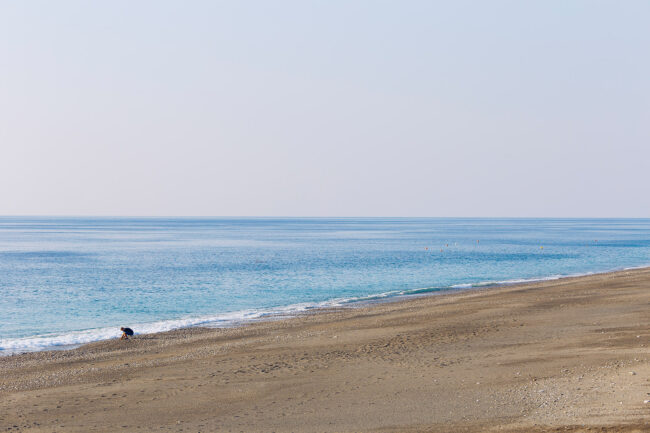
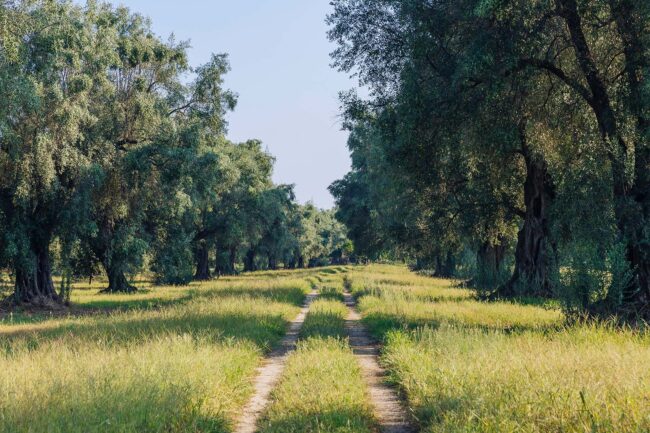
In the 18th and 19th centuries, Naples and the Kingdom of the Two Sicilies were leading European powers, with remarkably progressive governments. In 1839, the first double-track railway link in Italy was built to connect Naples and Portici.  Shipyards, metalworking, texitle, food-processing, and sulfur-extraction industries, along with agriculture, wow highly developed and firmly established. with commercial relations extending throughout Europe. Then, in the post-unification period, a dark era followed, and people began speaking of the “Southern Question”. The South became simpy “the South”. Our farm is what remains of an estate that originated earlier, in the 1700s, and that generated employment and prosperity throughout Calabria. It was a 40,000-hectares in the Plain of Gioia Tauro where olive cultivation is predominant. We have centuries-old olive trees dating back to the late 18th century. We work continuously to innovate the production process and refine a product with outstanding qualities. We have preserved most of the ancient olive trees, while mechanizing fruit harvesting as early as the 1980s through the use of shaker machines.  Before this innovation, olives from centuries-old trees were used to produce “lampante” oil, so called because throughout the 19th century and the early 20th century it was used for lighting and exported to Russia. Other oil was exported to France and England for soap production, including the famous Marseille soap. The centuries-old trees, reaching heights of up to 20 meters, did not allow for the early harvesting of the olives. Harvesting occurred only after natural falling once the fruit had fully ripened, resulting in a degraded product with excessively high acidity levels. The olives could not be used to produce extra virgin oil. To achieve a leap in quality, it was enough to anticipate the harvest. Managing these trees is complex because of their size, but shaker machines have enabled us to harvest olives before full ripening, obtaining fruit with excellent organoleptic characteristics in both aroma and flavor. In this way, we entered a high-end niche market. Calabria was actually the first region to import shakers from California, whose mechanical action is carefully calibrated so as not to damage the trees. However, harvesting olives from centuries-old trees still requires a large workforce because of the “sesto ducale” layout – that is, the wide spacing between one tree and another. For this reason, we decided to plant part of the land with younger, smaller trees spaced six meters apart.  This allows for more efficient management of cultivation, both from a phytosanitary perspective and in terms of harvesting, using umbrella shakers that require only two workers per tree instead of the six to eight needed for the ancient trees. Replacing old trees is costly and, rightly so, subject to landscape preservation regulations. Managing these olive groves is by no means simple, and many olive growers rely on state subsidies whenever they are available. On our farm, 50% of the old olive groves have been preserved, with careful attention paid to maintaining the same native varieties – Ottobratica and Sinopolese – in order to preserve the unique character of the territory. Our olive oil is distributed throughout Europe and the United States. Olive growing as once a flourishing and prosperous economy, and today it seeks to regain the splendor of the past and assume a significant role within an international context. Supporting agricultural development is part of a broader process of economic transformation in our region, one that can truly stand alongside the country’s industry, tertiary sector, and services, making it competitive and a meaningful player within the European and globalized landscape. Our company employs 50 people engaged in overseeing the entire supply chain, from cultivation to bottling. We live in a small village established in the 1700s in the Plain of Gioia Tauro: the village of Cannavá, which has been redeveloped with a focus on hospitality, tourism, and cultural activities. The heart of the village is Masseria Santa Teresa dating back to the 1830s and composed of a series of buildings arranged around a quadrangular square. It is a system centered on agriculture as its core identity, one that also sustains itself through the added functions of hospitality and cultural engagement.

Olive harvest, October 2020, at the Acton farm in Leporano. Photo by  Salvatore Greco.

Is the revival of Calabria through the land and olive trees too romantic a vision? Perhaps things are a little more complex in Calabria, but mano agricultural businesses are adapting to contemporary challenges, embracing technology and emerging as important realities in terms of employment and economic impact. There is remarkable dynamism: many have successfully renewed themselves by following European directives, investing in biogas systems for livestock farming and renewable energy through the use of pruning residues that can be transformed into wood chips. All of Calabria is engaged in this transformation: in the Lamezia area through citrus cultivation; in the Crotone area through wine production, which is gaining significant recognition nationally and internationally; and in the Reggio Calabria area through bergamot production for the French and international perfume industry. Along the Reggio Calabria coast, Calabrian mangoes are also cultivated. This demonstrates that starting again from the land and from agri-culture is neither merely an idea or simpley a project, but a reality that already exists.

Do infrastructure gaps, including those within the region itself, penalize you? Are they a determining factor in development prospects? The issue of missing roads must be evaluated and weighed in the proper terms. Calabria is a mountainous region: Sila, Pollino, and Aspromonte are our mountains, and mountains are difficult to manage everywhere. What would be extremely important is the rigorous maintenance of the existing neytwrk, wihich currently suffers from major deficiencies in this regard. We are actually in a better position than some other territories. The Salerno-Reggio Calabria motorway functions, even though the thirty-year reconstruction process caused enormous inconvenience and disruption. The Tyrrhenian coast is well connected to the rest of the country, and there are also two major high ways leaiding to the Ionian coast. The need to develop infrastructure must take into account the geomorphological structure of the territory. One cannot simply exploit the issue of missing roads without carefully assessing the benefits in relation to the investments required and the environmental and territorial risks involved. Our disadvantage lies in being geographically “at the end” of the peninsula: regardless of the means of transport, we still have to travel 1,200 kilometers to reach Italy’s gateways to Europe, the major distribution centers, and the main logistics hubs. What could have been our greatest strengths has been completely undermined by its function and by the lack of railway connections. The Port of Gioia Tauro is a missed opportunity. To build it, an extraordinary environmental landscape was sacrificed, and yet it provides no real service to its own region. It is an international transshipment port, a closed and highly specialized system. Our natural shortcut to Europe and other countries – the sea – is effectively reserved for another exclusive function.

Is our provocation – placing the South at the center of the process of revitalizing both Italy and Europe as a whole – a realistic prospect? I am convinced that it is possible, by using agriculture as a driver for generating sustainable local economies. Calabria does not possess the territorial or environmental conditions necessary to develop large-scale industrial sectors. Attempts at industrialization have produced only the remains of unfinished factories and abandoned industrial blights. The only industry that truly makes sense to develop is a rural one, capable of creating stable local employment with a strong international outlook. To achieve this, local politics must support these projects by following European directives and making proper use of European funding opportunities. It must also recognize that agricultural planning, by its very nature, does not follow the five-year cycle of political elections, but instead requires a much longer-term vision. Mistimed decisions, a poor understanding of real needs, and a lack of specific expertise have led to misguided choices, effectively leaving agricultural entrepreneurs alone to pursue – and at times even fulfill – the dream of establishing their territory on the world stage.

The opening photo is by Stefano Anzini.

200918_Mediterranei-Invisibili_∏Stefano-Anzini

BETTING ON YOUNG PEOPLE AND CULTURE: IT’S NOT A SLOGAN, BUT THE ONLY OPPORTUNITY TO FREE SICILY FROM PERCEPTUAL DISTORTIONS with Pietro Briguglio

Pietro Briguglio, the mayor of Nizza di Sicilia, speaks about a Sicily that wants to go beyond its borders – both physically and by building bridges between the memory of the past, the “outside” world, and the future.

Pietro Briguglio, Mayor of Nizza di Sicilia during Invisible Mediterranean(s)-Journey across the Strait, 17 September 2020. Photo by Stefano Anzini.
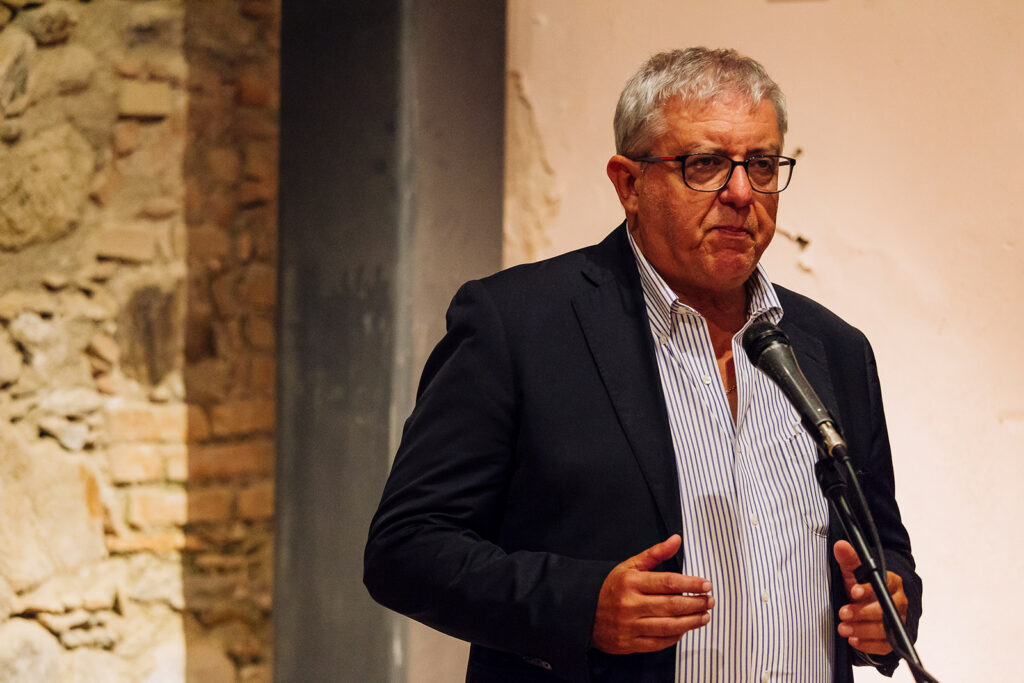
Sicily is not mafia and crime. If that remains, in the background, a persistent perception shaped by an outdated reading of the territory, it is equally true that today the reality is completely different. An example? Savoca is the village of the 17 mummies, one of the most beautiful villages in Italy. It dates back to 1134, but it became famous in 1972 because Francis Ford Coppola, the director of The Godfather, shot some scenes of the film there.
And this is not the only perceptual distortion weighing on and slowing down the island’s development.
For example, Sicily is not only Taormina, nor is just seasonal seaside tourism.
And history and culture are not found only in Palermo and Noto.

Sicily is a land that goes beyond the distances and physical limits of being an island.
Of course, there are real limitations, but they have become so worn down over time that they have almost lost their intensity and urgency: the lack of internal infrastructure, the exodus of the younger population, the bridge that was never built, and the patchy spread of the digital network.
There are also other, less visible limits, yet equally restrictive: from a “human” perspective, we are not sufficiently equipped in terms of professional skills and capabilities to move with agility through a highly complex bureaucratic landscape – both at the regional and national level and, above all, in accessing and making use of the economic opportunities offered by Europe. Developing projects, reporting results, and meeting deadlines all require an organic and well-structured operational approach in terms of procedures.

Photo by Stefano Anzini

How important is tourism for the revival of this part of Sicily?
The strenght of seaside tourism also represents, to some extent, a limitation: we neglect the inland’s landscape and cultural treasures. Even the coastline outside the reference hub of Taormina is an underused heritage asset with enormous potential to make tourism less seasonal. An example closely connected to my own territory is the Nisi Valley, on the Ionian side of Messina, made up of small seaside towns and ancient hilltop villages. The valley has prehistoric origins and developed around one of the most important mountains in the Peloritani Mountains range, Monte Scuderi. The direct contact between sea and mountain makes these places fascinating and intense, and it is from here that the “Ring of the Nisi” was born, including Alì Terme, Alì, Fiumedinisi, and Nizza di Sicilia.
A great work that cannot be enjoyed by the community, locked away in a private room, represents an unjust way of relating art to society. Much of Sicily is an extraordinary work of art that remains undervalued and largely unknown.
The spread of culture – and the tourism that can grow from it – is the true instrument for revitalizing the territory.
Un’affermazione forte e autonoma in A strong and independent affirmation in this direction would generate the interest of central government and accelerate the construction of infrastructure. It could trigger a virtuous cycle capable of breaking down all these barriers.
Culture begins with an intense program of education and training that creates a sense of belonging to the territory, reverses the processe of youth migration, and generates jobs for culture, through culture.
Mental barriers can only be dismantled through culture. For Sicily, this is therefore a fundamental issue. What will redeem our land from distorted perceptions is the commitment of a younger generation encouraged – through education and culture – to believe in and invest in Sicily.

Borders and limitations must be transformed into horizons, aspiring to new models that constantly encourage the search for visions without boundaries.
Sicily can be imagined as a kind of beneficial, energizing, healing IV drip – a slow – release infusion of culture, history, and traditions to be administrated to the whole of Italy.
In Egypt and in other countries that have marked the course of human evolution, excavations continue endlessly, even after the essential has already been revealed.
We, too, have an immense cultural heritage to uncover and share, yet there is little interest in “digging” into our land. Not investigating our history means remaining one step behind.
Returning to the town of Savoca, Francis Ford Coppola’s choice and the success of The Godfather acted as a sounding board for the entire area. Today, the power of the internet spreads awareness of territories, curiosity, and the desire to visit them – and this, too, can work in combination with the development of the island’s internal physical infrastructure.
We are also moving forward on this front. Last September, the Government Commissioner and the CEO of Rete Ferroviaria Italiana, Maurizio Gentile, signed the approval of the final project for the doubling of the railway tracks between Giampilieri and Fiumefreddo di Sicilia, for an investment of €2.3 billion, already fully funded. The ordinance marks another decisive step forward in the realization of the Messina-Catania-Palermo railway axis, coming just days after the conclusion of the service conference held last August. With the approval now granted, the publication of tenders for the two functional sections – Fiumefreddo di Sicilia–Taormina/Letojanni and Taormina/Letojanni–Catania – can proceed in the coming weeks. The project completes the doubling of the railway line between Messina and Catania and includes the construction of 42 kilometers of which will run underground. This will increase the line’s capacity for both passenger and freight traffic and reduce travel times between Messina and Catania by approximately 30 minutes, enabling the development of a metropolitan-style rail service from Catania to Taormina/Letojanni.

Is the Bridge across the Strait of Messina a decisive factor within this framework of development?
The bridge is a primary infrastructure project, connecting Sicily to the mainland, both for the transport of goods and for the movement of people. The benefits would be undeniable, even though, after postponing its construction for nearly a century, the urban complexity of the departure and arrival areas has grown enormously. Today, compensation measures are necessary to address the disruption that the project would inevitably bring.
Beyond the debates, reflections, and the technological, institutional, economic, and environmental issues involved, the only indisputable reality is that building this bridge is both urgent and appropriate: it is not only in the interest of Sicily and Calabria, but of the whole Italy.

The opening photo is by Stefano Anzini.


200918_Mediterranei-Invisibili_∏Stefano-Anzini

A SOUTHERN MODEL CAPABLE OF DRIVING THE COUNTRY FORWARD IS BUILT UPON HISTORICAL EXPERIENCE, WITHOUT INDULGING IN NOSTALGIA FOR THE PAST, BY ADAPTING CENTURIES-OLD WISDOM TO THE PRESENT with Serena Bonura

Serena Bonura works and conducts research in the field of ecology and sustainability applied to education and communication. From her perspective, it is not possible to speak of a “South rising again”, because the South is already wonderful. However, quality of life depends on functioning schools and hospitals, not only on landscapes, the sea, and sunshine. In Sicily, there are still many things that need to be improved.

Serena Bonura during the talk of Invisible Mediterranean(s) – Journey Across the Strait III on 18 September 2020. Photo by Stefano Anzini.
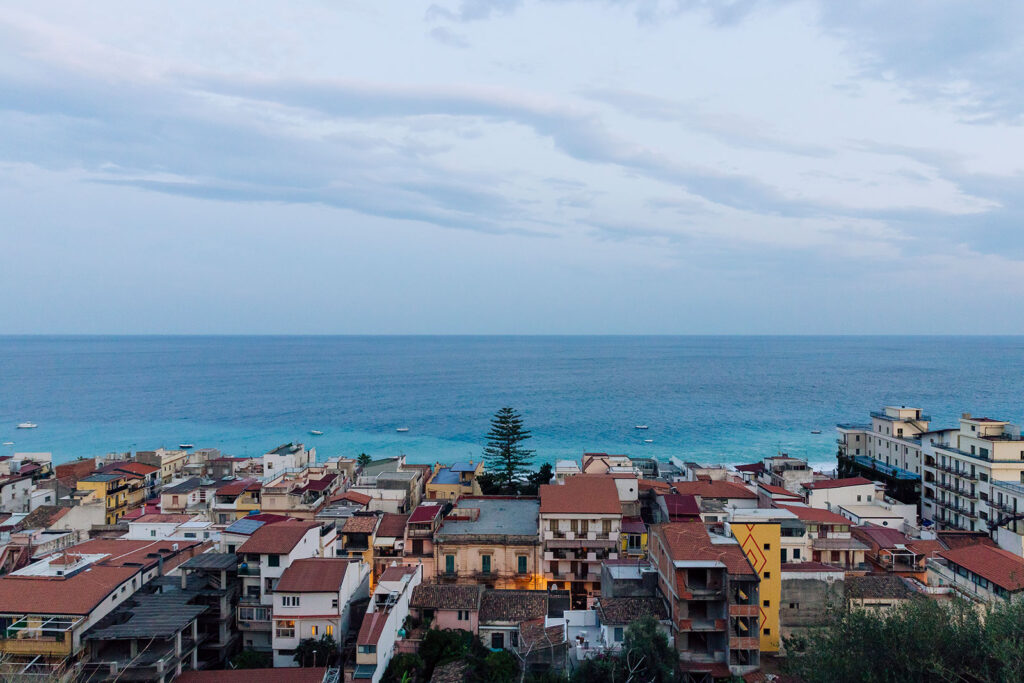
Serena lived in Bologna for a period of time, and this experience changed her way of seeing the world (and the South). For her, ecology and sustainability–particularly in relation to food–are both an economic resource and, at the same time, a way to avoid impoverishing and degrading her homeland.

The “new economy” and “circular economy” – emerging outcomes of a more conscious view of the environment–are already quickly turning into slogans. Yet, in reality, work has barely begun in this direction. It is as if anticipating the concept, without having fully experienced it, has already worn it out and made it feel outdated.
For the South, and for Sicily in particular, this is not just an abstract representation: it is one of the viable paths to building an economy in places where, fundamentally, economic structures are still weak. This means making use of the full range of local resources and activities, especially in connection with the agri-food sector.
In Sicily, a new economy can truly be activated starting from tradition. However, Serena emphasizes that speaking of tradition does not mean returning to outdated or obsolete ways of doing things–or worse, ways of thinking.
Awareness of the present, she explains, comes from a layering of positive experiences and mistakes. Nothing should be forgotten; memory is the best key to change. This is why she speaks of “retro-innovation”: taking with is valuable from the past and reinterpreting it through contemporary tools. It is not a concept limited to food and agriculture; it can be applied to every context, everywhere. However, the Sicilian model of retro-innovation is shaped by the specific geographical, cultural, and historical identity of the South in a way that is unique–neither transferable nor directly replicable elsewhere. Just as unique as the South itself.

Circular economy generates contemporary models of consumption, without diminishing or uncritically glorifying the past. It is also an “economy of relationships”, an expression that is almost a contradiction in terms, because it activates a process that evokes forms of exchange rooted in ancient memory. A sort of modern-day “pre-monetary” system.
To explain better, we work in co-production with aggregated consumers from the other areas of Italy, the Gruppi di Acquisto Solidale, who agree to share the production risks inherent in agriculture (especially climate-related variables), paying farmers in advance. In this way, the producer does not “run alone” with the risk of not making it, thanks to the pre-financing provided by consumers.
It is a model that is also spreading to other European countries. For example, some Sicilian consortia have signed agreements of this kind with French consumer groups.
Here, then, still in an embryonic form, is the answer to the provocation of “Invisible Mediterranean(s)”: restarting Italy and Europe from the South.
Another example: in Catania, a startup called  Orange Fiber was founded by Adriana Santanocita and Enrica Rena. By recovering citrus waste, they created an exclusive, high-quality textile. Last year, Orange Fiber began a collaboration with the Swedish brand H&M, which chose the Sicilian company to produce part of its Conscious Exclusive 2019 premium collection.
Also from Catania comes another hight-tech startup,  Kanèsis, which developed a system to produce the first eco-sustainable plastic. It is an innovative material derived from industrial plant waste, including hemp, designed by young engineering student Giovanni Milazzo and his team. It is a thermoplastic composite with properties similar to conventional petrochemical plastics, but with improved resistance and lightness. Recently, Kanèsis signed an agreement with Lati, an internationally established firm. Here again, we see Sicily projecting itself toward Europe and beyond. France, Sweden…we set no limits.

It is a very rigorous narrative, and it conveys the idea of a “great South”. But to what extent does the less luminous and less enterprising side suppress and hinder the emergence of this “great South”?
The South is beautiful.
The South is intelligent.
The South is enterprising.
But the reality we experience must contend with serious inefficiencies that not only slow down development, but also deteriorate the quality of life: hospitals and schools that do not function – or function poorly– are defining feature of our island. We often take refuge behind the excuse of lacking infrastructure, almost as a mantra, but the problems lie elsewhere.

The issue of infrastructure is one of the most painful and recurring themes in the current debate on the South, even more so in the Strait area. Your position may sound counter-current.
It is true that there is a lack of connections, including important ones– I do not intend to deny the obvious. But this is not a recent discovery; it is a problem that dates back to the post-war period, the 1960s, and even earlier. And it has never truly been resolved, except in small stretches. Much of the territory is at serious hydrogeological risk, and when building large-scale infrastructure – such as a motorway section or a viaduct– any uncertainty or design indeterminacy must be eliminated beforehand. In Sicily, there are many “ruins”: remnants of reckless infrastructural dreams, abandoned due to procurement issues, geological risks, conflicts between responsible authorities, or lack of funding.
The railway doubling project between Giampilieri and Fiumefreddo di Sicilia – currently in the news–would run through an area known to be prone to landslides, and of the planned 42 kilometers, 38 would be in tunnels.
Up to now, train stations have actually served nearby communities; after the works, they will be moved outside urban centers, making it necessary to create additional connection networks and invent new models. In Sicily, the key is proximity, not mega-infrastructure. Not least, organized crime infiltration has historically taken root in large public works. Here again, memory is essential because it reveals mistakes–preferably ones not to be repeated. To better understand the infrastructure issue in the South, we can use a parallel: we continue to talk about illness, whereas we should reverse the perspective and begin to consider health as the model.

Photo by Stefano Anzini.
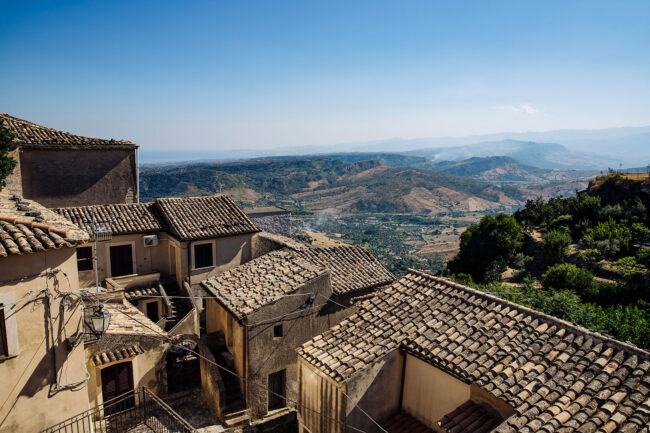


IN THIS 2020, THE MEANING OF THINGS HAS CHANGED. THE SOUTH IS OUR BEST OPPORTUNITY

Alfonso Femia opens the third edition of Invisible Mediterranean(s) –  Journey across the Strait.

“We can no longer just talk; for politics and architecture, it is time to act.”

It was not supposed to be a four-day event, nor was it meant to take place in September.
The idea was for it to last a full week, in June, during which field research on the territory would be combined with an organic re-examination of the themes and situations we had previously explored separately in the two earlier editions.  I am referring to Invisible Mediterranean(s) – Journey Across the Strait III,, which despite the pandemic, we chose to undertake also – or rather especially – in 2020, albeit with reduced time and programming, in order to affirm the need and the will to state that the South can no longer be read, interpreted, and experienced as it has been up to now.

It is precisely 2020 that marks the first demonstration of how strong the South can be, and how this strength can sustain the country as a whole.
I believe that what Invisible Mediterranean(s) has revealed – and will continue to reveal – is important for the country. As we will read in the interviews with representatives of local public administrations, presidents of professional orders, and Sicilian and Calabrian architects, the meaning of words and actions can change when the perspective and gaze are different, and above all when dialogue and confrontation take place on site.
“Infrastructure”, “school”, “village”, “territory” carry different meanings and nuances in places such as Messina compared to places like Siena or elsewhere, and the evidence of this diversity must be strengthened and made more widely known.

There is no romanticism in the gaze of Invisible Mediterranean(s). Each investigation brings to light problems that can no longer be confined within an isolated identity, but must instead be expressed and resolved through connection with other identities. Citiens exist within territories, just as villages do, just as landscapes, coastlines, and mountains do. And Journey across the Strait reveals these connections and the overall system of relationship that binds them together.

Citing Cyprian Broodbank, author of “Il Mediterraneo” (Einaudi, 2015), perhaps the most interesting and brilliant narrative on the subject in the last decade, the characteristics of the Mediterranean are often taken as given facts. Yet the Mediterranean system is made up of closely interconnected centers, whose surprising economic and cultural development has become a model for the entire world. As Broodbank writes: “The Mediterranean of prehistory, a microcosm where everything has come to a standstill, is the perfect model for helping us investigate the globalized world in which we live”.

For example, in the past, highly original civilizations such as Cyprus and Malta, which reached peaks of development, were later reabsorbed into the dominant trend – and this represents, in Broodbank’s view, “the dark side of globalization. A warning message for all of us”.

And is the contemporary Mediterranean a sea of relations?
“Absolutely. If in the past it experienced both moments of confrontation and conflict, the prevailing message that emerges is that of a place of encounter – a place where stereotypes are constantly challenged and dismantled”, says Cyprian Broodbank. We strongly believe that, starting from the second half of 2020, national and European policies must invest in the Southern Mediterranean of Italy. Not as an act of compassion, but as a new center of energy for the entire Old Continent.

Journey across the Strait. Photo by Stefano Anzini.
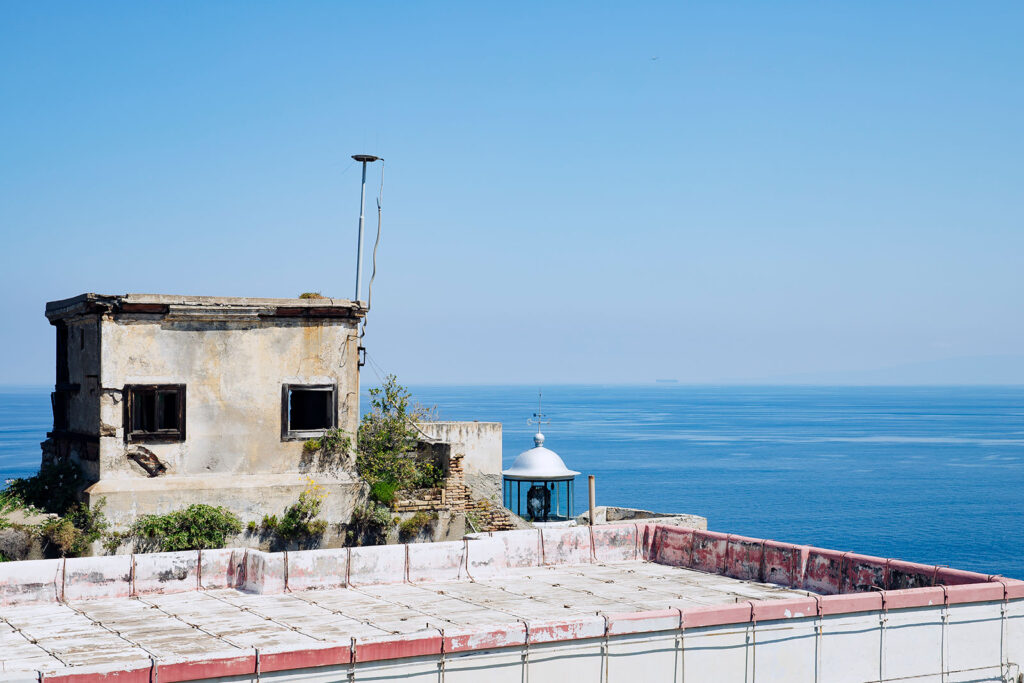
Alfonso Femia, Photo by Stefano Anzini

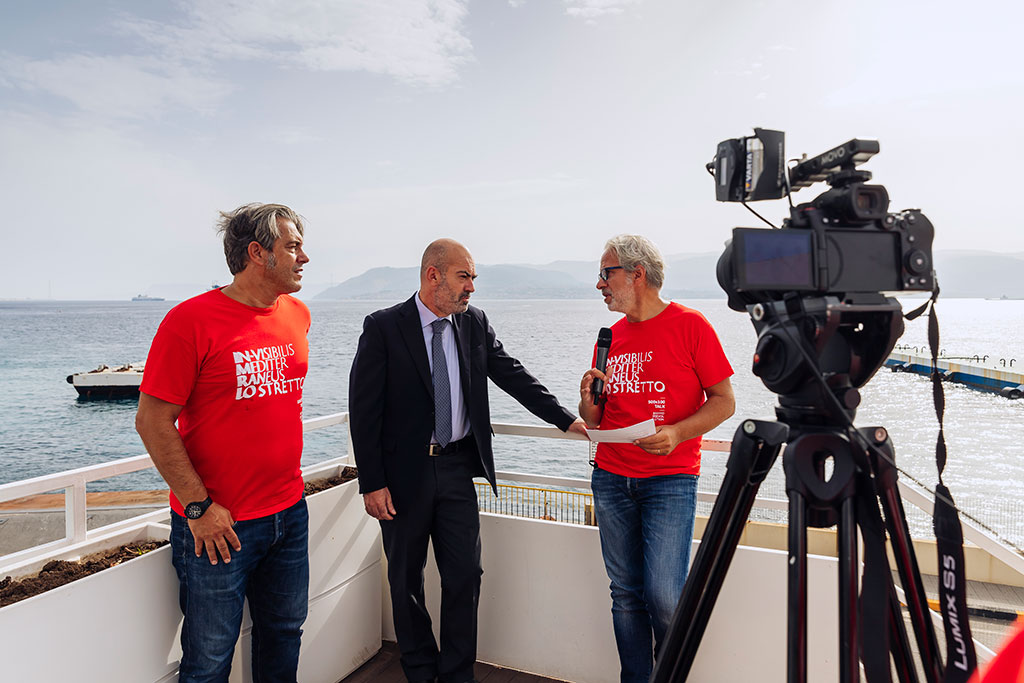
The exploration Invisible Mediterranean(s), with the third Journey across the Strait, resumes together with Marco Predari (500×100) and Giorgio Tartaro, journalist who followed the previous editions, capturing the invisibility not only of the Mediterraneans, but also of journeys themselves.

GIORGIO TARTARO’S NEUROIMAGING FOR INVISIBLE MEDITERRANEAN(S)

Let’s play a game.
A videogame. 
Or rather, a game of images.
To make the invisible Mediterranean visible – even in its plural form – we can imagine the bounce of a ball. A basketball, perhaps. And imagine its sound in an empty gym.
As a bearer – hopefully a healthy one – of internal Invisible Mediterranean(s), as a lake dweller who loves the sea, I imagine this ball bouncing from Greek and Latin epics to the recent image of a Mediterranean rotated ninety degrees: unrecognizable, yet fascinating, like a future highway.
From Phoenician and Roman splendours to the Maritime Republics, from the fragmented history of a richly biodiverse “boot-shaped” country to the troubled process of Italian unification, from times of excessive government to times of no government at all… It is astonishing to think that, apart from devastations and agricultural, artisanal, and industrial revolutions, many – very many – things have fortunately endured.
For instance, the desire for discovery: just as in coastal landscapes, so too in inland, pre-Alpine and mountainous ones, it reveals exemplary moments of recognition. Tradition, the will to recover, effort, commitment, attachment, people, identity.
The encyclopaedists work on these dynamics and return splendours. The fact is that Invisible Mediterranean(s) bounces very high. It elects a “Virgil 4.0” and surgically identifies heterodox contemporary heroes – those who fight against the common opinion of the obvious, who research, design, study, involve, and connect… in short, as my children would say, they really go all in
No, it is not just cool or picturesque: it is an ethical and luminous way of being in time, this telling of Invisible Mediterranean(s).
Those that some know and hide. Those that many long for and cannot find. Those that, sometimes, by sheer luck, we happen to encounter.
And then it becomes a kind of drama. Because they are like beautiful songs, refrains, synthetic dependencies you can’t quite escape.
Travel is about seeing with new eyes…new sounds, scents, energies, sensations, friends, anecdotes…in short: human beings. Women and men who, outside the uniform of formality, rejoice in telling, collecting, giving.
For me, Invisible Mediterranean(s) are everything that escapes the individual, egoism, the idea of status and social position.
Once Muhammad Al began a speech in public. He apparently didn’t quite know what to say. At some point, he said: “Me, we”.
He then reportedly reworked the “Me, We” pronounced at Harvard in 1965 into “Me, Whee”  a joyful “me!”, or rather “I? Hooray!” Perhaps suggested by his team or by circumstance.
Personally, I prefer the first version. Which is also my point of view on the Invisible Mediterranean(s), seen from the kaleidoscopic position of the Inner Mediterraneans: it is, fully and legitimately, an “I,we”. A-Sea Our Sea.

YOU CAN START AGAIN FROM THE SOUTH, BY MARCO PREDARI

Invisible Mediterranean(s) is part of the broader project of Marco Predari, 500×100, which was launched five years ago with the aim of investigating, through dialogue, paths of built and conceptual architecture. It has progressively strengthened and expanded, moving from its first Milan-based experience at the Salone del Mobile to other national contexts, including Venice, Rome, Pisa, and the South.

It represents an important commitment for a company such as Universal Selecta, a leading organization that this year won the Compasso d’Oro in the “Office Furniture and Accessories” category. The company supports the process of growth in Southern regions through the encounter and alignment between politics and architecture, also through the 500×100 platform.

As a company, we share initiatives rich in content in Puglia, Sicily, and Campania, and we believe that the entire South can be transformed from an area of development into a territory for validating effective experiences.

medinv-journal_calabria-19.jpg

CALABRIA IS IN CONSTANT MOTION, BUT SOMETIMES ITS COURSE IS THE WRONG ONE. LET US ABANDON OLD PROCESS MODELS AND FACE OUR “ARCHAIC FUTURE” with Salvatore Greco

Salvatore Greco, architect and council member of the Order of the Architects of Reggio Calabria, overturns the preconceived narrative of a poor Calabria. Its supposed poverty exists only in the eyes of the those who are unable to see.

Calabria is wealth”
Salvatore Greco opens with this stement, immediately and decisivly removing one of the many stereotypes surrounding Calabria as a “poor region”. It is a beautiful narrative by Greco one that does not indulge in sentimentality but instead develops a rigorous analysis grounded in observation and the memory of places. An alternating vision – close-up and from a distance – that returns the most honest and passionate portrait of the South.

Calabria is rich in perceptions. Its highly distinctive morphology is itself a form of wealth.
It is a mountainous region, made of mountains that face each other across the seas (the Ionian and the Tyrrhenian), and the physical space between the coasts and the Aspromonte is filled with countless stories.
Eight hundred kilometers of coastline, pastoral culture and cuisine…other narratives and forms of wealth.
Another form of wealth is the Calabrian “unfinished”: the rebar of pillars emerging from slabs, awkward volumes rising up, unfulfilled promises of houses – behind every house there is a social story, and this is wealth. Further wealth is the suspended sense of time, as if it stops and then resumes.
A sad form of wealth, but still wealth, is that of lands abandoned due to economic necessity, hydrogeological instability, earthquakes, and floods.
There is also the wealth of ghost towns, where only the past exists, while present and future are merely illusory intentions: the village of Amendolea and its river, the Cretto di Burri in Gibellina, which tells not what once existed, but its disappearance, the aftermath of the earthquake. The linguistic richness of the Grecanic area (certainly not a “minority” – a word that feels wrong and contradicts its enchantment and fascination).

Again, suspended time. All of this is wealth.

Photo by Stefano Anzini.
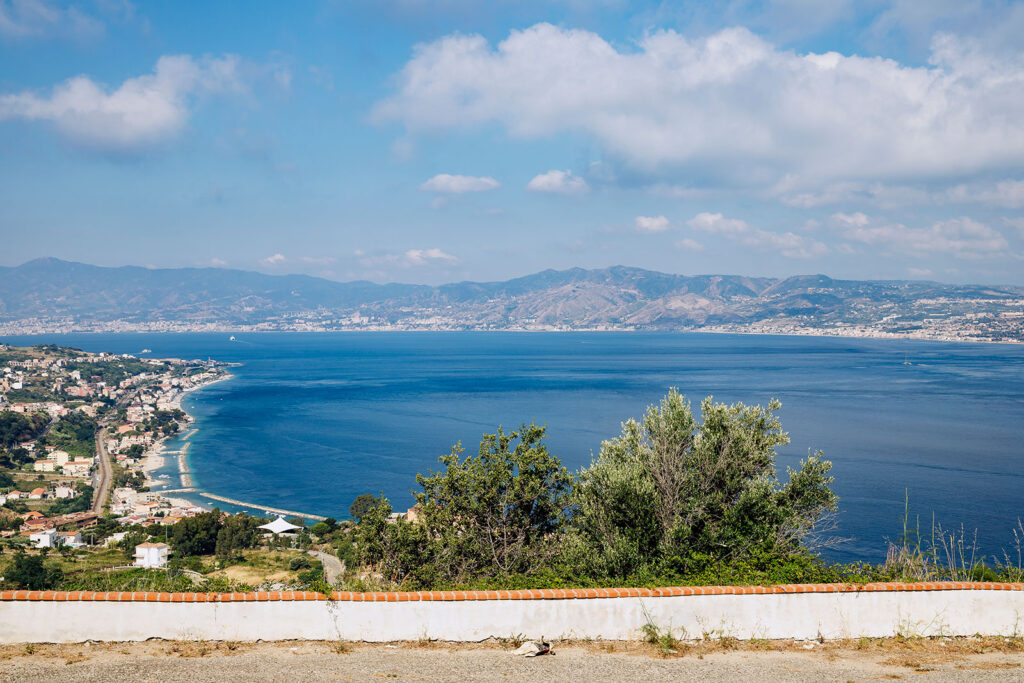
Then we move into the question of how to use and invest this extraordinary value.
A first reflection is that some of these situations have been preserved precisely because they have remained inaccessible.
And while invisibility and inaccessibility can certainly have negative connotations, I believe it is preferable to maintain an extreme form of protection rather than resorting to misguided interventions or restoration approaches that turn villages into something resembling and “Indian reservation”.
That would mean losing wealth rather than gaining it – making room for a form of consumption that empties places out, a throwaway use of territories.
Change, “progress”, even in its most aggressive forms, has reached Calabria filtered through its environmental character and geography – sometimes hostile – and this has caused less damage than in other regions.
We must encourage a delicate form of tourism, one that is not offensive or arrogant.
Landscapes transformed into postcard panoramas end up aligning with an undifferentiated mass of postcard-like landscapes.
The danger is that the richness of values is reduced to a merely transitory purchasing power – and the lost forever.

Can the authenticity of the Calabrian territory be reconciled within a European framework? The provocation we are putting forward with Invisible Mediterranean(s) is that of restarting the country (and Europe as well) from the southern Mediterranean.
These are not separate positions, but shared objectives grounded in respect for identity.
In Calabria there is no strong opposition between countryside and city; our wealth comes from the rural world and can be interpreted and strengthened within a European perspective. We are cities, villages, and communities: we must relaunch the vision of the world within and through communities.
For this reason, I believe a surgical level of attention is needed in how tourism is directed. And we must do this ourselves, as Calabrians.
Many things have been “dropped from above” onto us – for example investments in the steel industry, despite its crisis (with Taranto already struggling as a competitor). The Port of Gioia Tauro later managed to transform itself into a transshipment hub, but generating little local spin-off. The port is in fact a ZES–Special Economic Zone–which means that production and processing take place and exchange happens within the port itself. However, the lack of adequate rail infrastructure and railway terminals hinders the development of a potential local economic ecosystem.

Photo by Stefano Anzini.
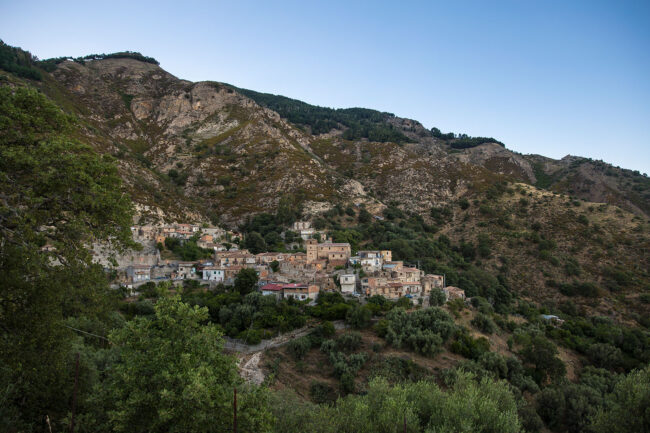
We simply need to return to being what we once where, without anachronistic positions, within a framework of real change.
Calabria is in constant motion, but too often the course it takes is the wrong one.
We can speak a great deal about conservation– about architecture, landscape, and places. But places and landscapes exist through their transformation. To trivialize concepts and apply labels – first “sustainability”, now “resilience” – while pretending not to understand what real mutation means, overlaying inadequate models onto communities, is precisely to take the wrong direction.

In Calabria there are two dawns and two sunsets: the sun rises over the Ionian Sea and over the Tyrrhenian Sea, and the water is made of two seas and of the fiumare. Geography is what shapes history. And it is from here that we must begin. 
Politics – which is a fundamental component in triggering architectural processes – must detach itself from models that do not work and embrace the regenerative capacity inherent in territories.
Nik Spatari, an internationally renowned artist and recently deceased, founder of Musaba, the art park in Mammola, spoke of the “archaic future” of Calabria – an idea that is less visionary and more deeply rooted in reality. 
I wish greater fortune to this my, and our, ultramediterranean Calabria”.
With Nik Spatari.


medinv-journal_calabria-27.jpg

A GIANT LOOKING OUT TOWARD THE SEA AND THE PLAIN BEHIND IT: GIOIA TAURO, A UNIQUE PLACE DIVIDED IN TWO, EEMBODYING AND REFLECTING THE DESTINY OF A SOUTH SHAPED BY ILLOGICAL SEPARATIONS. A CONDITION THAT ARCHITECTURE CAN TRANSFORM with Giovanni Multari

Giovanni Multari, architect and professor at University of Naples Federico II, believes that regeneration should be a program implemented through small steps, relying on alternative solutions: if the Bridge is not built, let’s immediately redevelop Villa San Giovanni. If industry is not working, let’s invest everything in agri-“culture”.

Invisible Mediterranean(s) is dialogue, comparison, and investigation. It is a journey and a revelation of the invisible dimensions of Sicily and Calabria. It is all of this, but above all it is a way to recognize and reaffirm the strong identity of shy places seeking a sustainable synchronicity with contemporary time.
The Mediterranean is a vast theme belonging to many cultures, marked by different geographies and united by ‘invisible’ aspects, contradictions, and harmonies. The Mediterranean of the Strait is a hidden and reserved place, despite still being a major crossroads and a transnational hub.
At the heart of this Mediterranean, of the South, Rosarno, the plain, and the port of Gioia Tauro form an extraordinary aggregation of masterful visual and olfactory euphonies, together with striking dissonances and urban distress.
Gioia Tauro is a geometric center, but also a generator of economic and political meanings. A place of failed strategies and missed opportunities.
The Port of Gioia Tauro is a giant facing only toward the sea, turning its back on the land because it generates little local impact, is self-sufficient in its function and organization, and is more inclined to look toward the Suez Canal or Strait of Gibraltar than toward its own plain.
Expanding the gaze outward, the richness of extraordinary places immediately emerges – places that have always nourished Calabria. A predominantly agricultural world, whose Calabrian environmental context makes it fertile ground for an evolution that can positively intertwine with architecture.

In Calabria and throughout the South, architecture takes on the meaning of care for the land and for communities; it becomes agri-culture.
We must invest in the traditions we have, enhance them, and make them known: recent pandemic events have confirmed Calabria’s capacity to be an extraordinary reservoir of energy and have highlighted that the region can be self-sufficient.
Infrastructure difficulties still exist, but we are working on them step by step: for example, our mountains are no longer inaccessible. The Club Alpino Italiano has mapped most of the trails and opened the way to a form of tourism that is passionate and respectful of places.
In these mountains lie areas only partially shaped by human activity, revealing an authentic heritage of culture and traditions. It is a unique monumental reality, that of the Sila mountain range, which contrasts with the coastline – a threshold element of the Mediterranean – where design is directed toward the essential themes of ecology and the environment.
In this unusual summer, the first phase of coexistence with coronavirus, Calabria experienced a moment of great redemption, lived across its entire territory, visited by tourists from all over Italy and even by some European visitors. A sign of attention, appreciation, a first step toward taking – by right – a place within a European geography, also through tourism.

Photo by Stefano Anzini.
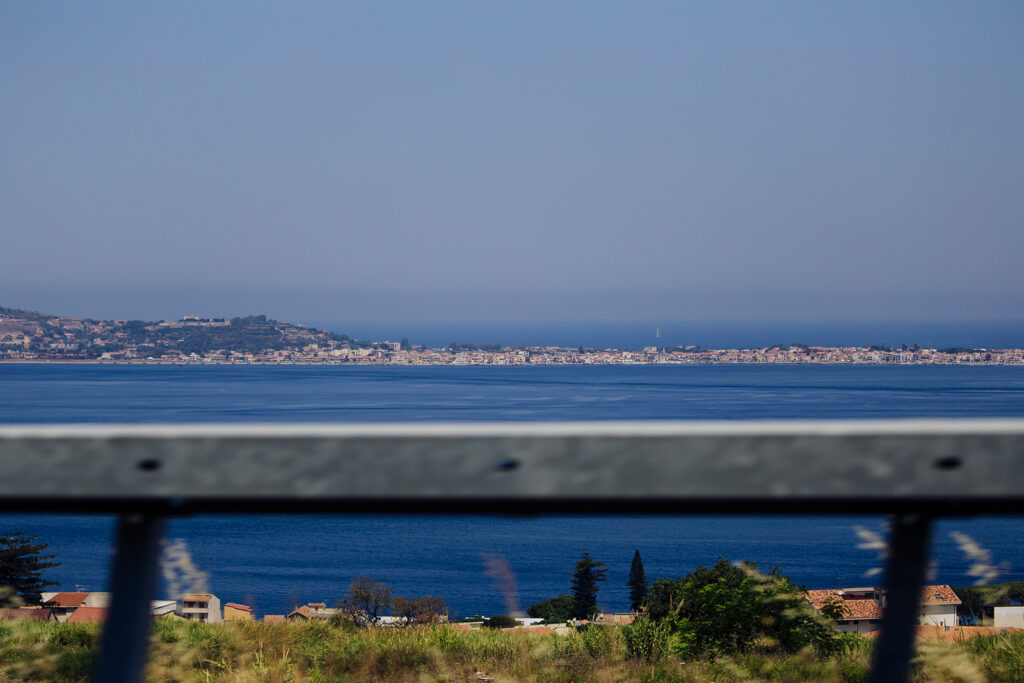
Where do we go after tourism?
Urban regeneration processes are not only made of large-scale transformations. Alongside major works – complex and difficult to implement – there is a small, continuous effort that also reaches the less visible territorial fringes and opens up unknown cultural and physical channels of communication.
We already have an infrastructure system in place that works, and it must be integrated with what is still missing.
The Ionian backbone suffers more, while the Tyrrhenian one is very dynamic, and from these different speeds of places emerges an unusual beauty, the awareness of a diachronic condition that generates positive evolutions out of contradiction: Paola, Crotone, Lamezia Terme, Catanzaro, Reggio Calabria.
There are territorial conditions that can be improved without major transformations, regenerating from the ground up and involving communities and citizens.

Photo by Stefano Anzini.
Let’s take a step back: how do the different “souls” of the same territory coexist?
Sometimes they are separate, sometimes they intersect. The Port of Gioia Tauro should be better connected with the plain. And if the best industry in Calabria is agriculture, then the agricultural system must be highlighted and enhanced, from cultivation to forestry, considering that it generates a significant economic impact, with exports across Europe.
But above all, precisely in order to reconcile these different identities, we must never stop and proceed in small steps: if the Strait Bridge is not built, let’s redevelop Villa San Giovanni, equipping it as a place of transit, imagining a large marina, and replicating the same program in Messina, to improve the efficiency of the two gateways.
Before thinking about new projects, we should survey what already exists: abandoned places and unfinished construction sites.
Let’s create a table of people who live in the communities; we do not need prefabricated solutions imposed from above.
Let’s involve a network of local businesses, breaking away from a system governed by patronage politics that has damaged Italy as a whole and especially the South.

medinv-journal_calabria-8.jpg

THE INFRASTRUCTURAL GAP GENERATES A CULTURAL GAP. THE DESIGN NARRATIVE STOPS, THE PERSPECTIVE CLOSES. CONNECTION – BETWEEN CLABRIA AND SICILY, BETWEEN THE IONIAN COAST AND THE TYRRHENIAN COAST – IS THE ONLY WAY TO GO BEYOND THE LIMIT with Francesco Messina

Francesco Messina, architect and contract lecturer at the University of Ferrara, addresses the concept of “limit”: the limits of cultural policy, of environmental policy, and of an attitude of self-imitation that prevents major transformation in the extraordinary space between Sicily and Calabria.

Invisible Mediterranean(s) is a narrative that makes it possible to discover territories that would otherwise remain in the background. Above all, it is a form of ‘proof of existence’., because without knowledge, storytelling, and representation, places and landscapes would not exist beyond their physical boundaries. The Journeys Across the Strait have the merit of going beyond the limit of invisibility.
The limit is the most serious problem of our territories: the Strait of Messina has a geographical and political specificity, a point of tension between the island and mainland dimensions of Italy, a large water space where the distance between the two shores is ‘dialectically’ variable. The journey becomes a syncrasis between these cultures – Sicilian and Calabrian – which find in the Strait a unique form of synthesis and propulsive energy, something that concerns the entire Italian South.
Landscapes are revealed, places are identified, and their knowledge is amplified, extending it to the entire local community and to Italy, in a global expansion where, finally, the limit is broken down.
Invisibility is a limit linked to the difficulty of physical connections between places, a condition that feeds and perpetuates itself through the constraints imposed by a culture of conservation which, in a distorted cognitive process, overlaps with certain environmental policies.
Thus, a geographical limit is transformed into a major political limit that discourages development projects and encourages the abandonment of territories sorrounded by increasingly high mental walls.
All levels of infrastructure are missing, starting from the physical one – and I am not referring only to exceptional engineering works such as bridges and viaducts, but also to basic roads.
In Sicily there is greater sensitivity; in Calabria, the two coasts – Ionian and Tyrrhenian – do not communicate with each other.
The revival of Calabria depends on these connection nodes between east and west, and between the interior, the mountains, and the coasts.
Architecture must intersect with infrastructure projects, acting on the territory to bring out its value and transform it into a driver for tourism flows.

Photo by Stefano Anzini

Tourism is a key element for places with unique environmental characteristics. But architecture has the responsibility to look toward the everyday life of a territory …
A country’s strategy can coordinated through architecture, which brings together, within an overall vision, the regeneration of places without allowing certain functions to prevail at the expense of others, and without creating single “vocations”.
Calabria region, in particular, must restart from architecture because it is dense with contradictions; it has been scarred by illegal construction that has continued, unpunished, for years. Architecture recognizes beauty everywhere, even where the “ordinary” eye sees only ugliness, and design is the best tool for redemption.
Redemption and regeneration feed one another, creating places for social life, public and accessible spaces. And precisely the lack of places where people can gather, engage, and find orientation is another serious limitation for communities. On the part of central government, there is a total lack of attention to real needs, and even local politics struggles to understand the true priorities.

Do decision-making and operational processes seem slower in Southern Italy than elsewhere? Is there a different sense of time in Calabria and Sicily?
Contrary to this common perception, I distance myself from the cliché of the “slow time” of the South: time is the same in both the North and the South. The difference is that in the South, Time expands in order to settle, to be absorbed, and metabolized. In the unique space between Sicily and Calabria, there is no such thing as “disposable” time – a consumable kind of time that leaves no trace of reflection or growth. In the South, Time always leaves something behind.

Photo by Stefano Anzini