

THE MEDITERRANEAN OF THE STRAIT IS NOT CELEBRATED THROUGH STRIKING MONUMENTAL OR LANDSCAPE EPISODES; IT IS MADE OF FRAGMENTS AND GLANCES with Gaetano Scarcella
Reflections by Gaetano Scarcella, a Sicilian architect active in Messina and Nizza di Sicilia, addressing infrastructure, tourism, and education in relation to globalization
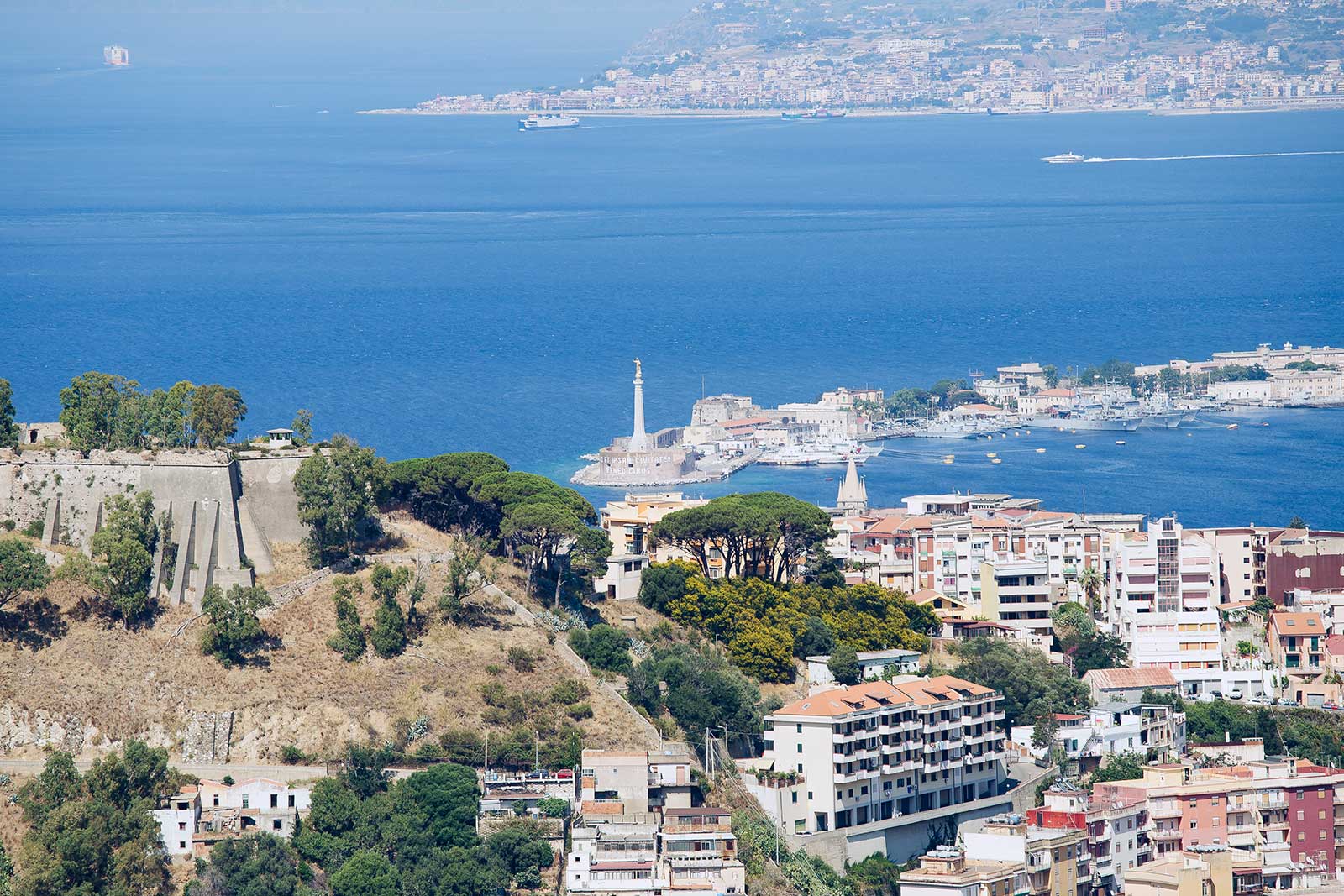
The Mediterraneans are not all the same. Perspectives and conditions change between the Atlantic Mediterranean and the Mediterranean that washes the Tyrrhenian, Ionian, or Adriatic coasts of Italy. Invisible Mediterranean(s) – Journey Across the Strait III – focuses on the strip of sea and the territories between the extreme edge of Calabria and the welcoming, outstretched cusp of Sicily.
This territory is so distinctive that, to truly understand it, one must experience it slowly – walking, lingering along a path made of diverse yet coherent fragments that together generate the uniqueness and rural character of these places. Small villages, terraces, and spaces – those of the Messina area – do not live through spectacular monumental or scenic events. Here, Time transforms from an abstract theme into a material reality measured by the speed at which places and the relationships between them were built.
Within this vision, the village embodies one of its meanings: a settlement, an extension of a settlement, or a way of living connected to the past through its relationship with the land.
Our villages were born to protect communities from medieval pirate raids, within a territorial system based on agricultural connections and the use of water resources.
Construction methods and systems of relationships were conceived according to the climatic conditions of the periods in which they emerged, when dwelling expressed different meanings and needs because domestic life was not yet the central focus of existence.
This is the primary reason why the destiny of these villages must be understood starting from their present-day relationship with the territory, reconciling it with their historical one. Some villages, because of their landscape, architectural, or historical qualities, now exist in a postcard-like dimension. Yet not everything can adopt the traditional tourism paradigm as its model for development – either because there is no natural vocation for it, or because these places do not wish to transform themselves in that direction. For example, the Ring of Nisi is a circular network of paths connecting the four centers of a valley marked by discreet and unexpected landscapes, abandoned mills, agricultural scenery, and scattered monuments.
It is precisely here that, in recent years, spontaneous movements have emerged with the aim of promoting a quieter, research-oriented form of tourism – one that does not conform to the pre-established mental image shaped by traditional tourism models.
If it makes sense for the revival of a territory – such as the Ionian valleys of the Peloritani Mountains, the first stage of the 2020 journey – to pass also (though not exclusively) through tourism, then it is essential to find the right and respectful interpretative key, because these are still unexplored places.
The meaning attributed to tourism – de-seasonalized and made more ‘cultivated’ – must be calibrated to places not only in functional terms, but also in ways that are coherent with the temperament and vocation of local communities.
If tourism appears to be a spontaneous and straightforward opportunity for revitalizing Southern Italy, development neverthless remains dependent on three fundamental elements of growth: physical infrastructure, educational systems, and digital infrastructure. When speaking of physical infrastructure, we must move beyond the obvious refrain of simply strengthening road and railway connections. Instead, contexts should be carefully analyzed in order to identify solutions that are harmonized with the physical characteristics of each territory. When we speak of physical infrastructure, we are still living in a prehistoric age: in much of Sicily, public transportation is unusable, there is no genuine cycling network, and places of extraordinary charm – such as the Magna Via Francigena – have only been minimally enhanced. Schools, especially in Southern Italy and particularly in this South, must take on the responsibility of transmitting knowledge, awareness, and prime in local places and identities. Finally, digital infrastructure must become a means of projecting Southern Italy outward, connecting it with the rest of the world.
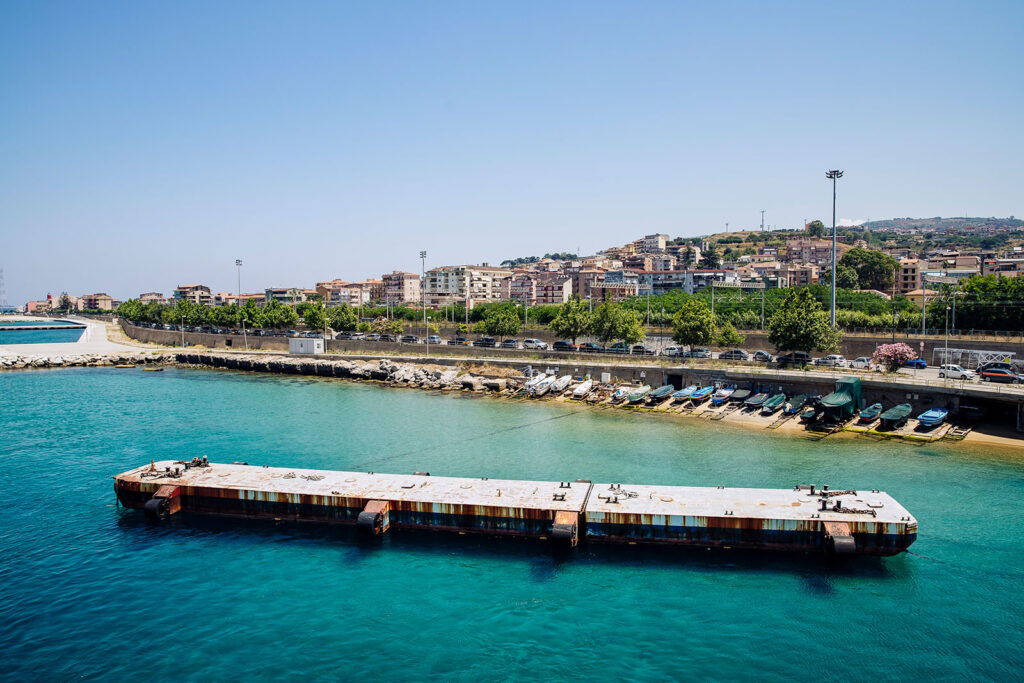
What design strategies can be implemented to reconcile, for example, infrastructural development with the expansion of tourism?
The approach is, first and foremost, cultural: infrastructure is not meant ‘for others’, for tourists, but rather serves the needs of the territory and its communities, because the primary outcome of good physical infrastructure is the improvement of the quality of life of every individual citizen. This is not about emulating or uncritically importing Northern European or Northern Italian models. Instead, it requires analyzing the organization of local economies and working through their underlying values – including in terms of infrastructure – for example by preserving the identity of agricultural systems and highlighting the biodiversity of the landscape.
The landscape is a unique and unrepeatable product, and it is precisely from this awareness that one can work on the territory by adopting the right interpretative approach and intervening in ways that enhance its value.
Southern Italy may appear as a small and marginal fragment when viewed within the broader framework of globalization, yet its renewal could emerge precisely in opposition to the cultural models of the Anglo-Saxon world, which, in 2020, revealed the profound limitation and inability to replace the verb to consume with the verb to live.
The South could become the counterpoint to ruthless globalization, absorbing only its positive aspects and finally emerging as a truly competitive cultural and territorial model.